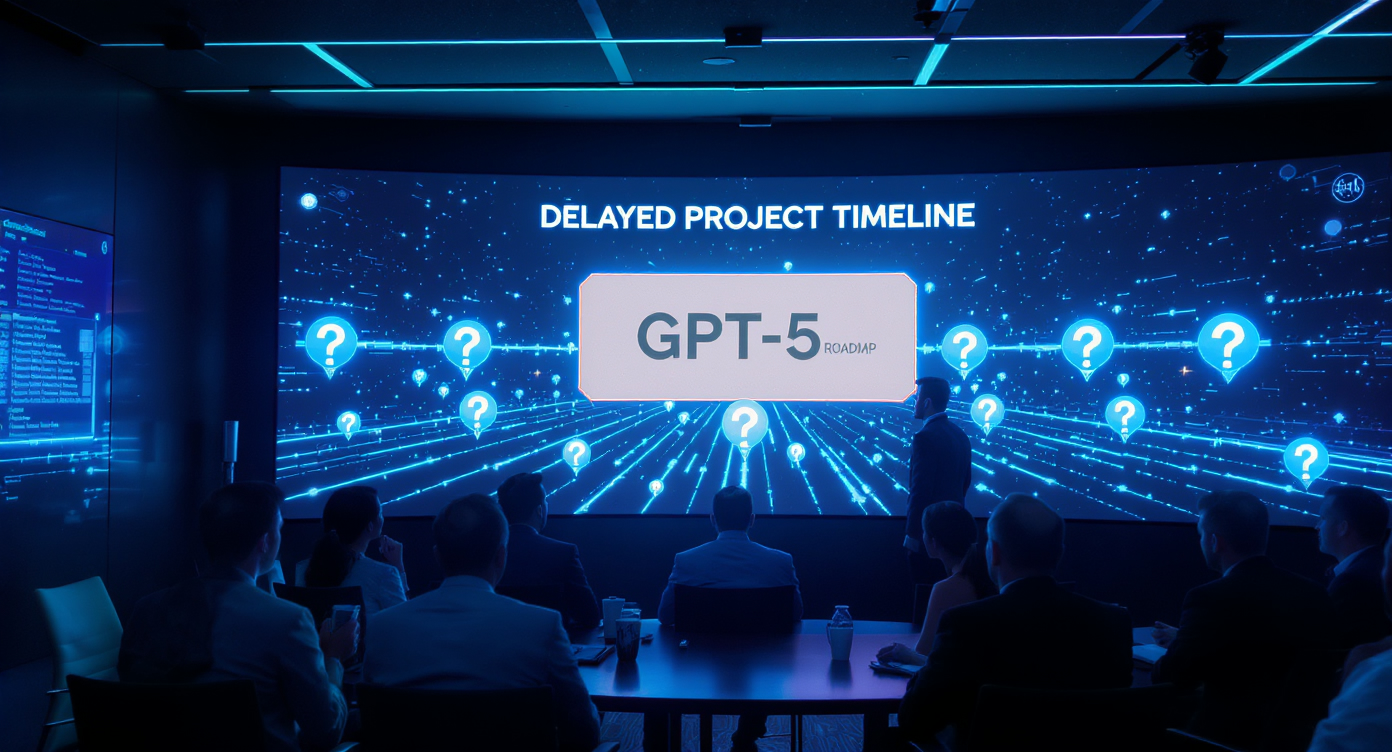
The artificial intelligence landscape is experiencing a significant shift as OpenAI’s anticipated GPT-5 release faces unexpected delays, prompting enterprise leaders to recalibrate their AI investment strategies. What was once expected to arrive in 2024 has now pushed major corporate AI budget allocations well into 2027, creating both challenges and opportunities for organizations worldwide.
This delay isn’t merely a minor setback in the tech world—it represents a fundamental reshaping of how enterprises approach AI transformation. Companies that had earmarked substantial resources for GPT-5 integration are now grappling with extended timelines, forcing them to reassess their competitive positioning and technological roadmaps.
Understanding the GPT-5 Delay Impact
The postponement of GPT-5 stems from several complex factors that extend far beyond simple development challenges. OpenAI faces mounting pressure to ensure their next-generation model meets unprecedented safety standards while delivering the quantum leap in capabilities that the industry expects. The company is reportedly focusing on achieving artificial general intelligence (AGI) characteristics, which requires extensive testing and validation periods.
For enterprises, this delay translates into extended planning horizons and modified investment strategies. Chief Technology Officers and AI leaders who had structured their 2024-2025 budgets around GPT-5 capabilities are now redistributing funds across longer timeframes. The ripple effect is substantial—affecting everything from staffing decisions to infrastructure investments.
The delay also impacts competitive dynamics within industries. Companies that had planned to leverage GPT-5’s advanced reasoning and multimodal capabilities to gain market advantages must now explore alternative strategies. This has led to increased interest in other AI providers, including Anthropic’s Claude, Google’s Gemini, and various open-source solutions.
Enterprise AI budgets are inherently tied to expected returns on investment. With GPT-5’s advanced capabilities delayed, organizations are recalculating their ROI projections and adjusting budget allocations accordingly. Many are choosing to spread their AI investments over extended periods rather than making large upfront commitments to technologies that may become obsolete once GPT-5 eventually arrives.
Strategic Implications for Enterprise AI Planning
The extended timeline creates unique strategic challenges that forward-thinking organizations are already addressing. Rather than viewing the delay as purely negative, many enterprises are using this additional time to strengthen their AI foundations and prepare more thoroughly for the next generation of AI capabilities.
Infrastructure Readiness and Talent Development
Organizations are redirecting portions of their GPT-5 budgets toward infrastructure improvements and team capability building. This includes upgrading data pipelines, enhancing security frameworks, and investing in AI literacy programs across departments. The extra time allows for more comprehensive change management strategies, which often determine the success or failure of AI implementations.
Companies are also using this period to experiment with current-generation AI tools more extensively. Rather than waiting for GPT-5, they’re maximizing value from GPT-4, Claude 3, and other available models. This hands-on experience is proving invaluable for developing internal expertise and identifying the most impactful use cases for future advanced AI systems.
Risk Mitigation and Diversification
The delay has prompted many enterprises to diversify their AI vendor strategies. Organizations that previously planned to rely heavily on OpenAI are now developing relationships with multiple AI providers. This diversification reduces dependency risks and provides flexibility as the AI landscape continues evolving rapidly.
Some enterprises are allocating increased budgets toward developing proprietary AI capabilities or fine-tuning open-source models. This approach provides greater control over AI development timelines while building valuable internal capabilities that complement external AI services.
Budget Reallocation Strategies and Market Dynamics
The shift in AI budget timelines is creating new market dynamics that extend far beyond individual enterprise decisions. The collective postponement of major AI investments is influencing venture capital flows, startup valuations, and technology development priorities across the industry.
Short-term Investment Patterns
Many organizations are adopting a “bridge strategy” approach to AI investments. Instead of waiting entirely for GPT-5, they’re making smaller, more targeted investments in current AI technologies while reserving larger budget portions for future advanced capabilities. This approach maintains momentum in AI adoption while preserving resources for more transformative investments.
The delay is also driving increased investment in AI supporting technologies. Companies are allocating more resources toward data preparation tools, AI governance platforms, and integration solutions that will be essential regardless of which AI models they eventually deploy.
Long-term Strategic Positioning
Forward-thinking enterprises are using the extended timeline to develop more sophisticated AI strategies. Rather than focusing solely on individual AI models, they’re building comprehensive AI ecosystems that can adapt to various technological developments. This includes creating AI centers of excellence, establishing cross-functional AI governance committees, and developing standardized processes for AI evaluation and deployment.
The delay is particularly beneficial for organizations in heavily regulated industries. Financial services, healthcare, and government entities often require extensive compliance reviews before implementing new AI systems. The additional time allows these organizations to work with regulators and develop frameworks that will facilitate faster adoption of advanced AI capabilities when they become available.
Market Competition and Innovation
The GPT-5 delay is creating opportunities for alternative AI providers to capture market share and prove their value to enterprise customers. Companies like Anthropic, Cohere, and various open-source projects are experiencing increased enterprise interest as organizations seek immediate AI capabilities while waiting for GPT-5.
This competitive dynamic is driving innovation across the AI industry. Providers are investing heavily in improving their current offerings and developing specialized capabilities that address specific enterprise needs. The result is a more diverse and robust AI ecosystem that benefits enterprise customers through increased choice and innovation.
Preparing for the Future AI Landscape
As enterprises adjust their AI timelines and budgets, several key considerations will determine success in the evolving AI landscape. Organizations that use this transitional period strategically will be better positioned to capitalize on advanced AI capabilities when they become available.
Building Adaptive AI Strategies
Successful enterprises are developing AI strategies that remain effective regardless of specific technological timelines. This includes focusing on fundamental AI capabilities like data quality, model governance, and human-AI collaboration frameworks that will remain relevant across different AI generations.
Organizations are also investing in AI experimentation platforms that allow them to quickly evaluate and deploy new AI models as they become available. This infrastructure will prove valuable when GPT-5 and other advanced AI systems eventually launch, enabling rapid adoption and integration.
Developing AI-Ready Organizational Culture
The extended timeline provides valuable opportunity for cultural transformation within enterprises. Organizations are using this time to build AI literacy across their workforce, establish ethical AI frameworks, and develop processes for responsible AI deployment. These foundational elements are often more critical to AI success than the specific technologies being used.
Companies are also focusing on change management strategies that will facilitate smoother AI adoption when advanced capabilities become available. This includes identifying AI champions within different departments, developing internal AI communities of practice, and creating feedback mechanisms for continuous improvement in AI implementation.
The delay in GPT-5 also allows organizations to learn from early AI adopters and avoid common implementation pitfalls. Companies can study case studies, participate in industry forums, and develop more refined approaches to AI integration based on accumulated industry experience.
As enterprise AI budgets shift toward 2027 and beyond, the organizations that will ultimately succeed are those using this transitional period to build strong foundations for AI adoption. Rather than simply waiting for the next breakthrough, they’re actively preparing their people, processes, and infrastructure for the AI-driven future.
The GPT-5 delay, while initially disruptive, may ultimately prove beneficial for the enterprise AI ecosystem by allowing for more thoughtful, strategic approaches to AI adoption and creating space for innovation across the industry.
How is your organization adapting its AI strategy and budget allocation in light of these extended timelines, and what steps are you taking to prepare for the next generation of AI capabilities?

Comments