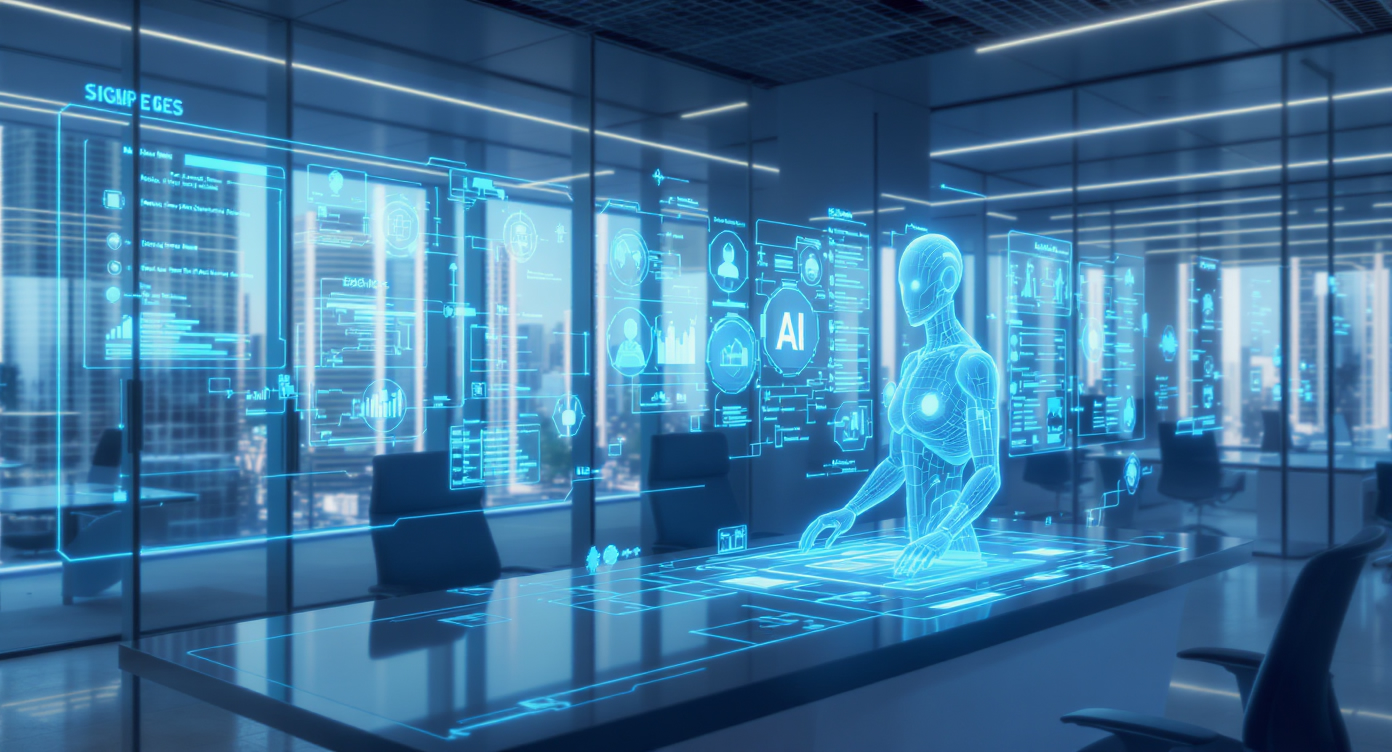
As we navigate through the early months of 2026, artificial intelligence agents have evolved from experimental tools to mission-critical components of enterprise operations. Organizations worldwide are witnessing unprecedented levels of automation, efficiency, and decision-making capabilities that seemed like science fiction just a few years ago. The transformation is not just happening—it’s accelerating at a pace that’s reshaping entire industries.
The current landscape shows AI agents handling complex workflows that previously required human intervention at every step. From autonomous customer service resolution to predictive supply chain management, these intelligent systems are proving their worth by delivering measurable results. Companies that embraced AI agent technology early are now reporting efficiency gains of 40-60% in key operational areas, while maintaining or improving service quality standards.
What makes this transformation particularly compelling is the shift from simple task automation to intelligent orchestration. Today’s AI agents don’t just follow predetermined scripts—they adapt, learn, and make contextual decisions based on real-time data analysis. This evolution has created opportunities for businesses to reimagine their operational frameworks entirely.
The Rise of Autonomous Decision-Making Systems
Enterprise AI agents in 2026 have reached a level of sophistication that enables them to make complex business decisions without constant human oversight. These systems analyze vast amounts of data from multiple sources, identify patterns, and execute actions that align with business objectives and risk parameters.
In manufacturing environments, AI agents are now managing entire production lines, adjusting parameters in real-time based on quality metrics, supply availability, and demand forecasts. General Motors recently reported that their AI-driven production agents reduced waste by 35% while increasing output quality scores by 28%. The agents continuously monitor equipment performance, predict maintenance needs, and optimize production schedules to minimize downtime.
Financial services have seen equally impressive results. JPMorgan Chase’s deployment of AI agents for fraud detection and risk assessment has enabled them to process complex transactions 75% faster than traditional methods. These agents analyze transaction patterns, cross-reference multiple data points, and make approval or rejection decisions within milliseconds, all while maintaining strict compliance standards.
The healthcare sector is experiencing a revolution in patient care coordination. Cleveland Clinic’s AI agents now manage patient scheduling, treatment protocol recommendations, and resource allocation across multiple facilities. The system considers patient history, current symptoms, physician availability, and treatment efficacy data to optimize care delivery. Early results show a 42% reduction in patient wait times and improved treatment outcomes.
Key capabilities driving this transformation include:
- Multi-source data integration: AI agents seamlessly combine structured and unstructured data from various enterprise systems
- Real-time adaptation: Systems adjust strategies based on changing conditions without manual intervention
- Risk-aware decision making: Agents evaluate potential outcomes and make choices within defined risk parameters
- Compliance automation: Built-in regulatory and policy adherence across all decisions and actions
Revolutionizing Customer Experience and Support
Customer-facing AI agents have evolved far beyond simple chatbots to become comprehensive experience orchestrators. These systems now handle complex customer journeys from initial inquiry through problem resolution, often without customers realizing they’re interacting with AI.
Microsoft’s enterprise customers are reporting remarkable success with their new AI agent platform. These agents manage customer support tickets by analyzing historical data, identifying similar cases, and implementing solutions automatically. For complex issues requiring human intervention, the agents prepare comprehensive briefings for human specialists, reducing resolution time by an average of 65%.
The retail sector has embraced AI agents for personalized customer experiences at scale. Amazon’s enterprise division now offers AI agents that manage B2B customer relationships, handling everything from order processing to custom pricing negotiations. These agents analyze purchasing patterns, market conditions, and relationship history to make pricing and service decisions that optimize both customer satisfaction and profit margins.
Practical implementation strategies that enterprises are finding most effective:
- Graduated autonomy: Starting agents with limited decision-making authority and gradually expanding their capabilities based on performance
- Human-AI collaboration: Designing workflows where agents handle routine decisions while escalating complex or sensitive issues to human specialists
- Continuous learning loops: Implementing systems that learn from both successful and unsuccessful interactions to improve future performance
- Multi-channel integration: Ensuring agents can seamlessly operate across email, chat, phone, and in-person interactions
The banking industry exemplifies this evolution. Bank of America’s AI agents now handle 78% of routine customer inquiries without human intervention, while maintaining customer satisfaction scores above 4.2 out of 5. These agents access customer account information, transaction history, and behavioral patterns to provide personalized solutions and proactive recommendations.
Streamlining Internal Operations and Workflow Management
Internal enterprise operations have undergone perhaps the most dramatic transformation through AI agent deployment. These systems now manage complex workflows that span multiple departments, systems, and processes, creating unprecedented levels of operational efficiency.
Human resources departments are leveraging AI agents for comprehensive talent management. Unilever’s global HR AI agents manage recruitment, onboarding, performance evaluation, and career development processes across 190 countries. The agents analyze job requirements, candidate profiles, team dynamics, and performance data to make hiring and promotion recommendations. This has reduced time-to-hire by 52% while improving employee retention rates by 31%.
Supply chain management has been revolutionized by AI agents capable of managing global logistics networks. Walmart’s AI agents coordinate inventory across thousands of locations, manage supplier relationships, and optimize delivery routes in real-time. When supply disruptions occur, these agents automatically identify alternative suppliers, adjust inventory allocations, and modify pricing strategies to maintain service levels.
Critical success factors for internal AI agent deployment:
- Process mapping: Thoroughly documenting existing workflows before AI implementation
- Change management: Preparing employees for new human-AI collaborative workflows
- Performance metrics: Establishing clear KPIs to measure agent effectiveness and business impact
- Scalability planning: Designing agent architectures that can handle growing operational complexity
The legal sector has seen AI agents transform contract management and compliance monitoring. Morrison & Foerster deployed AI agents that review contracts, identify potential risks, and suggest modifications based on regulatory requirements and company policies. These agents process contracts 85% faster than traditional review methods while maintaining accuracy standards that exceed human-only reviews.
Preparing for the Next Wave of AI Agent Evolution
As we look ahead through 2026 and beyond, enterprise leaders must prepare for the next generation of AI agent capabilities. The current trajectory suggests even more sophisticated systems that will handle strategic decision-making, creative problem-solving, and complex multi-stakeholder negotiations.
Emerging trends shaping the future of enterprise AI agents:
Predictive orchestration: AI agents are beginning to anticipate business needs and take preemptive actions. These systems analyze market trends, internal metrics, and external signals to prepare for future scenarios before they materialize.
Cross-enterprise collaboration: AI agents from different companies are starting to interact directly for B2B transactions, negotiations, and partnerships. This agent-to-agent commerce is reducing transaction costs and accelerating business processes.
Emotional intelligence integration: Advanced AI agents are incorporating emotional intelligence capabilities to better understand human colleagues and customers, leading to more effective interactions and decision-making.
Industry-specific specialization: AI agents are becoming highly specialized for specific industries, incorporating deep domain knowledge and regulatory understanding that rivals human experts.
Organizations preparing for this evolution should focus on building flexible AI infrastructures that can accommodate rapid capability expansion. This includes investing in robust data management systems, establishing clear AI governance frameworks, and developing human workforce skills that complement rather than compete with AI capabilities.
The competitive advantage will increasingly belong to organizations that can seamlessly integrate AI agents into their operational DNA while maintaining the human elements that drive innovation, empathy, and strategic thinking.
What specific operational challenge in your organization could benefit most from AI agent automation, and how might you begin piloting such a solution?


Comments