
The dominant strategy in AI development has been straightforward: more data leads to better models. But new research from Johns Hopkins University is challenging this assumption, suggesting that how AI systems are structured may be just as important as how much data they process.
The Surprising Discovery
Researchers found that AI systems built with designs inspired by biology can begin to resemble human brain activity even before they are trained on any data. This discovery suggests that architecture itself carries important information about how to process the world.
Think of it like building a house. The conventional wisdom said the quality of furniture (data) determined how good the house was. But this research shows that the blueprint (architecture) matters just as much—perhaps more.
What Makes an Architecture “Brain-Inspired”?
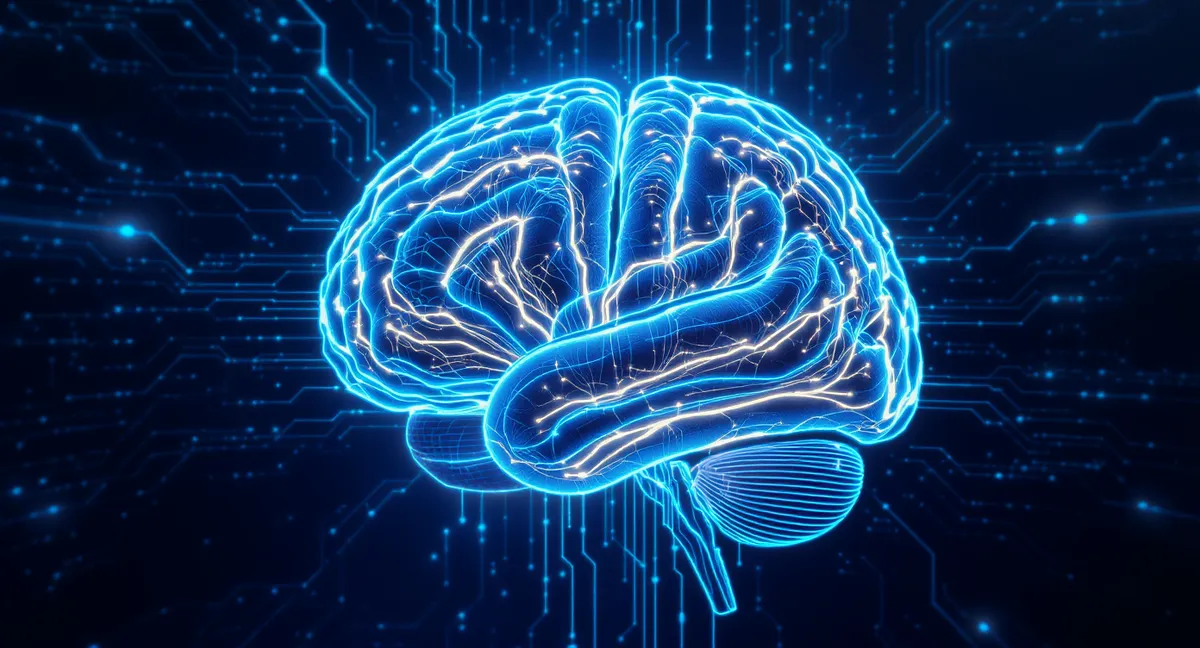
Brain-inspired AI architectures mimic the organizational principles found in biological neural systems. This includes:
Hierarchical Processing
Like the visual cortex, these systems process information in layers, with each layer extracting increasingly abstract features. Early layers detect edges and colors; later layers recognize objects and scenes.
Sparse Activation
The brain doesn’t activate every neuron for every task. Brain-inspired AI uses sparse activation patterns, where only relevant pathways light up for specific inputs. This improves efficiency and may lead to better generalization.
Recurrent Connections
Unlike standard feedforward networks, brain-inspired architectures often include feedback loops that let information flow backward. This enables iterative refinement of interpretations.
Modularity
The brain has specialized regions for different functions. Brain-inspired AI incorporates modular designs where different components specialize in different tasks.
Implications for AI Development
If architecture matters as much as data, it changes how we should approach AI development:
Reduced Data Requirements
Better architectures might achieve strong performance with less training data, making AI more accessible and reducing the environmental cost of training.
More Efficient Models
Brain-inspired designs could lead to models that are both more capable and more efficient, running faster on less hardware.
Better Generalization
Architectures that mirror how biological systems process information might generalize better to new situations, a persistent challenge for current AI.
New Research Directions
This finding opens up new avenues for AI research, suggesting that studying neuroscience could yield practical improvements in AI systems.
The Nature vs. Nurture of AI
This research touches on a fundamental question: what makes AI systems intelligent? Is it the data they’re trained on (nurture) or their underlying structure (nature)?
The answer appears to be both. But the finding that architecture alone can produce brain-like patterns suggests we’ve been underestimating the importance of structure. Future AI development may need to balance data engineering with architectural innovation.
Looking Forward
As researchers explore this connection between brain structure and AI capabilities, we may see a new generation of AI systems that are more efficient, more capable, and more aligned with how biological intelligence actually works.
The brain has had millions of years of evolution to optimize its architecture. AI may benefit from studying that optimization more closely.
Recommended Reading
Deep Medicine: How AI Can Make Healthcare Human Again
Explore the intersection of neuroscience, AI, and medicine. Understand how brain-inspired approaches are shaping the future of AI.
As an Amazon Associate, I earn from qualifying purchases.
Do you think AI should be modeled more closely on biological brains? Share your thoughts in the comments below.


Comments