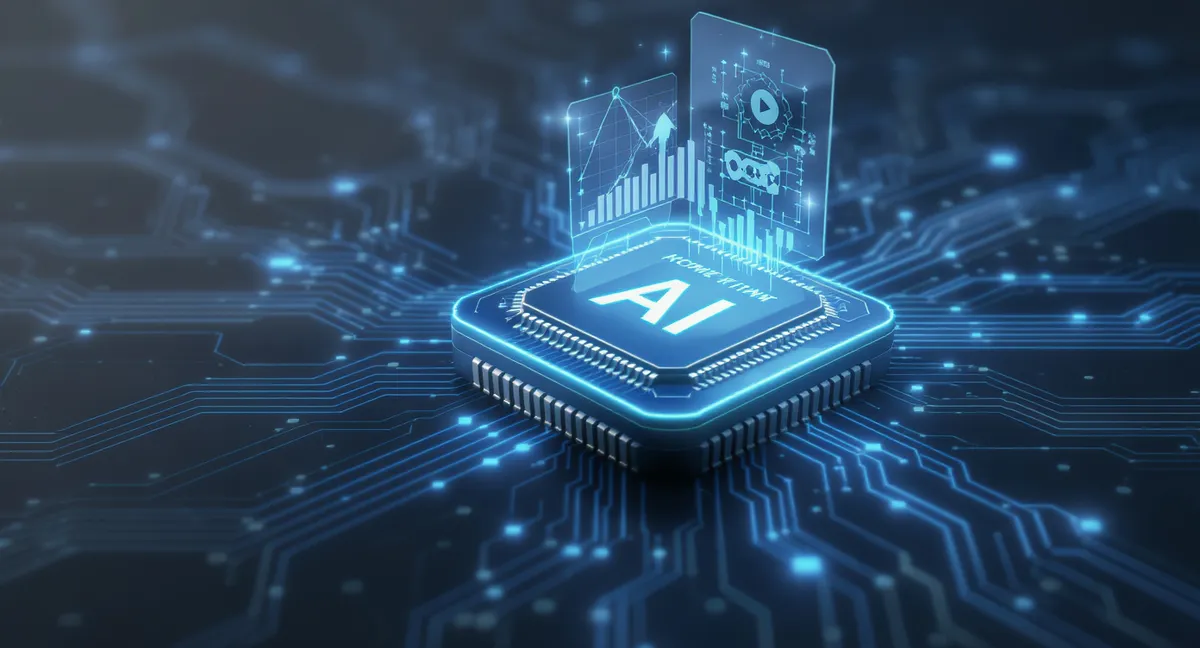
Computer vision has traditionally required powerful cloud servers to process visual data. But a significant shift is underway: edge AI is bringing sophisticated vision capabilities directly to cameras, sensors, and devices. This isn’t just a technical change—it’s reshaping what’s possible with visual AI.
What Is Edge AI?
Edge AI refers to running artificial intelligence algorithms directly on devices at the “edge” of the network, rather than sending data to centralized cloud servers for processing. For computer vision, this means cameras and sensors that can see and understand their environment locally.
Why Edge Matters for Vision
Latency
Cloud processing introduces delay. Data must travel to a server, be processed, and results returned. For applications requiring instant response—autonomous vehicles, safety systems, real-time inspection—even milliseconds matter. Edge processing eliminates network latency entirely.
Privacy
Sending video to the cloud raises privacy concerns. Edge processing keeps visual data local—the camera sees and analyzes footage without transmitting it anywhere. Only processed results (alerts, statistics, decisions) leave the device.
Bandwidth
Video data is massive. Streaming high-resolution footage to the cloud requires substantial bandwidth and incurs costs. Edge processing reduces bandwidth needs to a fraction of raw video streams.
Reliability
Cloud-dependent systems fail when networks go down. Edge AI continues operating regardless of connectivity, critical for safety-critical applications.
Current Applications
Edge computer vision is already deployed across industries:
Manufacturing
Quality inspection systems examine products on assembly lines at production speed, catching defects that human inspectors might miss. Processing happens locally, enabling real-time rejection of faulty items.
Retail
Smart cameras track store activity, analyze customer behavior, and monitor inventory without sending video to external servers. Privacy-preserving analytics provide insights while keeping footage on-site.
Smart Cities
Traffic management systems use edge vision to count vehicles, detect accidents, and optimize signal timing. Local processing enables split-second decisions without waiting for cloud responses.
Healthcare
Medical devices with built-in vision capabilities can analyze samples, monitor patients, and assist diagnoses without transmitting sensitive health data externally.
The Hardware Evolution
Making edge AI practical required hardware advances:
Efficient Processors
Specialized AI chips (NPUs) deliver massive compute power in compact, energy-efficient packages. Modern edge devices pack capabilities that required server rooms a decade ago.
Optimized Models
Researchers have developed vision models specifically designed for edge deployment—smaller, faster, and more efficient without sacrificing accuracy for their target tasks.
Smart Cameras
A new generation of cameras includes built-in AI processing. These “smart cameras” are complete vision systems rather than passive sensors requiring external processing.
2026 Predictions
Dell’s edge AI predictions for 2026 highlight several trends:
- Organizations moving from proof-of-concept to production-scale edge deployments
- Widespread adoption of capabilities like searching within images and inferring context from visual data
- Computer vision remaining the top edge AI use case
- Increasing integration between edge and cloud systems
Challenges and Considerations
Edge AI isn’t a universal solution:
Complex Analysis
Some vision tasks still require cloud-scale computing. Edge systems excel at focused, well-defined tasks but may struggle with open-ended analysis.
Model Updates
Keeping edge models current requires managing updates across distributed devices—a significant operational challenge at scale.
Hardware Constraints
Despite advances, edge devices have finite power and memory. Applications must be designed with these constraints in mind.
The Future Is Distributed
The cloud isn’t going away, but the future of computer vision is increasingly distributed. Edge devices will handle time-sensitive, privacy-sensitive, and bandwidth-intensive processing, while cloud systems tackle complex analysis and training.
This hybrid approach combines the best of both worlds: the immediacy and privacy of edge processing with the power and flexibility of cloud computing.
Visual intelligence is moving to where it’s needed most—at the edge.
Recommended Reading
TinyML: Machine Learning on Microcontrollers
The definitive guide to running AI on edge devices. Learn to deploy vision models on low-power hardware.
As an Amazon Associate, I earn from qualifying purchases.
Are you deploying edge AI in your applications? Share your experience in the comments below.
Comments