
The artificial intelligence chip market has long been dominated by a single titan, but the landscape is shifting dramatically. Meta’s latest breakthrough in AI processor technology represents more than just another product launch—it signals a fundamental challenge to NVIDIA’s seemingly unshakeable position in the industry.
For years, NVIDIA has maintained its grip on the AI accelerator market, powering everything from autonomous vehicles to large language models. However, Meta’s strategic investment in custom silicon development is beginning to yield results that could reshape the entire semiconductor ecosystem. This development comes at a critical time when AI workloads are becoming increasingly specialized and companies are seeking alternatives to reduce their dependence on a single supplier.
The implications extend far beyond corporate rivalry. As AI becomes the cornerstone of modern technology infrastructure, the battle for chip supremacy will determine which companies can scale their operations efficiently and cost-effectively. Meta’s entry into this space represents a significant shift toward vertical integration in the tech industry, where major players are taking control of their entire technology stack.
Understanding Meta’s AI Chip Innovation
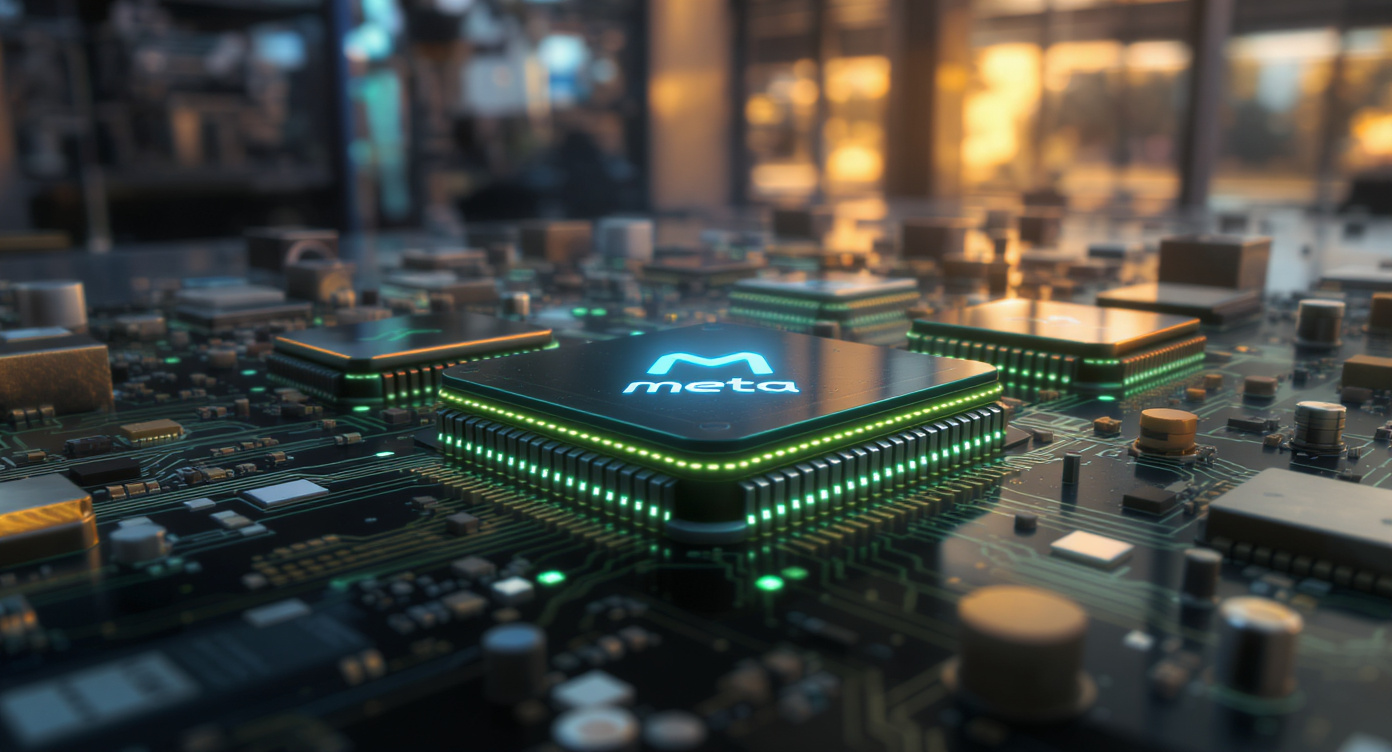
Meta’s approach to AI chip development centers around their Training and Inference Accelerator (TIA) architecture, specifically designed to handle the company’s massive machine learning workloads. Unlike general-purpose GPUs, these chips are optimized for Meta’s specific AI applications, including computer vision, natural language processing, and recommendation algorithms that power their social media platforms.
The company’s latest generation of AI chips incorporates several groundbreaking features that set them apart from traditional solutions. Advanced memory architecture allows for significantly faster data throughput, while specialized tensor processing units handle matrix operations more efficiently than conventional processors. These improvements translate to measurable performance gains in real-world applications.
What makes Meta’s chips particularly noteworthy is their energy efficiency profile. Early benchmarks suggest these processors can deliver comparable performance to high-end NVIDIA GPUs while consuming 30-40% less power. This efficiency advantage becomes crucial when operating data centers at Meta’s scale, where energy costs represent a substantial portion of operational expenses.
The development timeline reveals Meta’s long-term commitment to this technology. The company has invested over $4 billion in chip development over the past three years, establishing partnerships with leading semiconductor manufacturers and recruiting top talent from established players in the industry. This sustained investment is now materializing into tangible products that can compete directly with market incumbents.
Custom instruction sets represent another significant innovation in Meta’s chip design. By tailoring the processor’s fundamental operations to match their specific AI algorithms, Meta has achieved performance improvements that would be impossible with off-the-shelf solutions. This level of customization allows for optimizations at the hardware level that complement their software architecture.
How This Impacts NVIDIA’s Market Position
NVIDIA’s dominance in the AI chip market has been built on several key advantages: superior software ecosystems, established developer relationships, and consistent performance leadership. However, Meta’s breakthrough challenges each of these pillars in meaningful ways.
The software ecosystem advantage that NVIDIA has cultivated through CUDA is being challenged by Meta’s open-source approach to their development tools. By making their AI chip programming interfaces freely available, Meta is lowering the barrier to entry for developers who might otherwise default to NVIDIA solutions. This strategy mirrors successful open-source initiatives that have disrupted established proprietary platforms.
Performance benchmarks tell a compelling story about the shifting competitive landscape. In specific workloads that mirror Meta’s production environment, their custom chips are demonstrating 20-50% performance improvements over comparable NVIDIA hardware. While these gains are currently limited to Meta’s specific use cases, the underlying architecture suggests broader applications are possible.
The cost structure implications cannot be overlooked. NVIDIA’s premium pricing strategy, while justified by their market position, becomes vulnerable when customers have viable alternatives. Meta’s chips, produced at scale for their own use, demonstrate a cost model that other large tech companies are likely studying closely. This could pressure NVIDIA to reconsider their pricing approach, particularly for high-volume customers.
Supply chain diversification has become a critical concern for major technology companies. NVIDIA’s market dominance means that supply constraints or geopolitical issues affecting their production could impact the entire AI industry. Meta’s success in developing alternative solutions provides a template for other companies seeking to reduce their dependence on a single supplier.
Market analysts are already noting shifts in investor sentiment regarding NVIDIA’s long-term prospects. While the company remains dominant, Meta’s breakthrough demonstrates that technological moats in the semiconductor industry are not insurmountable. This realization is prompting more realistic valuations and increased scrutiny of NVIDIA’s competitive positioning.
Industry-Wide Implications and Market Dynamics
The ripple effects of Meta’s AI chip breakthrough extend throughout the technology industry, influencing everything from cloud computing strategies to startup funding decisions. Major cloud providers are reevaluating their hardware procurement strategies, considering whether custom silicon development makes sense for their specific workloads.
Amazon’s success with their Graviton processors for general computing workloads has demonstrated the viability of custom chip development for large-scale operators. Meta’s AI-focused approach takes this concept further, showing that even highly specialized workloads can benefit from purpose-built hardware solutions. This trend suggests we may see similar initiatives from Google, Microsoft, and other major technology companies.
The startup ecosystem is also responding to these market dynamics. Venture capital funding for AI chip startups has increased significantly, as investors recognize that NVIDIA’s dominance may be more fragile than previously assumed. Companies developing specialized AI processors for specific applications are finding it easier to secure funding and partnerships.
Manufacturing partnerships are becoming increasingly strategic as demand for custom AI chips grows. Taiwan Semiconductor Manufacturing Company (TSMC) and other foundries are expanding their capacity to serve customers beyond traditional chip companies. This diversification of the supply chain creates opportunities for innovation while reducing systemic risks associated with concentrated production.
The geopolitical dimension adds another layer of complexity to these market dynamics. As AI technology becomes increasingly important for national competitiveness, countries are investing in domestic semiconductor capabilities. Meta’s breakthrough demonstrates that American companies can develop alternatives to established players, potentially reducing dependence on any single supplier or manufacturing location.
Enterprise adoption patterns are likely to evolve as more AI chip options become available. Companies that previously had no choice but to use NVIDIA solutions for their AI workloads now have examples of successful alternatives. This could lead to more competitive procurement processes and better outcomes for end users.
Strategic Considerations for Businesses and Investors
The emergence of viable alternatives to NVIDIA’s AI chips creates both opportunities and challenges for businesses across various sectors. Companies developing AI applications must now consider a broader range of hardware options, each with distinct advantages and limitations.
Technology decision makers should evaluate their current AI infrastructure strategies in light of these developments. Organizations heavily invested in NVIDIA’s ecosystem may want to assess the costs and benefits of diversifying their hardware suppliers. While switching costs can be significant, the potential for improved performance and reduced expenses may justify exploration of alternatives.
Investment strategies in the semiconductor sector require recalibration as market dynamics shift. NVIDIA’s stock has benefited tremendously from their AI market dominance, but Meta’s breakthrough suggests that this premium may not be sustainable long-term. Diversified exposure to multiple AI chip companies may provide better risk-adjusted returns as competition intensifies.
Startup companies in the AI space should consider how hardware choices impact their scalability and cost structure. Access to more diverse and potentially cost-effective AI processing options could enable business models that weren’t previously viable. Early adoption of emerging AI chip technologies could provide competitive advantages for agile organizations.
Supply chain planning becomes more complex but potentially more resilient as the AI chip market diversifies. Companies should develop relationships with multiple hardware suppliers to avoid disruptions and maintain negotiating leverage. Understanding the capabilities and limitations of different AI chip architectures will be crucial for making informed procurement decisions.
Research and development priorities may need adjustment as the AI hardware landscape evolves. Software architectures optimized for specific chip designs could provide significant performance advantages. Organizations should consider how their development strategies align with emerging hardware trends and opportunities.
The race for AI chip supremacy is far from over, and Meta’s breakthrough represents just the beginning of what promises to be an intensely competitive period. As more companies recognize the strategic importance of controlling their AI infrastructure, we can expect continued innovation and market disruption.
What specific AI applications in your industry could benefit most from specialized chip architectures, and how might you evaluate the trade-offs between established solutions and emerging alternatives?


Comments