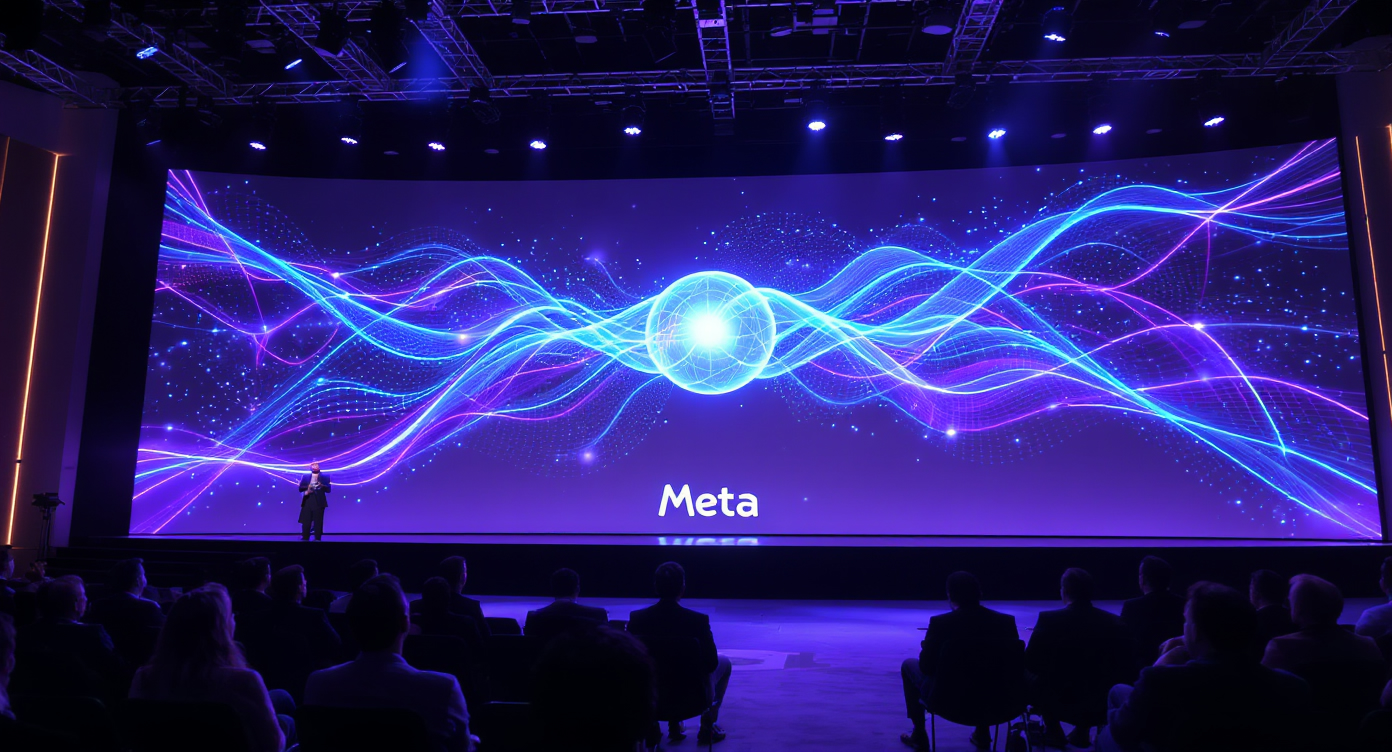
The artificial intelligence landscape has been dramatically reshaped once again with Meta’s announcement of Llama 4, a groundbreaking large language model that promises to intensify competition among tech giants and reshape how businesses approach AI integration. This latest iteration represents not just an incremental improvement, but a significant leap forward that could fundamentally alter the dynamics of the AI market.
Meta’s strategic decision to launch Llama 4 comes at a critical juncture when enterprise adoption of AI technologies is accelerating rapidly. Unlike its predecessors, Llama 4 introduces revolutionary capabilities that directly challenge established players like OpenAI’s GPT series, Google’s Gemini, and Anthropic’s Claude. The timing couldn’t be more significant, as organizations worldwide are actively seeking more sophisticated, cost-effective AI solutions to drive their digital transformation initiatives.
The new model showcases remarkable improvements in reasoning capabilities, multimodal understanding, and efficiency metrics that set new industry benchmarks. Early testing reveals that Llama 4 can process complex queries with unprecedented accuracy while maintaining computational efficiency that makes it accessible to a broader range of organizations. This accessibility factor is particularly crucial as it democratizes advanced AI capabilities beyond tech giants with unlimited budgets.
Revolutionary Features Driving Market Disruption
Llama 4’s architecture incorporates several breakthrough technologies that distinguish it from existing models in the market. The most notable advancement lies in its enhanced reasoning capabilities, which demonstrate superior performance in logical problem-solving, mathematical computations, and multi-step analytical tasks. This improvement addresses one of the most significant limitations of previous generations of language models.
The model’s multimodal capabilities represent another quantum leap forward. Unlike earlier versions that primarily focused on text processing, Llama 4 seamlessly integrates text, image, audio, and video understanding within a unified framework. This holistic approach enables more natural and intuitive human-AI interactions, opening up possibilities for applications that were previously technically unfeasible or economically impractical.
Perhaps most importantly for enterprise adoption, Llama 4 introduces advanced customization features that allow organizations to fine-tune the model for specific industry requirements without compromising security or performance. This flexibility addresses long-standing concerns about generic AI solutions that don’t adequately serve specialized business needs.
The model also incorporates improved safety measures and bias reduction mechanisms, reflecting Meta’s response to growing regulatory scrutiny and ethical considerations surrounding AI deployment. These enhancements include more sophisticated content filtering, better handling of sensitive topics, and improved transparency in decision-making processes.
Energy efficiency represents another critical advancement, with Llama 4 requiring significantly less computational power than comparable models. This improvement not only reduces operational costs but also aligns with growing corporate sustainability initiatives, making AI adoption more environmentally responsible.
Competitive Landscape Transformation
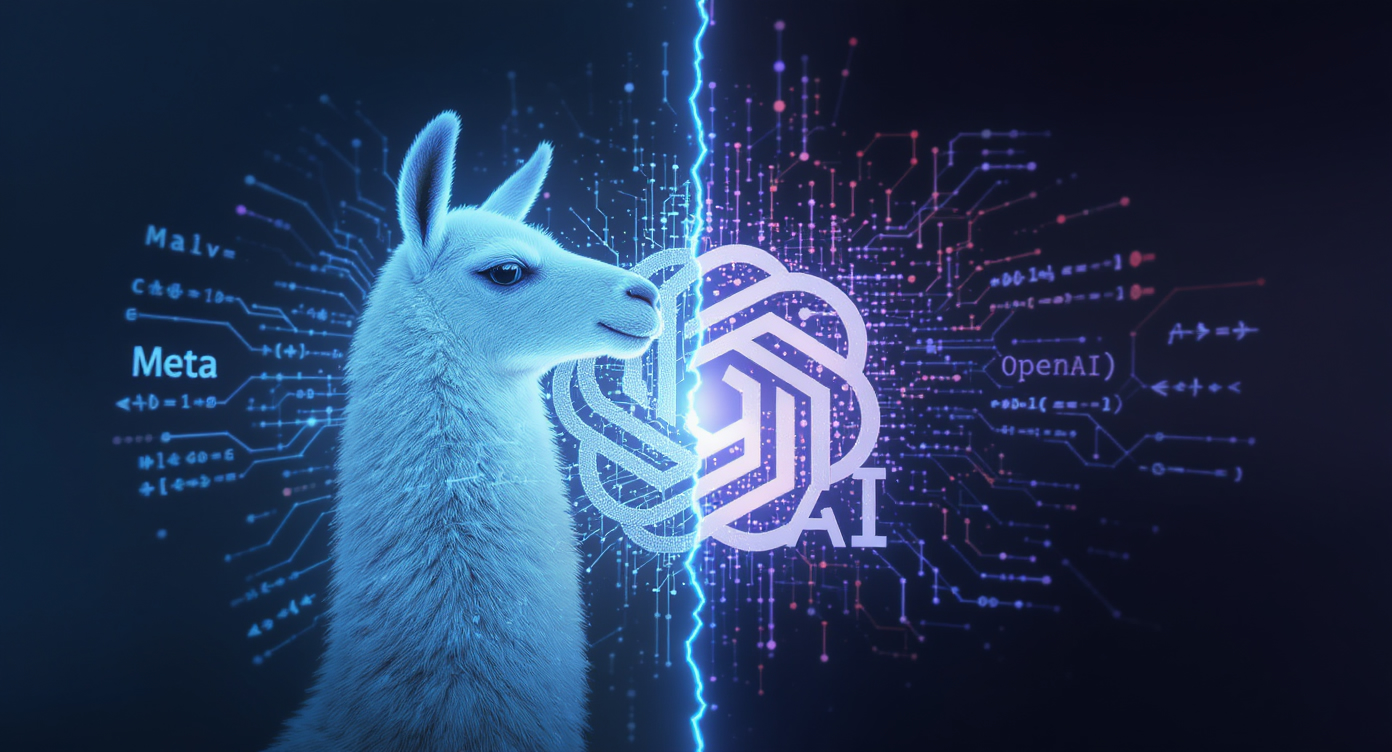
The launch of Llama 4 has sent ripples throughout the AI industry, forcing competitors to reassess their strategies and accelerate their own development timelines. OpenAI, which has maintained market leadership with its GPT series, now faces its most formidable challenger yet. The competitive pressure is evident in the rapid succession of announcements from various AI companies, each attempting to demonstrate their technological superiority.
Google’s response has been particularly swift, with rumors of significant enhancements to their Gemini platform aimed at maintaining competitive parity. The company’s vast resources and integration with existing cloud infrastructure provide them with unique advantages, but Llama 4’s open-source approach presents a different value proposition that appeals to organizations prioritizing flexibility and control.
Anthropic has positioned Claude as the safety-focused alternative, emphasizing constitutional AI principles and responsible deployment practices. However, Llama 4’s improved safety features challenge this differentiation strategy, forcing Anthropic to explore new avenues for competitive advantage.
The competitive dynamics extend beyond established players to include emerging companies and research institutions. Smaller AI companies are now faced with the challenge of differentiating themselves in a market where access to state-of-the-art capabilities is becoming increasingly democratized through open-source initiatives.
This intensified competition benefits end users through accelerated innovation cycles, more competitive pricing, and improved service offerings. Organizations now have access to multiple high-quality options, enabling them to select solutions that best align with their specific requirements and constraints.
Practical Implementation Strategies for Businesses
Organizations considering Llama 4 adoption should approach implementation strategically, recognizing both the opportunities and challenges associated with deploying cutting-edge AI technology. The first step involves conducting a comprehensive assessment of existing AI capabilities and identifying specific use cases where Llama 4’s advanced features can deliver measurable value.
Customer service automation represents one of the most immediate applications, where Llama 4’s improved conversational abilities and multimodal understanding can significantly enhance user experiences. Companies can leverage the model’s ability to process text, images, and audio simultaneously to create more intuitive support systems that resolve complex issues more effectively.
Content creation and marketing teams can harness Llama 4’s enhanced creativity and reasoning capabilities to produce more sophisticated, targeted content at scale. The model’s ability to understand nuanced brand guidelines and adapt tone and style accordingly makes it particularly valuable for maintaining consistency across diverse communication channels.
Data analysis and business intelligence applications showcase another area where Llama 4’s advanced reasoning capabilities shine. Organizations can employ the model to identify patterns, generate insights, and create actionable recommendations from complex datasets that would require significant manual analysis using traditional methods.
Implementation success requires careful attention to data governance, security protocols, and change management processes. Organizations must establish clear guidelines for AI usage, ensure compliance with relevant regulations, and provide adequate training to employees who will interact with the system.
The integration process should be approached incrementally, starting with pilot programs that allow for controlled testing and refinement before full-scale deployment. This approach minimizes risks while providing opportunities to optimize configurations for specific organizational needs.
Future Implications and Industry Evolution
The launch of Llama 4 marks a pivotal moment in AI evolution, signaling a shift toward more sophisticated, accessible, and specialized artificial intelligence solutions. This development suggests that the future AI landscape will be characterized by fierce competition, rapid innovation cycles, and increasing democratization of advanced capabilities.
The open-source nature of Meta’s approach has profound implications for the broader AI ecosystem. By making advanced AI capabilities more accessible, Meta is effectively lowering barriers to entry for smaller companies and research institutions while challenging the proprietary model strategies of competitors. This approach could accelerate overall AI advancement by enabling broader participation in research and development activities.
The competitive pressure created by Llama 4 will likely drive significant improvements across all AI platforms, benefiting users through enhanced capabilities, better pricing, and more diverse solution options. We can expect to see more frequent model releases, increased specialization for specific use cases, and greater emphasis on practical business applications.
Regulatory considerations will become increasingly important as AI capabilities advance. The enhanced performance of models like Llama 4 will likely prompt more comprehensive regulatory frameworks, requiring organizations to balance innovation with compliance requirements.
The economic implications extend beyond the technology sector, as improved AI capabilities enable new business models, transform existing industries, and create opportunities for competitive advantage. Organizations that effectively leverage these advanced AI capabilities will likely gain significant advantages over those that delay adoption.
Looking ahead, we can anticipate continued convergence between different AI modalities, with future models providing even more seamless integration of text, visual, and audio processing capabilities. This evolution will enable more natural human-AI interactions and unlock applications that are currently difficult to imagine.
Meta’s Llama 4 launch represents more than just another AI model release – it’s a catalyst for industry-wide transformation that will reshape competitive dynamics and accelerate innovation across the artificial intelligence landscape. As organizations navigate this evolving environment, success will depend on strategic thinking, careful implementation, and the ability to adapt to rapidly changing technological capabilities.
How is your organization preparing to leverage the new competitive AI landscape, and what specific capabilities are you most eager to explore with advanced models like Llama 4?


Comments