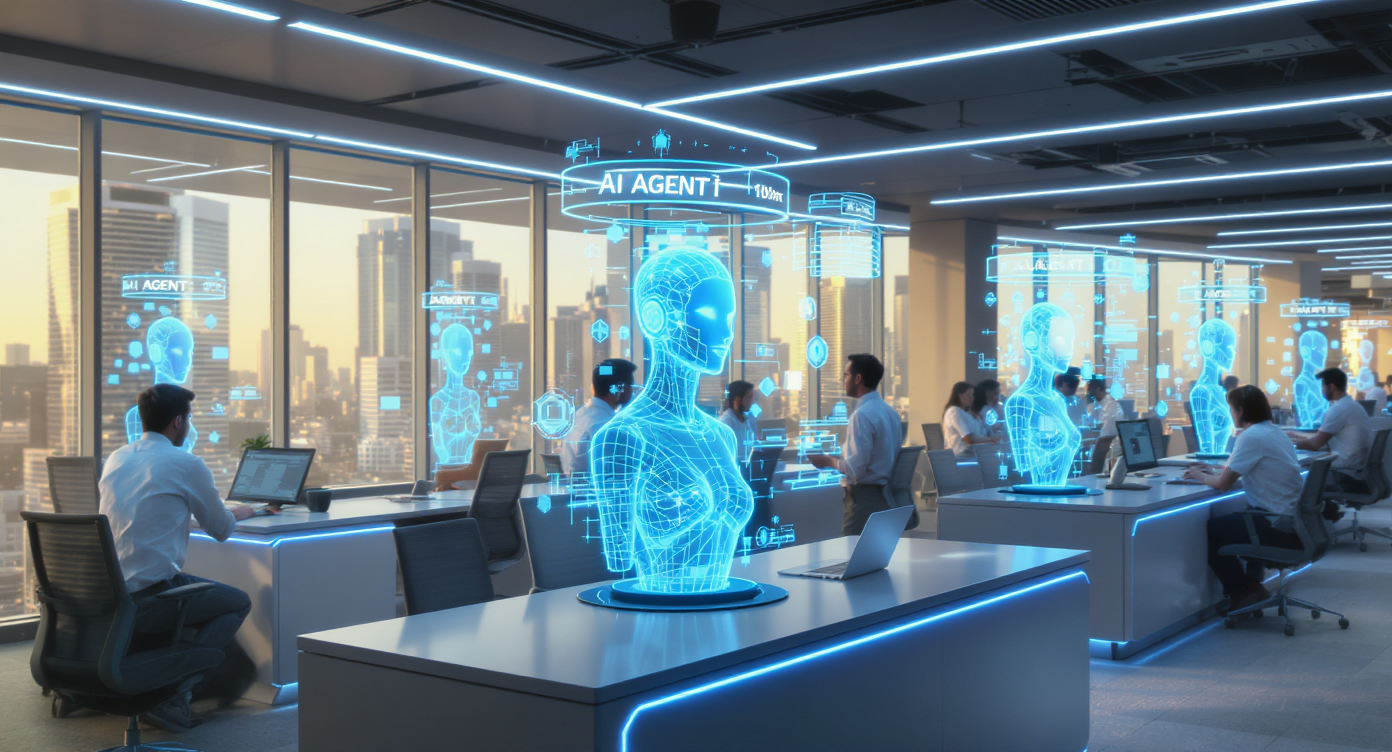
The customer service landscape has undergone a dramatic transformation in 2026, with artificial intelligence agents now handling an unprecedented 40% of all customer service calls. This milestone represents more than just a technological achievement—it signals a fundamental shift in how businesses interact with their customers and manage support operations.
This surge in AI adoption wasn’t sudden. Companies worldwide have been steadily integrating AI agents into their customer service ecosystems, driven by advances in natural language processing, machine learning, and conversational AI. The result? A new era where AI agents seamlessly handle complex customer inquiries, resolve issues in real-time, and deliver personalized experiences that often exceed human capabilities.
The implications of this shift extend far beyond simple cost savings. Organizations leveraging AI agents report significant improvements in customer satisfaction scores, reduced wait times, and the ability to provide 24/7 support across multiple languages and time zones. Meanwhile, human agents are being repositioned to handle more complex, emotionally nuanced interactions that require empathy and creative problem-solving.
The Technology Behind the Revolution
Modern AI customer service agents bear little resemblance to the rigid chatbots of the past. Today’s systems leverage sophisticated large language models (LLMs) trained on vast datasets of customer interactions, product information, and industry-specific knowledge. These AI agents can understand context, detect emotional undertones, and adapt their communication style to match customer preferences.
The breakthrough came through the integration of several key technologies. Natural Language Understanding (NLU) enables AI agents to comprehend customer intent even when expressed in colloquial language or with grammatical errors. Advanced sentiment analysis helps these systems recognize when customers are frustrated, excited, or confused, allowing for appropriate response adjustments.
Voice recognition technology has reached near-human accuracy levels, while real-time language translation capabilities allow single AI agents to serve customers across multiple languages without delay. Perhaps most importantly, these systems now feature dynamic learning capabilities, continuously improving their responses based on successful interaction patterns and customer feedback.
Integration with existing business systems has become seamless. AI agents can access customer histories, inventory databases, billing systems, and knowledge bases in milliseconds, providing comprehensive support without the need to transfer customers between departments. This level of integration enables what experts call “single-touch resolution”—the ability to completely resolve customer issues in one interaction.
Transforming Customer Experience and Satisfaction
The impact on customer experience has been overwhelmingly positive, with businesses reporting customer satisfaction scores increasing by an average of 23% since implementing advanced AI agents. The reasons behind this improvement are multifaceted and reveal the true potential of well-implemented AI customer service.
Immediate availability stands out as the most appreciated benefit. Customers no longer face lengthy hold times or restricted service hours. AI agents provide instant responses 24/7, 365 days a year, eliminating the frustration associated with waiting for human agents during peak periods or outside business hours.
Consistency in service quality has also improved dramatically. While human agents might have varying knowledge levels or experience bad days affecting their performance, AI agents deliver consistent, accurate information every time. They don’t forget procedures, misremember policies, or provide conflicting information to different customers with similar issues.
The personalization capabilities of modern AI agents have surprised even skeptical customers. These systems analyze customer history, preferences, and previous interactions to tailor their approach. For instance, an AI agent might remember that a customer prefers detailed technical explanations over simplified summaries, or that they’ve had recent billing issues that might be related to their current inquiry.
Speed of resolution has improved significantly. AI agents can simultaneously access multiple databases, cross-reference information, and provide comprehensive solutions in seconds rather than minutes. Complex tasks like policy explanations, account updates, and troubleshooting procedures that once required multiple steps and potential transfers are now handled seamlessly by single AI agents.
Customer feedback indicates growing comfort and even preference for AI agents in many scenarios. Survey data shows that 78% of customers report being satisfied with AI-handled interactions, with many noting they couldn’t distinguish between AI and human agents during their calls.
Business Impact and Operational Benefits
The operational transformation brought by AI agents extends well beyond customer-facing improvements. Organizations implementing these systems report substantial changes in their cost structures, operational efficiency, and strategic capabilities.
Cost reduction remains a primary driver, with companies achieving average savings of 35-40% in customer service operational costs. These savings come not just from reduced human staffing needs, but from decreased training costs, lower error rates, and reduced need for supervisory oversight. AI agents don’t require sick days, vacation time, or continuous training on new procedures.
The scalability benefits have proven invaluable, particularly for businesses experiencing rapid growth or seasonal fluctuations. AI agents can handle unlimited simultaneous conversations without degradation in service quality. During peak periods that would traditionally require hiring temporary staff or accepting longer wait times, AI systems simply scale up their processing capacity.
Data collection and analysis capabilities have become an unexpected strategic advantage. AI agents automatically capture and analyze every customer interaction, providing businesses with unprecedented insights into customer needs, pain points, and preferences. This data drives product improvements, policy changes, and strategic decisions with a level of detail impossible to achieve with human agents alone.
Quality assurance has been revolutionized. While monitoring and evaluating human agent performance requires significant time and resources, AI agent performance can be monitored continuously and automatically. Every interaction is recorded, analyzed, and scored, providing real-time feedback for system improvements.
Human resource allocation has become more strategic. With AI handling routine inquiries, human agents focus on complex problem-solving, relationship building, and high-value customer interactions. This shift has led to higher job satisfaction among human agents and improved career development opportunities within customer service organizations.
The multilingual capabilities of AI agents have enabled businesses to expand into new markets without the complexity and cost of hiring and training native speakers. A single AI system can provide consistent service across dozens of languages, removing geographical barriers to customer support.
The Future Landscape and Strategic Considerations
As we look beyond 2026, the trajectory suggests AI agents will handle an even larger percentage of customer service interactions, potentially reaching 60-70% by 2028. However, this growth will be accompanied by increasingly sophisticated capabilities and new strategic considerations for businesses.
Emotional intelligence in AI agents continues advancing rapidly. Future systems will better recognize and respond to complex emotional states, potentially matching or exceeding human empathy in many situations. Research indicates that customers often prefer the non-judgmental, patient nature of AI agents for sensitive topics like billing disputes or service complaints.
Integration with emerging technologies promises to expand AI agent capabilities further. Augmented reality (AR) integration will enable visual troubleshooting, while Internet of Things (IoT) connectivity will allow AI agents to directly diagnose and potentially resolve device issues remotely.
The regulatory landscape is evolving to address AI in customer service. New guidelines focus on transparency requirements, ensuring customers know when they’re interacting with AI agents, and maintaining options for human escalation when requested. Progressive companies are already implementing these practices proactively.
Hybrid models are emerging as the optimal approach for most organizations. Rather than complete replacement of human agents, successful companies are developing sophisticated routing systems that automatically direct interactions to either AI or human agents based on complexity, emotional content, and customer preferences.
Training and development for human agents is shifting toward specialization in areas where human skills remain superior: complex problem-solving, emotional support, relationship building, and handling unusual situations requiring creativity and judgment.
The competitive landscape is increasingly divided between companies that have successfully implemented AI agents and those still relying on traditional models. Early adopters report significant competitive advantages in customer acquisition and retention, while companies slower to adopt risk falling behind in customer experience expectations.
As AI agents continue reshaping customer service, the question isn’t whether to adopt this technology, but how quickly and effectively organizations can implement it. The 40% milestone reached in 2026 represents just the beginning of this transformation.
How is your organization preparing for a future where AI agents become the primary interface between your business and your customers?



Comments