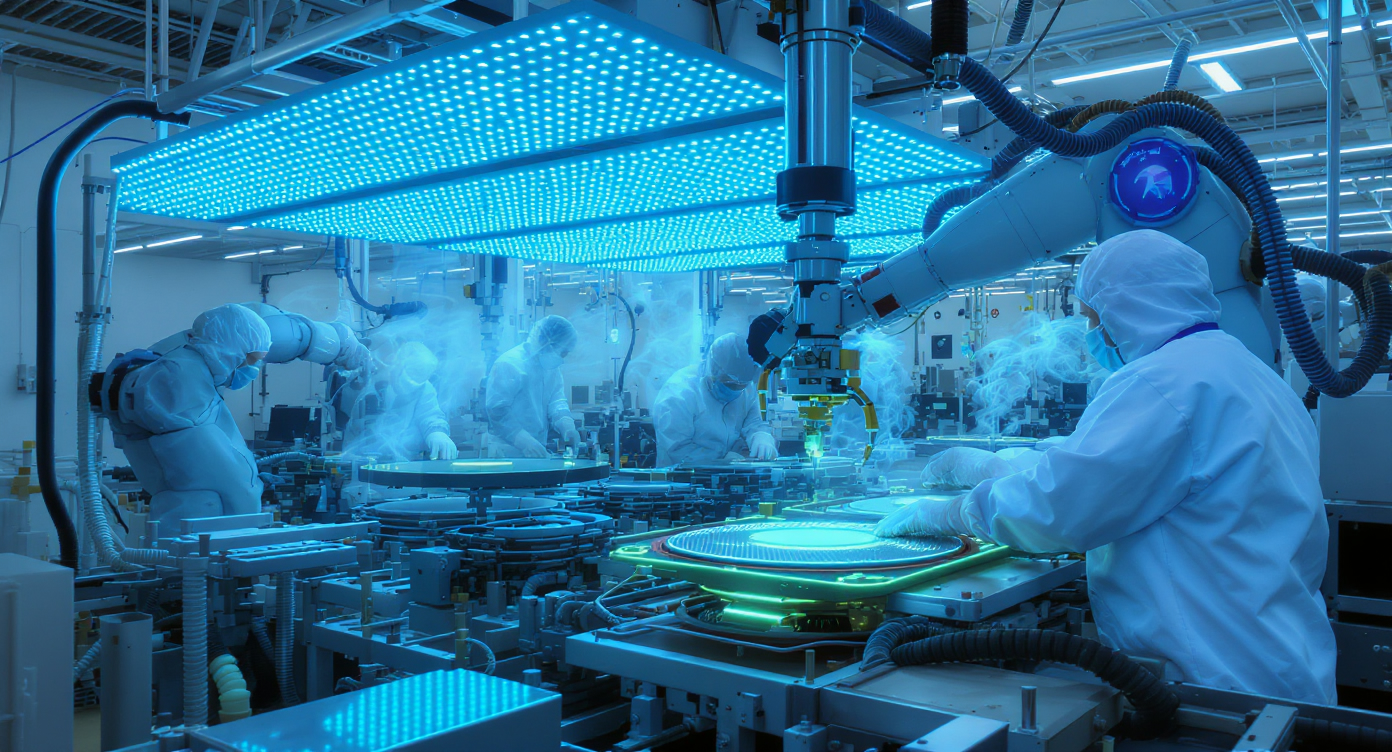
The artificial intelligence revolution is hitting an unexpected roadblock: a severe shortage of the specialized chips that power everything from ChatGPT to autonomous vehicles. As businesses and governments rush to implement AI solutions, semiconductor manufacturers are struggling to keep pace with unprecedented demand, creating a supply chain crisis that’s reshaping the entire tech industry.
The current shortage isn’t just about any computer chips—it’s specifically about the highly sophisticated processors designed for AI workloads. These aren’t your typical smartphone chips; they’re complex pieces of silicon that require months to design, validate, and manufacture. The perfect storm of surging AI adoption, geopolitical tensions, and manufacturing bottlenecks has created a supply crunch that industry experts predict could last well into 2025.
Leading AI companies like OpenAI, Google, and Microsoft are finding themselves in bidding wars for chip capacity, with some orders stretching delivery times to over a year. This scarcity is forcing companies to rethink their AI strategies, prioritize projects more carefully, and explore alternative solutions they might never have considered during times of abundant supply.
The Perfect Storm: What’s Driving the AI Chip Crisis
The root causes of this supply shortage run deeper than simple demand exceeding supply. The AI chip market is experiencing what economists call a “super-cycle”—a period of sustained, above-normal demand driven by fundamental technological shifts.
Explosive AI Adoption Across Industries
The launch of ChatGPT in late 2022 triggered an AI arms race that caught even seasoned tech veterans off guard. Companies across every sector—from healthcare and finance to retail and manufacturing—suddenly realized they needed AI capabilities to remain competitive. This wasn’t a gradual adoption curve; it was more like a switch being flipped overnight.
Consider the numbers: OpenAI’s GPT models require thousands of specialized chips just to run inference (generating responses to user queries), and training new models demands tens of thousands more. Multiply this across hundreds of AI companies and thousands of enterprises building their own models, and the scale becomes staggering.
Geopolitical Tensions Complicate Supply Chains
The ongoing technology trade disputes between the United States and China have added another layer of complexity to chip supply chains. Export restrictions on advanced semiconductors have limited where AI chips can be manufactured and sold, while also spurring countries to build domestic chip production capabilities—further straining global manufacturing capacity.
These restrictions have particularly impacted the supply of Graphics Processing Units (GPUs) and specialized AI accelerators, which are primarily manufactured by a handful of companies using cutting-edge fabrication processes available at only a few foundries worldwide.
Manufacturing Bottlenecks at Advanced Nodes
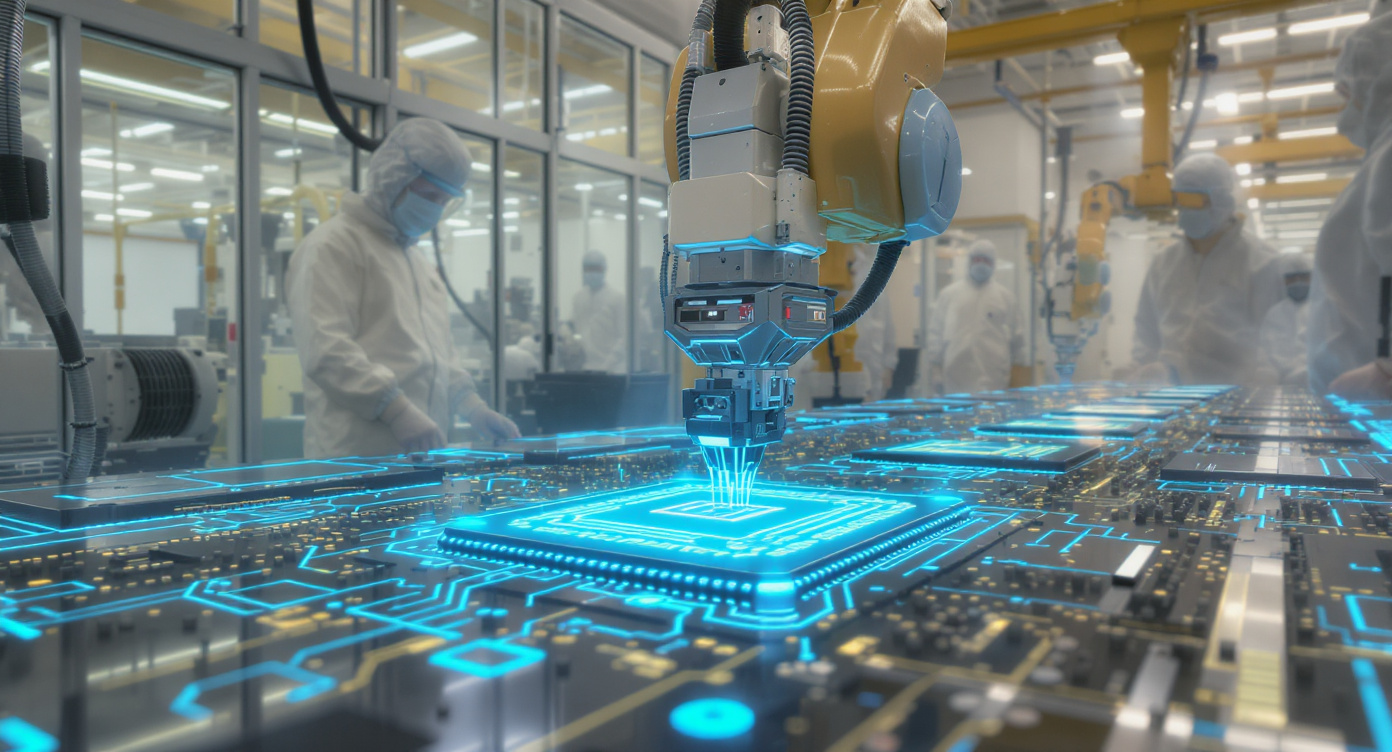
The most capable AI chips require the most advanced manufacturing processes—typically 7-nanometer, 5-nanometer, or even 3-nanometer fabrication nodes. Only a few foundries globally, led by Taiwan Semiconductor Manufacturing Company (TSMC), possess the technology and capacity to produce these chips at scale.
This creates a natural bottleneck: even if chip designers could create unlimited designs overnight, the physical manufacturing capacity simply doesn’t exist to produce them quickly. Building new advanced fabrication facilities takes 3-5 years and costs upward of $20 billion each.
Winners and Losers in the AI Chip Supply Crunch
The supply shortage isn’t affecting all players equally. Some companies are thriving in this constrained environment, while others are struggling to execute their AI strategies.
The Big Tech Advantage
Large technology companies with existing relationships with chip manufacturers and deep pockets are securing the lion’s share of available capacity. Google, Microsoft, Amazon, and Meta have been placing massive orders for AI chips, sometimes committing to purchase billions of dollars worth of processors years in advance.
These companies also have another significant advantage: they’re developing their own custom AI chips. Google’s Tensor Processing Units (TPUs), Amazon’s Inferentia chips, and similar custom silicon allow these tech giants to reduce their dependence on the merchant chip market while optimizing performance for their specific workloads.
Startups and Mid-Market Companies Struggle
Smaller AI companies and mid-market enterprises face a much tougher situation. Without the purchasing power or supplier relationships of tech giants, they’re often relegated to longer wait times and higher prices. Some startups are reporting chip procurement costs that represent 60-70% of their total operational expenses—a unsustainable situation that’s forcing many to seek additional funding or scale back their ambitions.
This dynamic is creating a competitive moat around established players and potentially stifling innovation in the AI sector. When access to compute resources becomes the limiting factor rather than talent or ideas, it fundamentally changes the startup ecosystem.
Cloud Providers Emerge as Kingmakers
The chip shortage has elevated cloud computing providers to a new level of importance in the AI ecosystem. Rather than purchasing their own hardware, many companies are turning to AWS, Google Cloud, Microsoft Azure, and other providers to access AI computing resources.
This shift is creating intense competition among cloud providers to secure chip inventory, as their ability to offer AI services depends entirely on their hardware procurement success. It’s also leading to innovative pricing models and capacity reservation systems that would have seemed unnecessary just a few years ago.
Industry Responses and Adaptation Strategies
Faced with this supply constraint, the AI industry isn’t sitting idle. Companies are implementing creative strategies to maximize their use of available chips while chip manufacturers are racing to expand capacity.
Optimization and Efficiency Improvements
Software optimization has become a critical competitive advantage when hardware is scarce. AI companies are investing heavily in making their models more efficient, developing techniques like model compression, quantization, and pruning to reduce the computational requirements of their applications.
Some companies report achieving 2-3x efficiency improvements through software optimization alone, effectively multiplying their available compute capacity without acquiring additional hardware. These improvements often involve trade-offs in model accuracy or capability, but they’re allowing companies to serve more users with the same hardware resources.
Alternative Chip Architectures Gain Traction
The shortage of traditional AI chips is driving interest in alternative architectures that were previously considered niche. Field-Programmable Gate Arrays (FPGAs), specialized neuromorphic chips, and even quantum processing units are receiving renewed attention as companies explore every available option.
While these alternatives often require significant software development investment and may not match the performance of purpose-built AI chips, they’re providing lifelines for companies that would otherwise have no access to adequate computing resources.
Supply Chain Diversification Efforts
Companies are also working to diversify their supply chains to reduce dependence on any single supplier or geographic region. This includes investigating emerging chip manufacturers, exploring partnerships with foundries in different countries, and even considering older-generation chips that might be more readily available.
Some organizations are also implementing more sophisticated inventory management systems, treating chip procurement more like a strategic resource planning exercise than a simple purchasing decision.
Looking Ahead: Long-Term Implications for the AI Industry
The current supply chain crisis is more than a temporary inconvenience—it’s fundamentally reshaping how the AI industry operates and may have lasting effects on innovation and competition.
Structural Changes in AI Development
The scarcity of computing resources is forcing AI researchers and engineers to be more thoughtful about their approach to model development. Instead of simply throwing more computational power at problems, teams are focusing on architectural innovations, training efficiency, and model optimization from the ground up.
This constraint-driven innovation mirrors historical periods in computing where hardware limitations led to breakthrough software techniques. The demoscene of the 1980s and 1990s, where programmers created impressive graphics and music within severe memory and processing constraints, offers a parallel for how limitations can spur creativity.
Investment in Manufacturing Capacity
The crisis has also triggered massive investments in chip manufacturing capacity worldwide. The U.S. CHIPS Act, European Chips Act, and similar initiatives in other countries are directing hundreds of billions of dollars toward building domestic semiconductor manufacturing capabilities.
While these investments won’t solve the immediate shortage, they’re laying the groundwork for a more resilient supply chain in the coming decade. However, the complexity and time required to build advanced chip fabrication facilities means relief is still years away.
Evolution of Business Models
The supply constraint is accelerating the adoption of new business models in the AI industry. Chip-as-a-Service offerings, where companies pay for computational cycles rather than purchasing hardware, are becoming more common. This model allows more efficient utilization of scarce resources while providing predictable revenue streams for hardware providers.
Similarly, we’re seeing the emergence of specialized AI infrastructure companies that focus solely on procuring and managing chip resources for other businesses, creating a new layer in the technology stack.
The AI chip supply crisis represents both a significant challenge and a catalyst for innovation in the technology industry. Companies that successfully navigate this constraint through optimization, strategic partnerships, and creative resource allocation will likely emerge stronger and more efficient. Meanwhile, the massive investments being made in manufacturing capacity and alternative technologies today will shape the competitive landscape for years to come.
As the industry adapts to this new reality, one thing is clear: the companies and countries that secure reliable access to AI computing resources will have a significant advantage in the next phase of technological development.
What strategies is your organization implementing to address the AI chip shortage, and how do you think this crisis will ultimately reshape the technology landscape?
Comments