
The artificial intelligence revolution has hit an unexpected roadblock as Q1 2026 draws to a close. Major technology companies and research institutions worldwide are grappling with severe AI chip shortages that have forced delays in critical machine learning projects, reshaping timelines and forcing organizations to reassess their AI strategies.
From Fortune 500 companies to cutting-edge startups, the semiconductor supply crunch has created a domino effect across the industry. This shortage isn’t just about delayed product launches—it’s fundamentally altering how organizations approach AI development, deployment, and resource allocation in an increasingly competitive landscape.
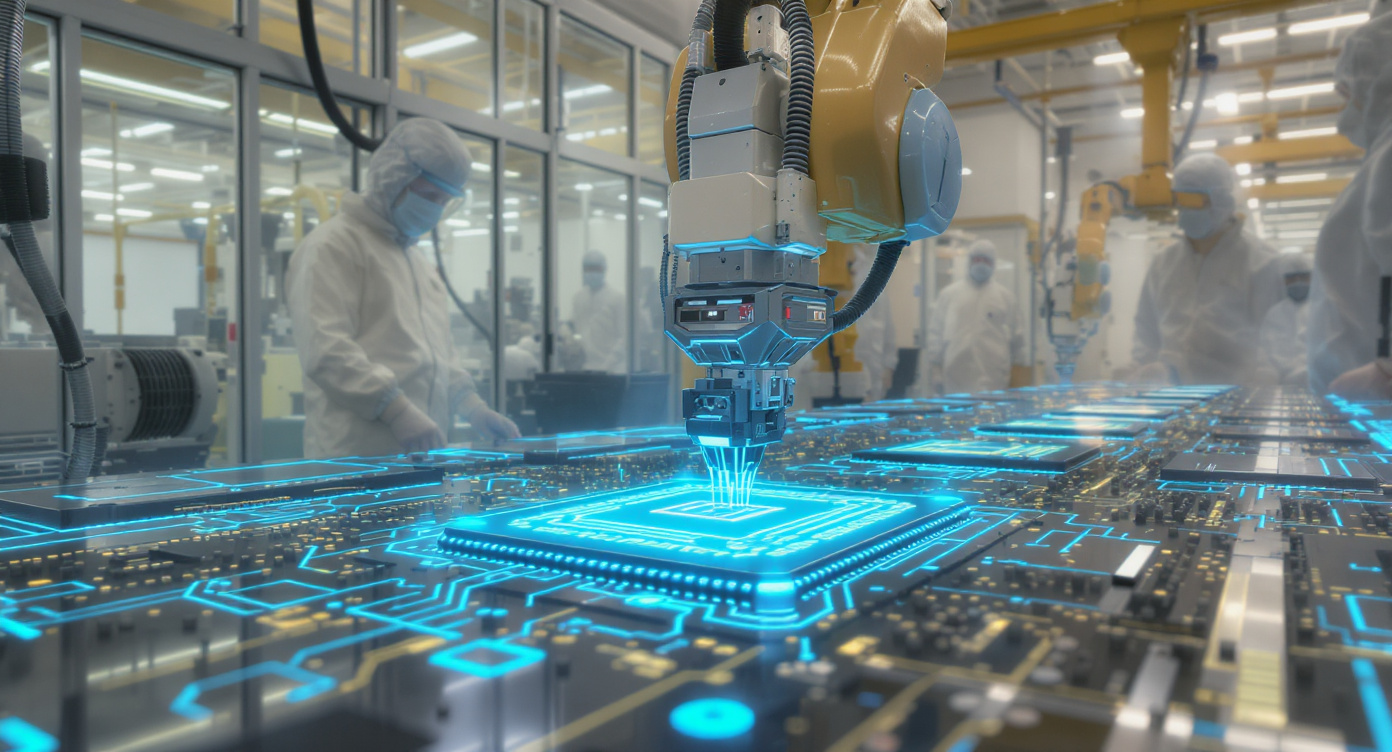
The semiconductor industry has been riding a wave of unprecedented demand for specialized AI processors, including Graphics Processing Units (GPUs), Tensor Processing Units (TPUs), and custom Application-Specific Integrated Circuits (ASICs). However, the manufacturing capacity simply cannot keep pace with the explosive growth in AI applications across industries.
Several high-profile tech giants have publicly acknowledged project delays, with some pushing back major AI model releases by 6-12 months. Research institutions that had planned groundbreaking studies in areas like climate modeling, drug discovery, and autonomous systems are now scrambling to secure alternative computing resources or fundamentally restructure their approaches.
Root Causes Behind the AI Chip Crisis
The current shortage stems from a perfect storm of interconnected factors that have been building over the past two years. Exponential demand growth represents the primary catalyst, with AI workloads increasing at an unprecedented rate across virtually every sector of the economy.
The rise of large language models and generative AI applications has created insatiable appetite for computational power. Each new generation of AI models requires exponentially more processing capability, with some of the latest multimodal systems demanding thousands of high-end GPUs for training alone. This computational arms race has outpaced even the most optimistic supply forecasts.
Geopolitical tensions have significantly complicated the supply chain landscape. Export restrictions and trade policies between major economies have created bottlenecks in the flow of both raw materials and finished semiconductors. Many companies are being forced to diversify their supply chains, leading to further delays and increased costs.
Manufacturing constraints present another critical challenge. Building new semiconductor fabrication facilities requires enormous capital investment and typically takes 3-5 years to complete. Even with massive investments announced by major chipmakers, new production capacity won’t come online until late 2026 or 2027.
The concentration of advanced chip manufacturing in a handful of facilities worldwide has created inherent vulnerability. When a single fab experiences downtime due to technical issues, natural disasters, or other disruptions, the ripple effects impact the entire global AI ecosystem.
Quality requirements for AI chips have also intensified the bottleneck. Modern machine learning workloads demand not just raw computational power but also specific architectural features, memory bandwidth, and energy efficiency characteristics. This specialization means that general-purpose chips cannot simply substitute for AI-optimized processors.
Industry Impact and Project Delays
The ramifications of the chip shortage are reverberating across multiple sectors, with some industries feeling the impact more acutely than others. Autonomous vehicle development has been particularly hard hit, with several major automakers postponing the rollout of advanced driver assistance systems and full self-driving capabilities.
Healthcare AI initiatives, including diagnostic imaging systems and drug discovery platforms, are experiencing significant setbacks. Research hospitals and pharmaceutical companies report delays of 8-18 months in projects that could have immediate patient impact. One major cancer research center had to postpone a breakthrough genomics study that could have accelerated personalized treatment development.
Financial services firms are struggling to deploy next-generation fraud detection and algorithmic trading systems. The competitive advantage that comes from faster, more sophisticated AI models is being delayed across the sector, potentially impacting everything from credit decisions to risk management.
The entertainment and media industry is also feeling the squeeze. Major streaming platforms have delayed advanced recommendation systems and content generation tools. Gaming companies are pushing back releases of AI-enhanced titles that rely on sophisticated real-time processing capabilities.
Cloud service providers are implementing rationing systems and priority queues for GPU access, fundamentally changing how organizations plan and budget for AI projects. Some companies are reporting 3-6 month wait times for access to the computational resources they need for model training.
Startups in the AI space face particularly acute challenges. Without the purchasing power and vendor relationships of major corporations, many smaller companies are being priced out of essential hardware or relegated to lengthy waiting lists. This dynamic threatens to consolidate AI capabilities among larger players and potentially stifle innovation.
Strategic Adaptations and Alternative Approaches
Organizations across industries are demonstrating remarkable creativity in adapting to the chip shortage, developing innovative strategies that may fundamentally change how AI projects are conceived and executed.
Model optimization has become a critical focus area. Instead of simply scaling up models with more parameters and computational requirements, teams are investing heavily in efficiency improvements. Techniques like model compression, pruning, and knowledge distillation are allowing organizations to achieve similar performance with significantly reduced hardware requirements.
Edge computing strategies are gaining renewed attention as companies look to distribute processing loads across larger numbers of less powerful devices. This approach not only reduces dependence on high-end data center chips but also improves latency and privacy characteristics for many applications.
Cloud resource sharing and flexible computing arrangements are becoming more sophisticated. Companies are forming consortiums to share expensive GPU clusters, implementing time-sharing arrangements that maximize utilization of scarce hardware resources. Some organizations are even exploring “follow the sun” training schedules that utilize compute resources across different time zones.
Alternative chip architectures are receiving increased investment and attention. Field-Programmable Gate Arrays (FPGAs) and specialized processors designed for specific AI workloads are becoming more viable options as organizations seek to reduce dependence on scarce GPU resources.
Many companies are also revisiting their AI strategies entirely, focusing on problems where smaller, more efficient models can deliver significant business value rather than pursuing cutting-edge but resource-intensive applications. This shift toward practical AI implementation may actually accelerate adoption in some sectors.
Open-source collaboration has intensified as organizations pool resources to develop shared models and tools that can benefit entire industries. This collaborative approach helps distribute both development costs and hardware requirements across multiple participants.
Future Outlook and Supply Chain Recovery
Industry analysts project that the AI chip shortage will begin to ease in late 2026, but full normalization may not occur until 2028. New manufacturing capacity coming online represents the most significant factor in eventual recovery, with several major fabs scheduled to begin production in the next 18-24 months.
Technological advances in chip design and manufacturing processes are expected to increase the effective supply even before new facilities are completed. Next-generation architectures promise significantly improved performance per chip, meaning that fewer processors will be required for equivalent computational capability.
Supply chain diversification initiatives launched in response to the current crisis should provide greater resilience against future disruptions. Companies and governments are investing in geographically distributed manufacturing capacity and alternative supplier relationships.
The development of more efficient AI algorithms and training methodologies will help reduce overall demand pressure. As the field matures, we’re likely to see more focus on practical efficiency rather than raw scale, which could moderate the exponential growth in computational requirements.
However, new challenges may emerge as AI adoption accelerates across additional industries and applications. The Internet of Things (IoT), augmented reality, and quantum computing interfaces could create entirely new categories of chip demand that are difficult to forecast.
Organizations planning AI initiatives should expect continued volatility in chip availability and pricing through at least 2027. Building flexibility into project timelines and maintaining relationships with multiple hardware suppliers will remain critical success factors.
The current shortage has already sparked innovation in areas that may have long-term positive impacts on the industry, including more efficient algorithms, better resource utilization techniques, and more sustainable approaches to AI development.
The AI chip shortage of 2026 represents both a significant challenge and a catalyst for innovation across the technology industry. While project delays are frustrating and costly, they’re also forcing organizations to think more strategically about AI implementation and develop more sustainable approaches to computational resource utilization.
Companies that successfully navigate this period by optimizing their approaches, building flexible partnerships, and focusing on practical applications will likely emerge stronger and more competitive when supply conditions normalize.
How is your organization adapting its AI strategy in response to current chip shortages, and what alternative approaches are you considering to maintain momentum on critical projects?
Comments