The global technology landscape is experiencing an unprecedented disruption as the AI chip shortage intensifies, creating ripple effects across a market now valued at over $50 billion. As we navigate through 2026, the semiconductor industry faces its most challenging period yet, with demand for artificial intelligence processors far outstripping supply capabilities worldwide.
This crisis extends far beyond simple supply chain hiccups. Major tech giants, startups, and enterprises across industries are scrambling to secure the specialized chips that power everything from autonomous vehicles to advanced data centers. The shortage has forced companies to reimagine their AI strategies, delay product launches, and in some cases, completely pivot their technological roadmaps.
The current shortage stems from a perfect storm of factors: explosive growth in generative AI applications, geopolitical tensions affecting manufacturing, and the inherent complexity of producing cutting-edge semiconductor technology. Unlike previous chip shortages that primarily affected consumer electronics, this AI-focused crisis is reshaping how businesses approach digital transformation and competitive positioning in the market.
The Root Causes Behind the AI Chip Crisis
Understanding the magnitude of this shortage requires examining the fundamental drivers reshaping semiconductor demand. The rapid adoption of large language models, computer vision systems, and machine learning applications has created an insatiable appetite for specialized processing power that traditional manufacturing capacity simply cannot meet.
Manufacturing Bottlenecks and Technical Complexity
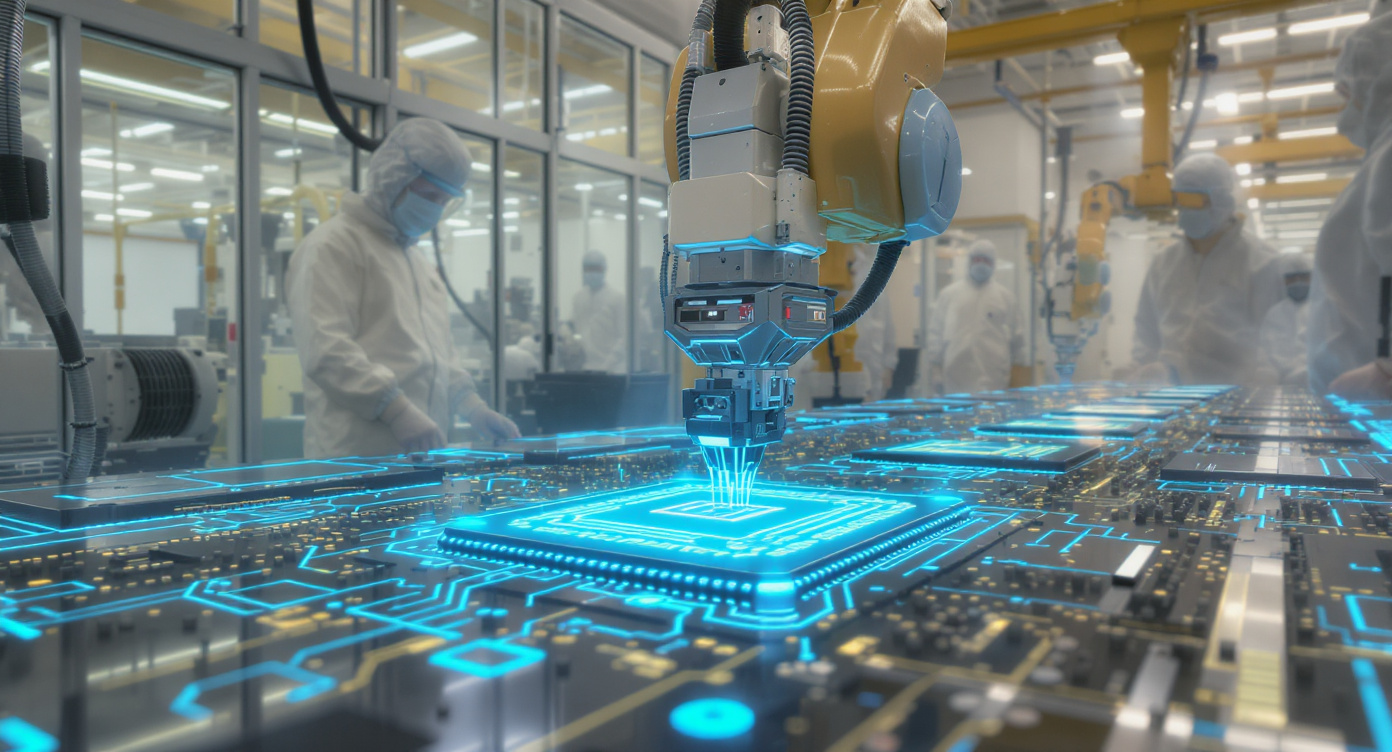
AI chips represent some of the most sophisticated semiconductor technology ever developed. Unlike standard processors, these chips require advanced manufacturing processes at 3-nanometer and 5-nanometer scales, with only a handful of foundries worldwide capable of producing them. Taiwan Semiconductor Manufacturing Company (TSMC) and Samsung dominate this space, but their combined capacity falls dramatically short of current demand projections.
The technical complexity extends beyond manufacturing. Each AI chip requires extensive testing, validation, and customization for specific applications. A single production run can take 12-16 weeks, and any defects or quality issues can delay shipments for months. This extended timeline creates a cascading effect where demand continues to grow while supply remains constrained.
Geopolitical Tensions and Trade Restrictions
International trade policies have significantly complicated the AI chip landscape. Export restrictions on advanced semiconductor technology have forced companies to redesign supply chains, often resulting in longer lead times and reduced efficiency. These policies, while intended to protect national interests, have inadvertently created market fragmentation and reduced global manufacturing optimization.
Chinese companies, previously major consumers of Western AI chips, are now developing domestic alternatives while still competing for international supply. This dual demand pressure has intensified competition for available chips while creating uncertainty in long-term supply planning.
Explosive AI Application Growth
The success of generative AI platforms has triggered unprecedented demand across industries. Every sector from healthcare to finance is racing to implement AI capabilities, creating a gold rush mentality that drives purchasing decisions. Companies are stockpiling chips to ensure future project viability, further exacerbating supply constraints.
Data centers alone account for nearly 60% of current AI chip demand, with cloud providers expanding capacity to meet growing computational needs. Edge computing applications, autonomous systems, and IoT devices represent additional demand categories that continue growing exponentially.
Market Impact and Industry Response
The $50 billion AI chip market has become a battleground where traditional supply and demand economics no longer apply. Lead times that once measured in weeks now extend to quarters, forcing companies to fundamentally reconsider their product development cycles and go-to-market strategies.
Pricing Dynamics and Market Distortion
Chip prices have increased by 200-300% in some segments, with premium AI processors commanding even higher multiples. This pricing pressure has created a two-tiered market where well-funded companies secure supply through long-term contracts and premium pricing, while smaller players face extended delays or complete unavailability.
The secondary market for AI chips has emerged, with some processors trading at 400-500% of their original retail price. This speculation-driven environment has attracted investors and distributors who view chip inventory as a valuable commodity, further reducing available supply for end users.
Strategic Partnerships and Vertical Integration
Major technology companies are responding through unprecedented vertical integration strategies. Amazon, Google, and Microsoft have significantly increased their custom chip development investments, working directly with foundries to secure dedicated manufacturing capacity. These partnerships often involve multi-billion dollar commitments that guarantee supply in exchange for volume commitments and technological collaboration.
Apple’s success with its M-series processors has inspired other companies to develop custom silicon solutions. However, the time and investment required for custom chip development means these solutions won’t address immediate supply constraints, instead positioning companies for better control over their 2027-2028 roadmaps.
Alternative Architecture Exploration
The shortage has accelerated research into alternative computing architectures. Quantum computing companies are attracting increased attention as potential solutions for specific AI workloads. Neuromorphic chips, which mimic brain-like processing, are receiving renewed investment as companies explore energy-efficient alternatives to traditional GPU-based AI processing.
Some companies are revisiting distributed computing approaches, using networks of less powerful processors to achieve similar results to specialized AI chips. While these solutions often involve trade-offs in performance or energy efficiency, they provide viable alternatives for companies unable to secure premium AI processors.
Strategic Adaptation in the Shortage Era
Organizations navigating this challenging environment must develop sophisticated strategies that balance immediate needs with long-term competitiveness. The companies emerging strongest from this crisis are those treating chip scarcity as a strategic planning challenge rather than merely a procurement problem.
Supply Chain Diversification and Risk Management
Leading companies are implementing multi-vendor strategies that reduce dependence on single suppliers or technologies. This approach involves qualifying alternative chip architectures, developing relationships with multiple distributors, and creating flexible product designs that can accommodate different processor types.
Inventory management has become a critical competitive advantage. Companies are investing in sophisticated forecasting tools that account for lead time variability, demand uncertainty, and geopolitical risks. Some organizations are maintaining 6-12 months of chip inventory, treating processors as strategic assets rather than just-in-time components.
Software Optimization and Efficiency Focus
The shortage has renewed focus on software efficiency and optimization. Companies are investing heavily in algorithmic improvements that reduce computational requirements, allowing existing hardware to handle more demanding workloads. This software-first approach often delivers better ROI than hardware upgrades while reducing dependence on scarce chip supply.
Model compression techniques, quantization, and pruning have become essential skills for AI development teams. Organizations that master these techniques can achieve comparable performance with less powerful hardware, providing significant competitive advantages in resource-constrained environments.
Partnership and Ecosystem Development
Successful companies are building comprehensive ecosystems that extend beyond traditional vendor relationships. These partnerships include chip manufacturers, software providers, system integrators, and even competitors in some cases. Shared development costs and risk distribution make ambitious projects viable even with supply constraints.
Cloud computing partnerships have become particularly valuable, allowing companies to access AI processing power without owning physical hardware. However, cloud AI services are also experiencing capacity constraints, making hybrid approaches that combine owned and leased resources increasingly important.
Future Outlook and Recovery Projections
Industry analysts project that the AI chip shortage will persist through 2027, with meaningful supply relief unlikely before 2028. This extended timeline reflects the complexity of expanding semiconductor manufacturing capacity and the continued growth in AI applications across industries.
Manufacturing Capacity Expansion
Major foundries are investing over $100 billion in new manufacturing facilities, but these investments require 3-4 years to become productive. TSMC’s Arizona facilities and Samsung’s Texas expansion represent significant capacity additions, but they won’t meaningfully impact supply until the late 2020s.
Emerging players are entering the market, including Intel’s foundry services division and new facilities in Europe. These alternatives may provide supply diversity, but they also need time to achieve the quality and scale required for AI chip production.
Technology Evolution and Market Maturation
The current shortage is accelerating innovation in chip design and manufacturing. New architectures specifically optimized for AI workloads are emerging, potentially offering better performance per dollar than current solutions. These innovations may help alleviate demand pressure by providing more efficient processing capabilities.
Standardization efforts are also gaining momentum, potentially reducing the complexity and cost of AI chip production. Industry consortiums are working on common interfaces and architectures that could enable more suppliers to enter the market and increase overall competition.
The AI chip shortage represents more than a temporary supply constraint—it’s a fundamental shift that will reshape competitive dynamics across industries. Companies that successfully navigate this challenge will emerge with stronger supply chains, more efficient operations, and better strategic positioning for the next wave of AI innovation.
Organizations must balance short-term adaptation with long-term strategic planning, investing in capabilities that provide resilience beyond the current crisis. The shortage has already accelerated innovation in software optimization, alternative architectures, and manufacturing processes, creating opportunities for companies willing to embrace new approaches.
What strategies is your organization implementing to navigate the AI chip shortage, and how are you balancing immediate operational needs with long-term competitive positioning in this rapidly evolving landscape?
Comments