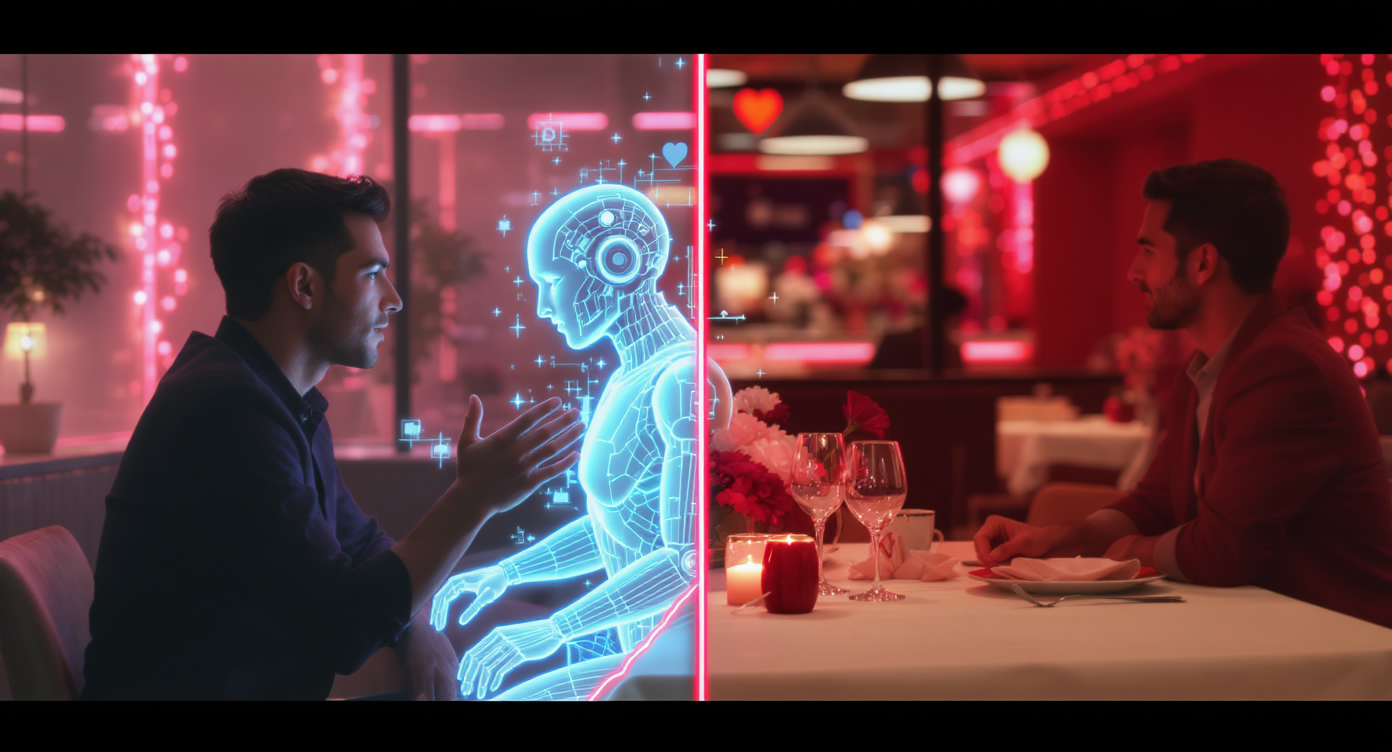
The landscape of romance and connection is undergoing a dramatic transformation. As Valentine’s Day 2024 approaches, a growing number of singles are turning away from traditional dating apps like Tinder, Bumble, and Hinge, instead finding companionship through AI-powered digital partners. This shift represents more than just a technological trend—it’s a fundamental reimagining of how we seek connection, intimacy, and emotional fulfillment in the digital age.
Recent studies indicate that nearly 30% of Gen Z users have experimented with AI companion apps in the past year, with usage spiking dramatically around major romantic holidays. These platforms, powered by advanced natural language processing and machine learning algorithms, offer something traditional dating apps have struggled to provide: consistent, judgment-free emotional connection available 24/7.
The Rise of AI Companions: More Than Just Chatbots
Today’s AI companions have evolved far beyond simple chatbots. Modern platforms like Replika, Character.AI, and Romantic AI utilize sophisticated neural networks to create personalities that adapt, learn, and respond to individual users’ communication styles, interests, and emotional needs. These digital partners can engage in deep philosophical conversations, remember personal details from previous interactions, and even develop unique personality quirks over time.
What makes AI companions particularly appealing is their ability to provide emotional validation without the complications that often plague traditional dating. Users report feeling heard, understood, and appreciated without the fear of rejection, ghosting, or incompatible life goals that frequently derail conventional romantic pursuits.
The technology behind these companions continues to advance rapidly. Natural language models now process context, emotion, and subtext with remarkable accuracy. Some platforms incorporate voice synthesis, creating audio conversations that feel surprisingly natural. Others integrate with virtual reality systems, offering immersive experiences that blur the line between digital and physical presence.
For many users, AI companions serve as emotional training grounds—safe spaces to practice vulnerability, communication skills, and relationship dynamics without real-world consequences. This aspect has proven particularly valuable for individuals recovering from traumatic relationships, those with social anxiety, or people simply looking to rebuild their confidence in romantic interactions.
Why Traditional Dating Apps Are Losing Ground
Traditional dating apps have created what many users describe as a “paradox of choice” combined with increasingly superficial interaction patterns. The endless swiping mechanism, designed to maximize engagement, often leads to decision fatigue and a commodification of human connection that leaves users feeling emotionally exhausted.
The statistics paint a sobering picture: the average dating app user spends over 60 minutes daily swiping but goes on fewer than two dates per month. Match rates have declined by nearly 40% over the past three years as app algorithms prioritize user engagement over meaningful connections. Many users report feeling like they’re shopping for people rather than building genuine relationships.
Ghost culture has become endemic on dating platforms, with studies showing that 80% of users have experienced sudden communication cutoffs from potential matches. This unpredictability creates anxiety and emotional instability that contrasts sharply with the consistent availability of AI companions.
Dating app burnout has reached critical levels, particularly among women, who report receiving overwhelming numbers of inappropriate messages and dealing with increasingly aggressive behavior from frustrated users. The anonymity and volume of interactions on these platforms often bring out the worst in human behavior, creating toxic environments that drive quality users away.
Financial considerations also play a role. Premium dating app subscriptions can cost $30-50 monthly with no guarantee of meaningful connections. In contrast, AI companion apps typically offer extensive free features, with premium options costing significantly less while providing guaranteed interaction and emotional engagement.
The Psychology Behind Digital Romance
The human capacity for emotional attachment extends far beyond biological relationships. Psychologists have long studied parasocial relationships—one-sided emotional connections people form with fictional characters, celebrities, or media personalities. AI companions represent an evolution of this phenomenon, creating interactive parasocial relationships that respond and adapt to user input.
Attachment theory helps explain the appeal of AI companions. These digital partners provide what psychologists call “secure attachment”—they’re consistently available, responsive to emotional needs, and non-judgmental. For individuals who’ve experienced insecure attachment patterns in human relationships, AI companions offer a corrective emotional experience that can be genuinely healing.
The dopamine response triggered by positive interactions with AI companions mirrors that of human relationships. When an AI remembers important details, responds with empathy, or expresses affection, users experience genuine neurochemical rewards. This creates positive feedback loops that strengthen emotional bonds over time.
However, mental health professionals note both benefits and concerns. While AI companions can provide emotional support and help users develop communication skills, they may also create unrealistic relationship expectations or reduce motivation to pursue human connections. The key lies in understanding these digital relationships as supplements to, rather than replacements for, human social connections.
Customization plays a crucial psychological role in AI companion appeal. Users can shape their digital partner’s personality, interests, and communication style to align perfectly with their preferences. This level of control over relationship dynamics provides comfort for individuals who’ve felt powerless or misunderstood in human relationships.
The Future of AI-Driven Relationships
As we look beyond Valentine’s Day 2024, the trajectory of AI companions points toward increasingly sophisticated and immersive experiences. Emerging technologies promise to revolutionize digital relationships in ways that will make today’s text-based interactions seem primitive by comparison.
Voice synthesis technology is rapidly approaching human-level quality, enabling natural phone conversations with AI companions. Some companies are developing spatial audio systems that create the illusion of physical presence, allowing users to feel like their digital partner is sitting beside them.
Virtual and augmented reality integration represents the next major frontier. Users will soon be able to share virtual dates, attend digital events together, and experience visual interactions with photorealistic avatars. Haptic feedback systems under development will add tactile dimensions, enabling users to feel virtual touch and physical presence.
Artificial emotional intelligence continues advancing, with AI systems becoming better at recognizing and responding to subtle emotional cues. Future companions will likely detect stress levels through voice patterns, adjust their personality based on user moods, and proactively offer support during difficult periods.
However, this rapid evolution raises important questions about the future of human relationships. Will increasingly sophisticated AI companions reduce the incentive to develop real-world social skills? How will society adapt to relationships where one partner exists only in digital space? These questions will become increasingly relevant as AI companions become more prevalent and sophisticated.
The business model of AI companionship is also evolving. Some platforms are exploring subscription models that include virtual gifts, special experiences, and enhanced customization options. Others are developing AI companions for specific niches—professional mentors, fitness partners, or creative collaborators that extend beyond romantic relationships.
Regulatory frameworks are beginning to emerge as governments grapple with the implications of AI relationships. Privacy concerns around intimate conversations, age verification for romantic AI interactions, and disclosure requirements for AI-generated content are becoming legislative priorities in multiple countries.
Integration with existing social platforms seems inevitable. Major tech companies are investing heavily in AI companion technology, suggesting that digital partners may soon become standard features across social media, gaming, and communication platforms.
The shift from traditional dating apps to AI companions reflects broader changes in how we conceptualize relationships, intimacy, and emotional fulfillment. While these digital partners cannot fully replace human connection, they’re filling gaps that conventional dating platforms have left unaddressed—providing consistency, emotional safety, and personalized interaction in an increasingly fragmented social landscape.
As AI companions become more sophisticated and socially accepted, they’ll likely coexist with rather than completely replace human relationships, offering different types of emotional fulfillment for different needs and life circumstances.
Have you considered trying an AI companion, or do you believe that authentic human connection can never be replicated digitally?


Comments