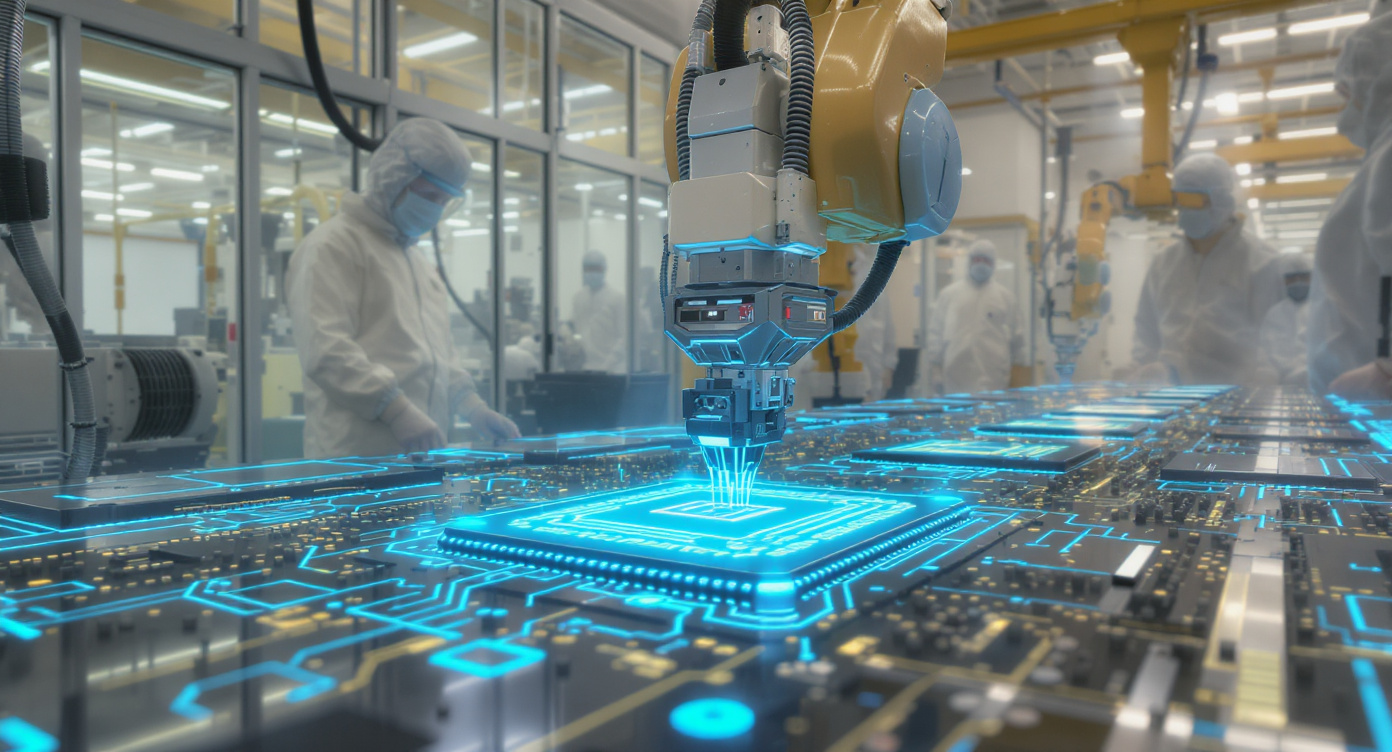
The artificial intelligence revolution has reached a critical juncture in Q2 2026, with tech giants scrambling to secure adequate supplies of AI chips as unprecedented demand collides with constrained production capacity. This shortage is reshaping competitive dynamics across the industry and forcing companies to fundamentally rethink their AI strategies and supply chain approaches.
The current crisis stems from explosive growth in AI applications, from advanced generative models requiring massive computational power to edge computing devices bringing AI capabilities directly to consumers. Major players including Microsoft, Google, Amazon, and Meta are reportedly facing significant delays in their AI infrastructure rollouts, with some projects pushed back by 6-12 months due to chip availability constraints.
NVIDIA, the dominant player in AI chip manufacturing, has seen its stock price surge 45% this quarter alone as companies compete fiercely for allocation of its latest H200 and upcoming B200 series processors. However, even NVIDIA’s expanded production capacity cannot keep pace with demand that has grown 340% year-over-year according to industry analysts.
The ripple effects extend far beyond Silicon Valley giants. Startups building AI-native applications are finding themselves locked out of essential hardware, while cloud providers are implementing strict rationing systems for GPU-intensive services. This scarcity is fundamentally altering how companies approach AI development and deployment strategies.
The Perfect Storm: Why AI Chip Demand Has Exploded
Several converging factors have created this unprecedented demand surge for AI processors. The rapid advancement of large language models and multimodal AI systems requires exponentially more computational power than previous generations of AI applications. OpenAI’s latest GPT-6 model, for instance, requires 10x more processing power than its predecessor, while new video generation models demand even greater resources.
Enterprise adoption of AI has accelerated dramatically, with 78% of Fortune 500 companies now running AI workloads in production, up from just 23% in 2024. This shift from experimental to production deployments has created sustained, predictable demand that far exceeds earlier projections.
The emergence of AI-powered autonomous systems represents another major demand driver. Self-driving vehicles, robotics applications, and smart city infrastructure all require specialized AI chips capable of real-time processing. Tesla alone has reportedly placed orders for AI chips worth over $2.5 billion to support its Full Self-Driving rollout across global markets.
Perhaps most significantly, the race to develop artificial general intelligence (AGI) has intensified resource competition among well-funded tech giants. Companies like Anthropic, backed by Amazon’s $4 billion investment, and Google’s DeepMind division are engaging in an arms race that requires massive chip acquisitions to train increasingly sophisticated models.
Geopolitical tensions have also constrained supply chains, with trade restrictions limiting access to advanced semiconductor manufacturing capabilities. Taiwan Semiconductor Manufacturing Company (TSMC), which produces the majority of cutting-edge AI chips, faces ongoing concerns about regional stability that have prompted companies to diversify suppliers and build strategic inventory reserves.
Supply Chain Bottlenecks and Manufacturing Constraints
The semiconductor manufacturing ecosystem faces fundamental limitations that cannot be quickly resolved through increased investment alone. Advanced AI chips require the most sophisticated fabrication processes, with leading-edge nodes below 5 nanometers available from only a handful of foundries worldwide.
TSMC’s 3nm production lines, essential for the latest AI processors, are operating at maximum capacity with waiting lists extending well into 2027. The company’s planned expansion of manufacturing facilities will not meaningfully impact supply until late 2027 or early 2028, creating a prolonged period of constrained availability.
Memory and packaging constraints represent additional bottlenecks often overlooked in supply chain planning. High-bandwidth memory (HBM) required for AI processors faces its own supply limitations, with SK Hynix and Samsung struggling to meet demand despite aggressive capacity expansion plans. Advanced packaging capabilities necessary for chiplet-based AI processors are similarly constrained, creating dependencies beyond traditional semiconductor fabrication.
The specialized nature of AI chip design has also created talent bottlenecks. Companies are competing fiercely for engineers with expertise in AI accelerator architecture, leading to dramatic salary inflation and project delays as teams struggle to scale quickly enough to meet market demands.
Quality control and yield rates add another layer of complexity. As AI chips become more sophisticated and larger, manufacturing yields naturally decrease, reducing the number of usable processors from each wafer. This effect is particularly pronounced for the massive AI training chips that tech giants require for their most ambitious projects.
Raw material constraints, including rare earth elements essential for semiconductor manufacturing, have created additional supply chain vulnerabilities. Recent disruptions in mining operations and export restrictions have highlighted the fragility of these foundational supply chains that support the entire AI chip ecosystem.
Strategic Responses from Tech Giants
Faced with unprecedented supply constraints, technology leaders are implementing diverse strategies to secure access to essential AI computing resources. These approaches range from direct investments in chip development to creative partnerships and alternative architectural approaches.
Amazon has announced a $12 billion investment in custom AI chip development through its Annapurna Labs division, aiming to reduce dependence on third-party suppliers for its AWS cloud infrastructure. The company’s Trainium and Inferentia chips, while still maturing, offer a pathway toward greater supply chain control and potentially lower costs for AI workloads.
Microsoft has taken a different approach, forming strategic partnerships with multiple chip suppliers while also investing in its own silicon development programs. The company’s recent $3 billion partnership with AMD aims to secure dedicated allocation of AI processors while supporting development of Microsoft-optimized architectures.
Google’s vertical integration strategy includes both custom chip development through its Tensor Processing Units (TPUs) and strategic investments in semiconductor manufacturing capacity. The company has committed $2 billion to expanding TSMC production specifically for Google’s AI chip designs, ensuring priority access to advanced manufacturing processes.
Meta has pursued an aggressive internal development strategy, building substantial engineering teams focused on AI infrastructure and custom silicon. The company’s Research SuperCluster represents one of the largest AI computing installations globally, built primarily with internally designed components to reduce external dependencies.
Smaller companies are exploring innovative approaches including chip-sharing consortiums, where multiple organizations pool resources to purchase and share access to expensive AI computing infrastructure. These collaborative models help distribute costs while ensuring access to essential capabilities.
Cloud providers are also implementing sophisticated allocation systems to maximize utilization of scarce AI computing resources. Dynamic pricing models, priority queuing systems, and workload optimization tools help balance supply and demand while maintaining service quality for critical applications.
Long-term Implications for the AI Industry
The current chip shortage represents more than a temporary supply chain disruption—it’s catalyzing fundamental changes in how the AI industry approaches infrastructure, competition, and innovation. These shifts will likely have lasting effects on market structure and competitive dynamics.
Vertical integration is becoming increasingly attractive as companies seek greater control over their AI destinies. Organizations with the resources to develop custom silicon and secure dedicated manufacturing capacity will likely gain significant competitive advantages over those dependent on merchant silicon providers.
The shortage is also accelerating innovation in AI efficiency and optimization. Companies are investing heavily in model compression techniques, efficient architectures, and novel training methods that require less computational resources. These efficiency gains may ultimately prove more valuable than raw computational scaling.
Geopolitical considerations are driving diversification of semiconductor supply chains, with governments and companies investing in domestic manufacturing capabilities. The United States’ CHIPS Act and European Union’s semiconductor investment programs represent long-term efforts to reduce dependence on concentrated Asian manufacturing capacity.
New business models are emerging around AI infrastructure sharing and optimization. Specialized service providers are developing platforms that maximize utilization of scarce AI computing resources through advanced scheduling, workload optimization, and resource pooling technologies.
The current crisis may also democratize AI development by forcing innovation in efficiency and accessibility. As resource constraints limit the ability to simply scale computational power, developers are creating more sophisticated techniques that deliver impressive results with modest hardware requirements.
Looking ahead, the industry appears to be entering a new phase where access to computational resources becomes as critical as algorithmic innovation. Companies that successfully navigate current supply constraints while building sustainable infrastructure strategies will likely emerge as leaders in the next phase of AI development.
The AI chip shortage of Q2 2026 represents a pivotal moment that will reshape competitive dynamics and innovation priorities for years to come. Organizations across the industry must balance immediate needs with long-term strategic positioning while navigating unprecedented supply chain complexity.
How is your organization preparing for continued AI chip scarcity, and what strategies are you implementing to ensure access to essential computational resources for your AI initiatives?
Comments