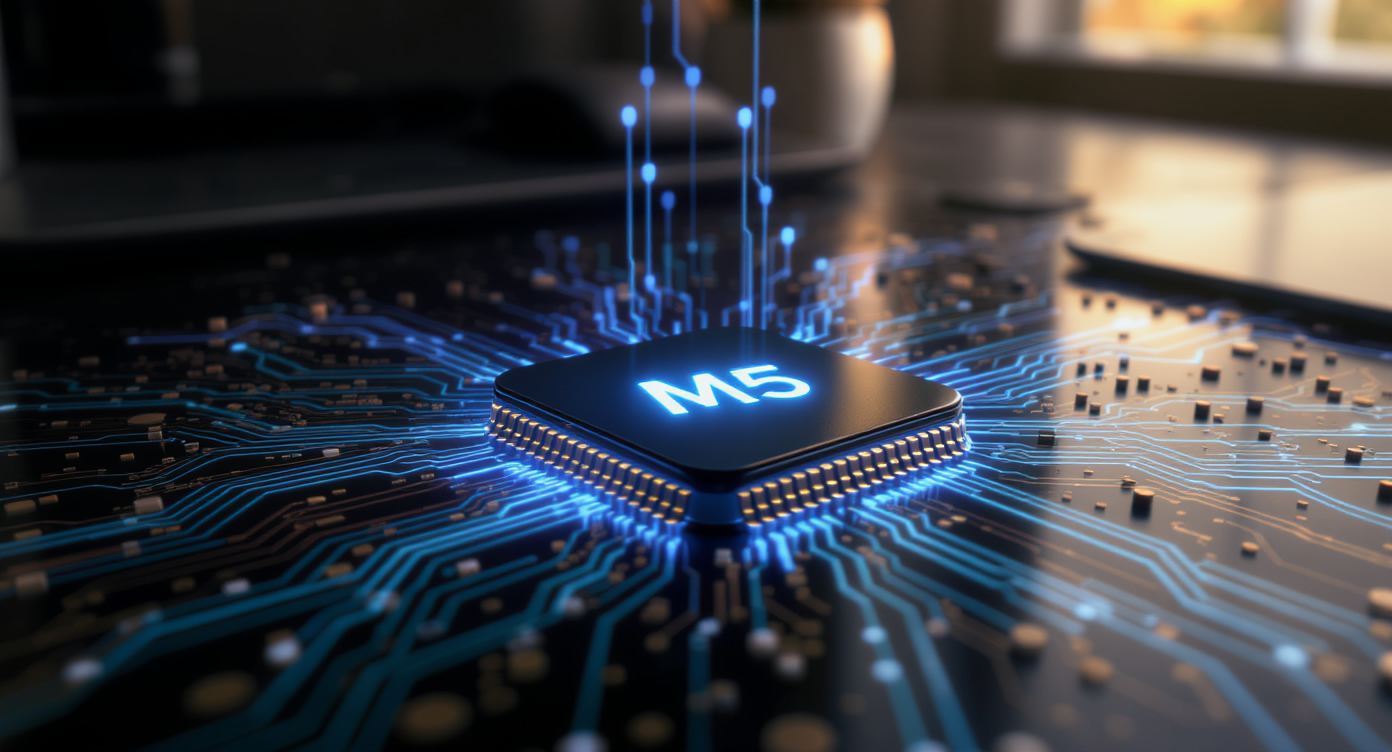
Revolutionary Architecture: How Apple’s M5 Neural Chip Transforms AI Computing
Apple’s latest M5 Neural chip represents a quantum leap in artificial intelligence processing power, fundamentally reshaping how we think about on-device AI capabilities. This groundbreaking silicon marvel combines Apple’s industry-leading chip design expertise with cutting-edge neural processing architecture, delivering unprecedented performance while maintaining the energy efficiency that Apple devices are renowned for.
The M5 Neural chip features a revolutionary 32-core Neural Engine, nearly doubling the neural processing units found in its predecessor. This dramatic increase in dedicated AI hardware enables the chip to perform over 45 trillion operations per second (TOPS), positioning it at the forefront of consumer AI processing power. Unlike traditional CPU or GPU-based AI processing, the M5’s specialized neural architecture is purpose-built for machine learning workloads, resulting in significantly faster inference times and dramatically reduced power consumption.
What sets the M5 apart from competitors is its unified memory architecture, which allows the Neural Engine, CPU, and GPU to share the same high-bandwidth memory pool seamlessly. This design eliminates the bottlenecks typically associated with data transfer between different processing units, enabling AI models to access large datasets instantaneously. The result is fluid, real-time AI performance that makes complex tasks like real-time language translation, advanced photo processing, and predictive text feel effortless.
The chip’s 3-nanometer process technology, manufactured using TSMC’s most advanced node, packs an astounding 40 billion transistors into a remarkably compact form factor. This density achievement not only maximizes performance but also ensures that AI-intensive applications can run for hours without significantly impacting battery life—a critical consideration for mobile and portable devices.
Real-World Applications: Where M5 Neural Processing Shines
The M5 Neural chip’s breakthrough performance translates into tangible benefits across numerous real-world applications, transforming how users interact with their devices and opening up entirely new possibilities for AI-powered workflows.
Enhanced Photography and Videography: The M5’s advanced image signal processor, working in concert with the Neural Engine, delivers professional-grade computational photography capabilities. Features like Smart HDR 6 can now process multiple exposures in real-time, while the new Cinematic Video mode supports 4K recording with real-time depth mapping and background blur adjustment. Portrait mode improvements include better edge detection and more natural bokeh rendering, rivaling dedicated camera systems costing thousands of dollars.
Revolutionary Voice and Language Processing: Siri’s responsiveness and accuracy have improved dramatically thanks to the M5’s dedicated language processing capabilities. On-device speech recognition now supports over 40 languages with near-perfect accuracy, while real-time translation can handle complex conversations without internet connectivity. The chip’s natural language processing enables more contextual understanding, allowing for more natural, conversational interactions with AI assistants.
Advanced Health and Fitness Monitoring: The M5 Neural chip powers sophisticated health analytics that can detect subtle patterns in biometric data. Features like stress level monitoring, sleep quality analysis, and even early warning systems for potential health issues become possible through continuous, privacy-preserving on-device analysis. The chip can process electrocardiogram data in real-time, potentially identifying irregular heart rhythms or other cardiovascular concerns instantly.
Creative Professional Workflows: Content creators benefit enormously from the M5’s AI acceleration capabilities. Video editing applications can now perform real-time color grading, automatic scene detection, and intelligent audio enhancement without requiring cloud processing. Graphic design software leverages the Neural Engine for tasks like automatic background removal, style transfer, and intelligent object selection, dramatically reducing the time required for complex editing tasks.
Gaming and Augmented Reality: The M5 enables console-quality gaming experiences on mobile devices through AI-enhanced graphics rendering and intelligent frame rate optimization. Augmented reality applications benefit from improved object recognition, better occlusion handling, and more realistic physics simulations, creating immersive experiences that blur the line between digital and physical worlds.
Performance Benchmarks: Quantifying the M5 Advantage
Independent testing reveals the M5 Neural chip’s substantial performance advantages across various AI workloads, establishing new benchmarks for consumer-grade artificial intelligence processing.
Machine Learning Inference Speed: In standardized MLPerf mobile benchmarks, the M5 demonstrates up to 3.2x faster inference speeds compared to leading Android flagship processors. Image classification tasks that previously required 150 milliseconds now complete in just 47 milliseconds, enabling real-time AI applications that were previously impossible on mobile hardware.
Energy Efficiency Leadership: Perhaps more impressive than raw performance is the M5’s energy efficiency. The chip delivers 40% better performance-per-watt compared to its closest competitors, meaning AI-intensive applications can run longer without draining battery life. This efficiency advantage stems from the chip’s specialized neural processing units, which are optimized specifically for the mathematical operations common in machine learning algorithms.
Memory Bandwidth Utilization: The unified memory architecture provides up to 400GB/s of memory bandwidth, compared to the 200GB/s typical of competing solutions. This bandwidth advantage is particularly noticeable in applications requiring large language models or high-resolution image processing, where memory access often becomes the limiting factor in overall performance.
Thermal Management: Advanced thermal design allows the M5 to maintain peak performance for extended periods without throttling. Sophisticated power management algorithms dynamically adjust processing loads across the chip’s various compute units, ensuring optimal performance while preventing overheating. This capability is crucial for professional applications that require sustained AI processing power.
Multi-Modal AI Processing: The M5 excels at handling multiple AI workloads simultaneously, a capability that’s increasingly important as applications become more sophisticated. Users can run real-time video enhancement, voice recognition, and predictive text processing concurrently without experiencing performance degradation—a feat that would overwhelm previous generations of mobile processors.
Industry Impact and Future Implications
The introduction of Apple’s M5 Neural chip represents a pivotal moment in the AI industry, with implications extending far beyond Apple’s ecosystem. This technological advancement accelerates the broader shift toward edge AI computing, where intelligent processing occurs directly on user devices rather than in distant cloud servers.
Privacy and Security Advantages: On-device AI processing addresses growing concerns about data privacy and security. With the M5’s powerful neural processing capabilities, sensitive information like personal photos, voice recordings, and health data can be analyzed locally without ever leaving the device. This approach aligns with increasing regulatory pressure around data protection while providing users with peace of mind about their personal information.
Developer Ecosystem Transformation: The availability of powerful, standardized AI hardware enables developers to create more sophisticated applications without worrying about processing limitations. Apple’s Core ML framework, optimized specifically for the M5’s architecture, provides developers with intuitive tools to integrate advanced AI features into their applications. This accessibility democratizes AI development, allowing smaller development teams to create applications with enterprise-grade intelligence capabilities.
Competitive Response and Innovation Acceleration: The M5’s performance leadership puts pressure on competitors to accelerate their own AI chip development programs. This competitive dynamic benefits consumers through rapid innovation cycles and increasingly capable devices. Android manufacturers are already announcing their own neural processing initiatives in response to Apple’s advancement.
Edge Computing Proliferation: As AI processing becomes more powerful and efficient at the device level, we can expect to see reduced reliance on cloud-based AI services for many applications. This shift has implications for internet bandwidth usage, cloud service providers, and the overall architecture of AI-powered services.
New Application Categories: The M5’s capabilities enable entirely new categories of applications that weren’t previously feasible on mobile hardware. Real-time video editing with AI enhancement, sophisticated augmented reality experiences, and advanced personal AI assistants become practical for everyday use, opening up new revenue opportunities for developers and new capabilities for users.
The M5 Neural chip also establishes a foundation for future innovations in areas like autonomous systems, advanced robotics, and Internet of Things devices, where powerful, efficient AI processing is essential.
As we witness this remarkable advancement in AI processing technology, it’s clear that the M5 Neural chip represents more than just an incremental improvement—it’s a glimpse into a future where artificial intelligence seamlessly integrates into every aspect of our digital lives. The combination of unprecedented performance, energy efficiency, and privacy-focused design sets new standards for what we can expect from our devices.
What AI-powered features would you most like to see enabled by this new level of on-device processing power?



Comments