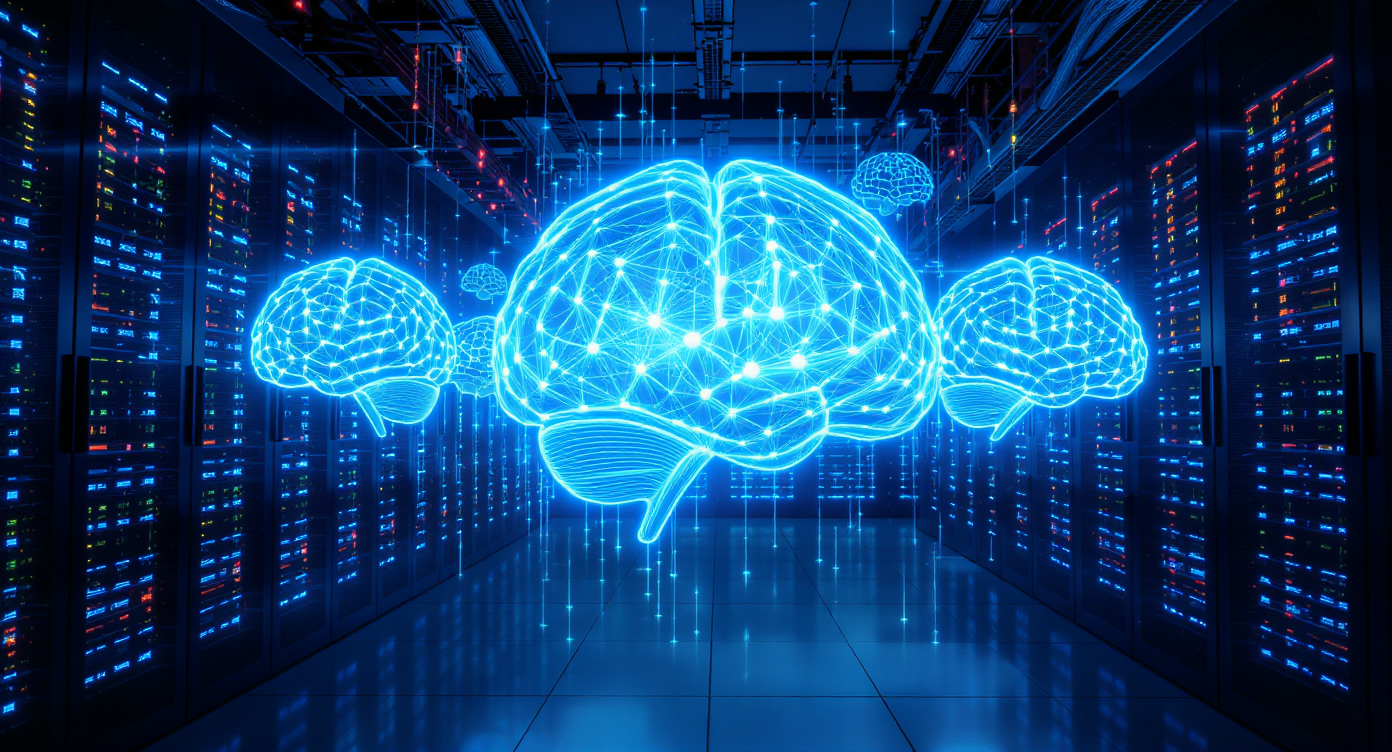
Meta has just unveiled a groundbreaking advancement in artificial intelligence that could reshape the entire landscape of neural network training. The tech giant’s latest breakthrough promises to accelerate AI model training by an astounding 90%, potentially cutting training times from months to mere days. This development represents one of the most significant leaps forward in AI efficiency since the introduction of GPU-accelerated computing.
The implications of this breakthrough extend far beyond Meta’s own AI initiatives. For researchers, developers, and organizations worldwide, faster neural network training could democratize access to cutting-edge AI capabilities while dramatically reducing computational costs. As the AI arms race intensifies among tech giants, Meta’s innovation positions the company at the forefront of next-generation machine learning infrastructure.
The Technical Foundation Behind Meta’s Speed Revolution
Meta’s 90% speed improvement stems from a revolutionary approach to distributed training and memory optimization. The breakthrough combines several innovative techniques that work synergistically to eliminate traditional bottlenecks in neural network training.
At the core of this advancement is Meta’s new Dynamic Gradient Compression algorithm. Unlike conventional training methods that transmit full gradient information between distributed computing nodes, this system intelligently compresses and prioritizes the most critical gradient updates. This selective approach reduces network communication overhead by up to 85% while maintaining model accuracy.
The second pillar of Meta’s breakthrough involves Adaptive Memory Scheduling. Traditional neural network training often suffers from memory fragmentation and inefficient resource allocation across GPU clusters. Meta’s system continuously monitors memory usage patterns and dynamically reallocates resources to prevent bottlenecks before they occur. This proactive approach keeps all computing resources operating at peak efficiency throughout the training process.
Perhaps most impressively, Meta has introduced Progressive Training Architecture – a novel methodology that starts with simplified model versions and gradually increases complexity. This approach allows the system to identify optimal hyperparameters early in the training process, avoiding the computational waste associated with training poorly configured models to completion.
The technical implementation also leverages Meta’s custom silicon optimizations. Their AI Research SuperCluster (RSC) hardware has been specifically designed to work in harmony with these new training algorithms, creating a vertically integrated solution that maximizes performance gains.
Real-World Impact: What 90% Faster Training Means for AI Development
The practical implications of Meta’s breakthrough extend far beyond impressive benchmark numbers. For AI practitioners and organizations, this speed improvement represents a fundamental shift in how machine learning projects can be approached and executed.
Accelerated Research Cycles: Previously, training state-of-the-art language models like GPT-3 or PaLM required months of continuous computation on massive clusters. With Meta’s breakthrough, similar models could potentially be trained in weeks or even days. This acceleration enables researchers to iterate faster, test more hypotheses, and push the boundaries of AI capabilities at an unprecedented pace.
Cost Reduction: The financial impact cannot be overstated. Training large neural networks currently costs hundreds of thousands to millions of dollars in cloud computing resources. A 90% reduction in training time translates directly to massive cost savings, making advanced AI development accessible to smaller organizations and research institutions that previously couldn’t afford such computational expenses.
Enhanced Experimentation: Faster training enables more aggressive experimentation with model architectures, hyperparameters, and training strategies. Data scientists can now afford to run extensive ablation studies and explore novel approaches that were previously too computationally expensive to investigate.
Improved Model Updates: For production AI systems, the ability to retrain models quickly means faster adaptation to new data and changing conditions. Companies can maintain more current and accurate AI systems without the lengthy downtime associated with traditional retraining cycles.
The breakthrough also has significant implications for AI safety and alignment research. Faster training cycles allow researchers to more quickly test safety measures and alignment techniques across various model sizes and architectures, potentially accelerating progress on some of AI’s most critical challenges.
Industry Implications and Competitive Landscape Shifts
Meta’s breakthrough arrives at a crucial moment in the AI industry, as companies race to develop more powerful and efficient AI systems. This advancement could significantly alter the competitive dynamics among tech giants and reshape the broader AI ecosystem.
Market Positioning: With 90% faster training capabilities, Meta gains a substantial competitive advantage in developing and deploying AI models. The company can iterate faster on products like their AI assistants, recommendation systems, and content moderation tools. This speed advantage could translate into superior AI products that outperform competitors who are still using traditional training methods.
Cloud Computing Impact: Major cloud providers like Amazon Web Services, Google Cloud, and Microsoft Azure will likely need to adapt their AI training services to remain competitive. We can expect to see these companies either licensing Meta’s technology, developing competing solutions, or risk losing AI-focused customers to more efficient alternatives.
Startup Ecosystem: The democratization effect of faster, cheaper training could energize the AI startup ecosystem. Small companies with innovative ideas but limited resources can now compete more effectively with well-funded incumbents. This could lead to increased innovation and more diverse AI applications across industries.
Open Source Implications: Meta has historically contributed significant AI research to the open-source community. If portions of this training breakthrough are released publicly, it could accelerate AI development across the entire industry, similar to how the release of the Transformer architecture revolutionized natural language processing.
Research Institution Benefits: Universities and research institutions, often constrained by limited computational budgets, stand to benefit enormously. Faster training could enable academic researchers to contribute more significantly to cutting-edge AI research, potentially leading to breakthrough discoveries that might otherwise require industrial-scale resources.
The geopolitical implications are also noteworthy. As nations compete for AI supremacy, Meta’s breakthrough could strengthen the technological leadership of countries with access to these advanced training capabilities while potentially widening the AI gap with nations lacking such resources.
Future Implications and What Comes Next
Meta’s 90% training speed improvement is likely just the beginning of a new era in AI efficiency. This breakthrough opens doors to possibilities that were previously constrained by computational limitations and suggests several exciting future developments.
Larger Model Exploration: With training times dramatically reduced, researchers can now feasibly experiment with even larger neural networks. Models with trillions of parameters, previously requiring prohibitive amounts of computation, become more accessible for research and development.
Real-Time Learning Systems: The speed improvements bring us closer to AI systems that can continuously learn and adapt in real-time. Instead of periodic retraining cycles, AI models could potentially update themselves constantly based on new data and feedback.
Specialized Model Development: Organizations can now afford to develop highly specialized AI models for niche applications. Instead of relying on general-purpose models, companies can create custom solutions optimized for their specific use cases without breaking their computational budgets.
Enhanced Personalization: Faster training enables more personalized AI experiences. Systems could potentially maintain individual user models or rapidly adapt to changing preferences and behaviors at scale.
Scientific Discovery Acceleration: In fields like drug discovery, climate modeling, and materials science, AI models often require extensive training on domain-specific datasets. Meta’s breakthrough could accelerate scientific discovery by making it feasible to train sophisticated models on specialized scientific datasets more frequently and efficiently.
The breakthrough also raises important questions about AI governance and safety. As training becomes faster and more accessible, ensuring responsible development and deployment of AI systems becomes increasingly critical. Regulatory frameworks may need to evolve to address the accelerated pace of AI development.
Meta’s achievement represents more than just a technical milestone – it’s a catalyst for the next phase of AI evolution. As training barriers continue to fall, we’re likely to see an explosion of AI innovation across industries, research domains, and application areas that were previously constrained by computational limitations.
The ripple effects of this breakthrough will likely be felt for years to come, influencing everything from startup strategies to national AI policies. As the technology matures and potentially becomes more widely available, it could democratize AI development in ways we’re only beginning to understand.
How do you think Meta’s 90% faster neural network training will impact your industry or field of work, and what new AI applications might become feasible with such dramatically reduced training times?

Comments