
The artificial intelligence revolution has created an unprecedented surge in semiconductor demand, propelling AI chipmakers to a staggering combined valuation of $2.3 trillion. This astronomical figure reflects not just market enthusiasm, but a fundamental shift in how the global economy values the infrastructure powering our AI-driven future. Yet beneath these impressive numbers lies a complex story of supply shortages, strategic positioning, and the race to dominate the most critical technology of our time.
The semiconductor industry has become the backbone of the modern AI ecosystem, with specialized chips designed for machine learning, neural networks, and deep learning applications commanding premium valuations. As artificial intelligence transforms everything from autonomous vehicles to medical diagnostics, investors are betting big on the companies that manufacture the silicon brains behind these innovations.
The $2.3 Trillion Phenomenon: Understanding Market Dynamics
The massive valuation surge in AI chipmakers represents more than speculative investment—it reflects genuine market fundamentals driven by explosive demand for artificial intelligence capabilities. Companies like NVIDIA, AMD, Intel, and emerging players have seen their market capitalizations soar as organizations worldwide scramble to implement AI solutions.
NVIDIA alone accounts for a significant portion of this valuation, with the company’s stock price increasing by over 200% in the past year. Their Graphics Processing Units (GPUs), originally designed for gaming, have become the gold standard for AI training and inference. The company’s H100 and A100 chips are so in demand that tech giants are willing to pay premium prices and wait months for delivery.
Traditional semiconductor companies have also benefited from this AI boom. Advanced Micro Devices (AMD) has positioned itself as a serious competitor with its MI300 series, while Intel is making strategic moves to reclaim market share with its Gaudi processors and massive manufacturing investments.
The valuation surge isn’t limited to established players. Startups focusing on specialized AI chips have attracted billions in venture capital funding. Companies developing neuromorphic processors, quantum computing chips, and application-specific integrated circuits (ASICs) for AI workloads are commanding valuations that would have been unthinkable just five years ago.
This market enthusiasm stems from a simple economic reality: AI chips have become as essential to the digital economy as oil was to the industrial economy. Every major technology company, from cloud computing giants to autonomous vehicle manufacturers, requires massive amounts of specialized computing power to remain competitive.
Supply Chain Bottlenecks: The Critical Shortage Crisis
Despite the enormous valuations, the AI chip industry faces a paradoxical challenge—meeting the overwhelming demand for their products. The supply shortage plaguing the semiconductor industry has created a bottleneck effect that simultaneously drives up prices and limits growth potential.
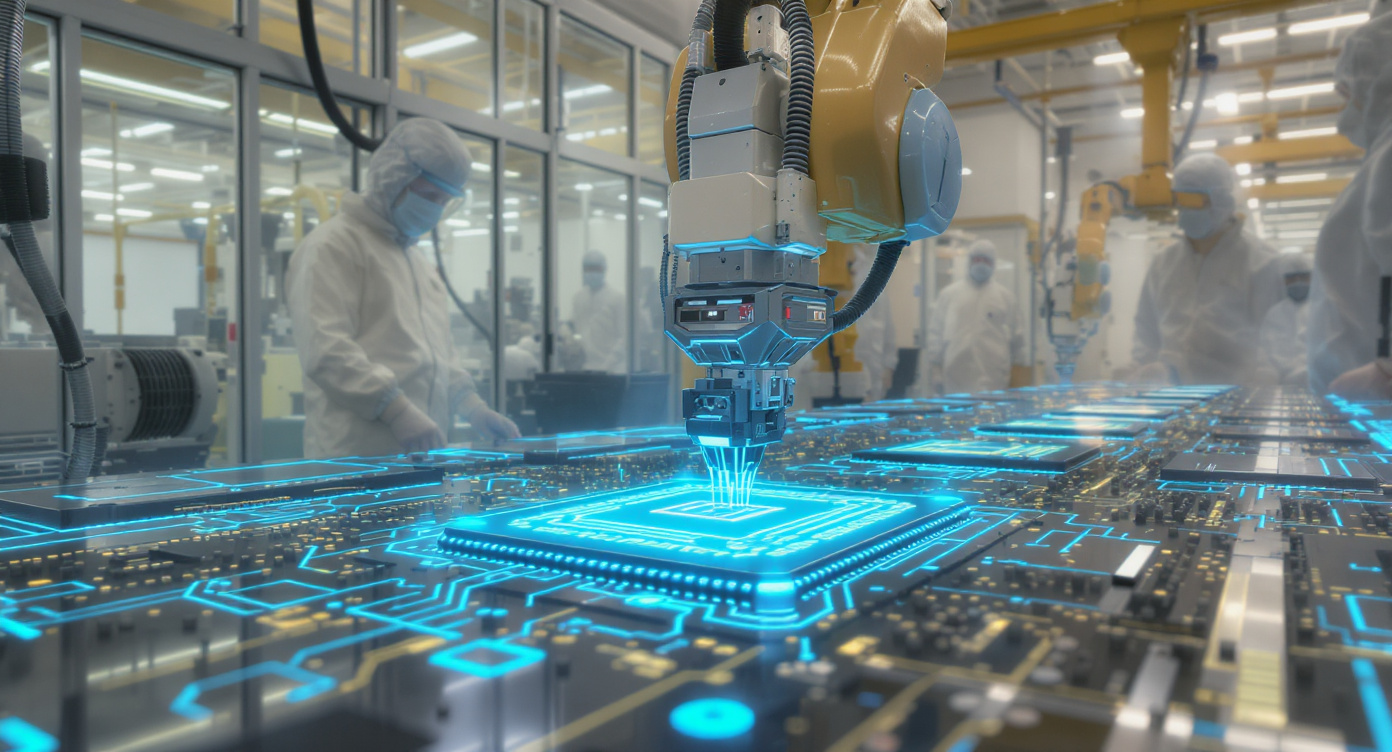
Manufacturing Complexity lies at the heart of the supply challenge. Modern AI chips require cutting-edge fabrication processes, with the most advanced processors manufactured using 3-nanometer and 5-nanometer process nodes. Only a handful of foundries worldwide, primarily Taiwan Semiconductor Manufacturing Company (TSMC) and Samsung, possess the technology and capacity to produce these sophisticated chips.
The geopolitical dimension adds another layer of complexity to supply chain management. Trade restrictions between the United States and China have disrupted traditional supply routes and forced companies to restructure their manufacturing strategies. Export controls on advanced semiconductors have created artificial scarcities in certain markets while driving up prices globally.
Raw material shortages compound the manufacturing challenges. The production of AI chips requires rare earth elements, high-purity silicon, and specialized chemicals that have limited global supply chains. Natural disasters, political instability in mining regions, and transportation disruptions can create cascading effects throughout the entire semiconductor supply chain.
Lead times for advanced AI chips have extended from weeks to months, with some customers waiting over a year for critical components. This scarcity has created a secondary market where chips trade at significant premiums, further inflating the perceived value of semiconductor companies and their inventory.
Cloud service providers like Amazon Web Services, Microsoft Azure, and Google Cloud are reportedly stockpiling AI chips to ensure they can meet customer demand for machine learning services. This hoarding behavior exacerbates shortages and creates additional upward pressure on prices and valuations.
Investment Strategies and Market Opportunities
The AI chip boom presents both tremendous opportunities and significant risks for investors seeking exposure to this transformative sector. Understanding the nuances of this market is crucial for making informed investment decisions.
Direct equity investment in established chipmakers offers the most straightforward exposure to AI semiconductor growth. However, investors must carefully evaluate each company’s technological capabilities, market positioning, and ability to scale production. NVIDIA’s dominance in AI training chips makes it a popular choice, but its premium valuation also increases potential downside risk.
Diversified semiconductor ETFs provide broader exposure to the AI chip ecosystem while reducing single-company risk. Funds like the VanEck Semiconductor ETF (SMH) and iShares Semiconductor ETF (SOXX) include holdings across the entire semiconductor value chain, from chip designers to equipment manufacturers.
Supply chain investment opportunities extend beyond chip manufacturers to include companies that support semiconductor production. Firms specializing in chip design software, manufacturing equipment, testing systems, and packaging services are experiencing significant growth as the industry scales up production capacity.
Emerging technology plays offer higher risk-reward potential for sophisticated investors. Companies developing quantum computing chips, photonic processors, and brain-inspired neuromorphic chips could become the next generation of AI semiconductor leaders. However, these investments require careful due diligence and risk management.
International diversification within the AI chip space helps mitigate geopolitical risks. European companies like ASML, which manufactures critical lithography equipment, and Asian firms like SK Hynix and Micron Technology, which produce memory chips essential for AI systems, provide exposure to different segments of the global semiconductor ecosystem.
Private market opportunities in AI chip startups have attracted significant institutional investment, though these investments typically require substantial minimum commitments and longer holding periods. Venture capital funds specializing in semiconductor investments offer indirect access to early-stage AI chip companies.
Future Outlook: Navigating Growth and Challenges
The trajectory of the AI chip industry will likely determine the success of the broader artificial intelligence revolution, making future market developments crucial for investors, technologists, and policymakers to monitor closely.
Technology roadmaps suggest continued innovation in AI chip design, with companies developing specialized processors for different AI workloads. Edge computing chips for autonomous vehicles, low-power processors for mobile AI applications, and massive-scale training chips for large language models represent distinct market segments with unique growth drivers.
Manufacturing capacity expansion is underway globally, with governments and private companies investing hundreds of billions of dollars in new semiconductor fabrication facilities. The United States CHIPS Act, European Union semiconductor initiatives, and Asian manufacturing investments aim to reduce supply bottlenecks and increase regional production capabilities.
Competitive dynamics will intensify as more companies enter the AI chip market. Traditional CPU manufacturers, memory companies, and even software firms are developing specialized AI processors. This increased competition could pressure margins while accelerating innovation cycles.
Regulatory considerations may impact market development, particularly regarding international trade, environmental standards, and data security requirements. Companies must navigate complex compliance landscapes while maintaining technological leadership and market access.
The sustainability aspect of AI chip manufacturing is gaining attention as environmental concerns about energy consumption and electronic waste influence corporate and government procurement decisions. Chipmakers investing in energy-efficient designs and sustainable manufacturing processes may gain competitive advantages.
Long-term success in the AI chip industry will likely depend on companies’ ability to balance massive capital investments in research and development with the need to generate sustainable returns for shareholders. The current $2.3 trillion valuation creates high expectations for continued growth and innovation.
Market analysts project continued growth in AI chip demand, driven by expanding applications in healthcare, finance, manufacturing, and entertainment. However, cyclical downturns, technological disruptions, or geopolitical tensions could significantly impact valuations and growth trajectories.
The AI chipmaker industry’s $2.3 trillion valuation amid supply shortages represents a pivotal moment in technology and finance. As artificial intelligence reshapes our world, the companies manufacturing the silicon foundation of this transformation have become some of the most valuable enterprises in human history.
How do you think the current supply shortages will reshape the competitive landscape of AI chipmakers, and which companies are best positioned to emerge as long-term winners in this rapidly evolving market?
Comments