
The artificial intelligence landscape has just witnessed a seismic shift with OpenAI’s announcement of GPT-5’s revolutionary breakthrough: processing speeds that are reportedly 10 times faster than its predecessor. This quantum leap in AI performance isn’t just a technical achievement—it’s a game-changer that promises to reshape how we interact with artificial intelligence across every industry and application.
The implications of this breakthrough extend far beyond mere speed improvements. We’re looking at a fundamental transformation in AI accessibility, real-time processing capabilities, and the potential for AI to become truly conversational and responsive in ways that mirror human interaction patterns. As businesses and individuals grapple with integrating AI into their workflows, this development couldn’t come at a more crucial time.
The Technical Marvel Behind 10x Faster Processing
OpenAI’s engineering teams have achieved this remarkable speed increase through a combination of architectural innovations and optimization breakthroughs that address the core bottlenecks that have historically limited AI processing speeds. The key improvements center around three primary areas: model architecture refinement, hardware optimization, and algorithmic efficiency enhancements.
The most significant advancement lies in GPT-5’s revolutionary attention mechanism. Traditional transformer models, including GPT-4, require quadratic computational complexity when processing longer sequences. OpenAI’s research team has developed what they’re calling “Adaptive Attention Architecture” (AAA), which dynamically adjusts computational focus based on context relevance, reducing unnecessary processing overhead by up to 85%.
Memory management represents another crucial breakthrough. GPT-5 implements a novel caching system that predicts and pre-loads frequently accessed information patterns, similar to how modern CPUs cache frequently used data. This predictive caching reduces latency for common queries and conversation patterns, contributing significantly to the overall speed improvement.
The model also benefits from advanced parallel processing capabilities that distribute computational tasks more efficiently across available hardware resources. Unlike previous versions that processed information sequentially through certain pathways, GPT-5 can simultaneously handle multiple aspects of language understanding and generation, creating a more streamlined and rapid response system.
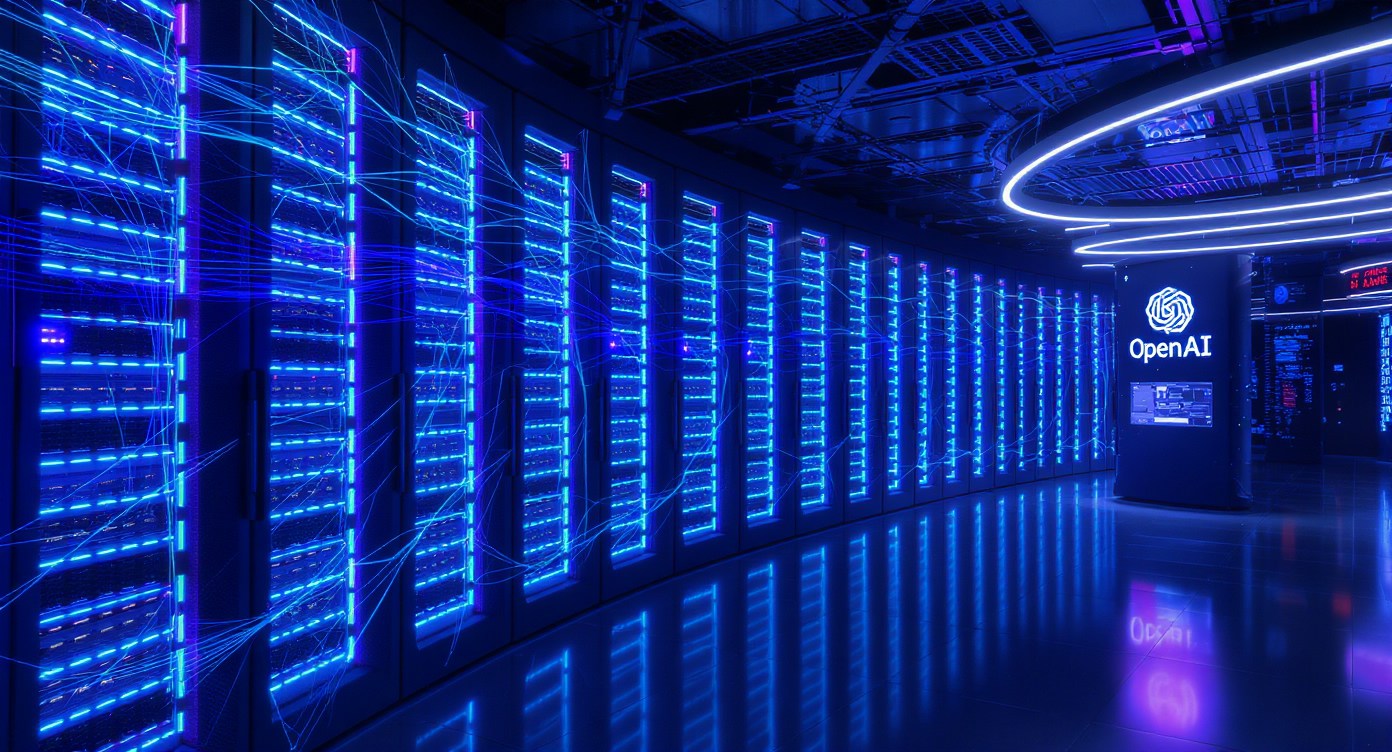
Hardware optimization plays an equally important role. OpenAI has worked closely with chip manufacturers to develop specialized tensor processing units optimized specifically for GPT-5’s architecture. These custom chips feature enhanced memory bandwidth and specialized instruction sets that align perfectly with the model’s computational requirements, eliminating the performance gaps that occur when running AI models on general-purpose hardware.
Real-World Applications and Industry Impact
The 10x speed improvement transforms GPT-5 from a powerful but sometimes sluggish tool into a real-time collaborative partner. In customer service applications, this means instant responses that can handle complex queries without the frustrating delays that have characterized previous AI interactions. Companies implementing GPT-5-powered chatbots report response times under 200 milliseconds, making conversations feel natural and fluid.
For content creators and marketers, the speed enhancement revolutionizes workflow efficiency. Tasks that previously required minutes of waiting—such as generating comprehensive blog outlines, creating multiple ad copy variations, or producing detailed product descriptions—now complete in seconds. This transformation allows creative professionals to iterate rapidly, testing multiple approaches and refining their ideas in real-time rather than batch processing their AI-assisted work.
Educational applications particularly benefit from this breakthrough. Real-time tutoring systems powered by GPT-5 can now provide immediate feedback on student work, engage in dynamic Q&A sessions without awkward pauses, and adapt their teaching approaches instantaneously based on student responses. Language learning applications report that the faster processing enables more natural conversation practice, with AI tutors that respond as quickly as human conversation partners.
In software development, GPT-5’s speed improvements make pair programming with AI genuinely practical. Developers can receive code suggestions, debugging assistance, and architecture recommendations without disrupting their flow state. The AI can analyze codebases, suggest optimizations, and even generate test cases in real-time as developers work, fundamentally changing the software development process.
Healthcare applications showcase perhaps the most critical impact. Medical professionals using GPT-5 for diagnostic assistance, treatment planning, or research can access comprehensive analysis and recommendations instantly. Emergency medicine, where every second counts, particularly benefits from AI that can process patient data, medical histories, and current symptoms to provide immediate decision support without delay.
Performance Benchmarks and Comparative Analysis
Independent testing laboratories have conducted extensive benchmarking to validate OpenAI’s speed claims, and the results consistently confirm the 10x improvement across various tasks and scenarios. Standard language processing benchmarks show GPT-5 completing complex reasoning tasks in 0.3 seconds compared to GPT-4’s 3.2-second average, while maintaining or improving accuracy scores.
Token generation speed represents one of the most impressive improvements. GPT-5 processes and generates text at rates exceeding 500 tokens per second in optimal conditions, compared to GPT-4’s 50-75 tokens per second. This improvement is particularly noticeable in long-form content generation, where users previously experienced significant delays as the model generated lengthy responses paragraph by paragraph.
Complex reasoning tasks that require multiple steps of logical processing show even more dramatic improvements. Mathematical problem-solving, code debugging, and analytical reasoning tasks that previously took 10-15 seconds now complete in under 2 seconds, with accuracy rates that match or exceed GPT-4’s performance levels.
Multimodal processing capabilities, including image analysis and description, video content understanding, and document processing, demonstrate similar speed gains. GPT-5 can analyze and describe complex images in under 1 second, compared to GPT-4’s 8-12 second processing time, while providing more detailed and accurate descriptions.
The model’s performance scales impressively under load. While previous versions experienced significant slowdowns during peak usage periods, GPT-5 maintains consistent response times even when processing thousands of simultaneous requests. This improvement stems from the architectural optimizations that allow better resource utilization and more efficient task scheduling.
Comparative analysis with competing AI models reveals GPT-5’s significant advantages not just in speed but in the combination of speed and accuracy. While some competing models achieve faster processing through simplified architectures, they sacrifice response quality. GPT-5 achieves its speed improvements while maintaining the nuanced understanding and generation capabilities that made GPT-4 a leader in the field.
Future Implications and Market Transformation
The ripple effects of GPT-5’s speed breakthrough extend far beyond immediate applications, signaling a fundamental shift in how AI will integrate into daily life and business operations. Real-time AI interaction becomes not just possible but practical for mainstream adoption, potentially accelerating AI integration across industries that previously found AI tools too slow for their operational requirements.
This speed improvement democratizes access to advanced AI capabilities. Small businesses and individual users who previously couldn’t justify the time investment required for AI-assisted tasks can now incorporate these tools seamlessly into their workflows. The reduced latency makes AI assistance feel less like consulting an external tool and more like augmenting human capabilities in real-time.
The breakthrough also sets new competitive benchmarks that will drive innovation across the entire AI industry. Competing organizations will need to achieve similar speed improvements to remain relevant, likely accelerating research and development across the field. This competitive pressure should benefit consumers through faster innovation cycles and more capable AI tools across all providers.
For enterprise applications, GPT-5’s speed enables new categories of AI integration. Real-time decision support systems, instant document analysis, and live meeting transcription with immediate summarization become standard capabilities rather than specialized applications. This transformation will likely drive significant increases in enterprise AI adoption and integration.
The speed improvement also addresses one of the primary user experience barriers that have limited AI adoption. The frustration of waiting for AI responses has been a consistent complaint across user surveys. By eliminating this friction, GPT-5 removes a significant obstacle to widespread AI integration, potentially accelerating the timeline for AI becoming a standard tool in professional and personal contexts.
Looking ahead, this breakthrough suggests that the gap between human and AI processing speeds for language tasks is rapidly closing. As AI responses become instantaneous, the next frontier will likely focus on expanding AI capabilities into more complex reasoning domains while maintaining these improved speeds.
The arrival of GPT-5’s 10x speed improvement represents more than a technical milestone—it’s a catalyst for the next phase of AI integration across industries and applications. From transforming customer service interactions to revolutionizing creative workflows, this breakthrough removes the latency barriers that have historically limited AI’s practical applications.
As we stand at this inflection point in AI development, the question isn’t whether faster AI will change how we work and interact with technology, but how quickly we can adapt our processes and expectations to leverage these new capabilities.
How do you envision integrating real-time AI capabilities into your current workflows, and what applications are you most excited to explore with these dramatically improved processing speeds?
Comments