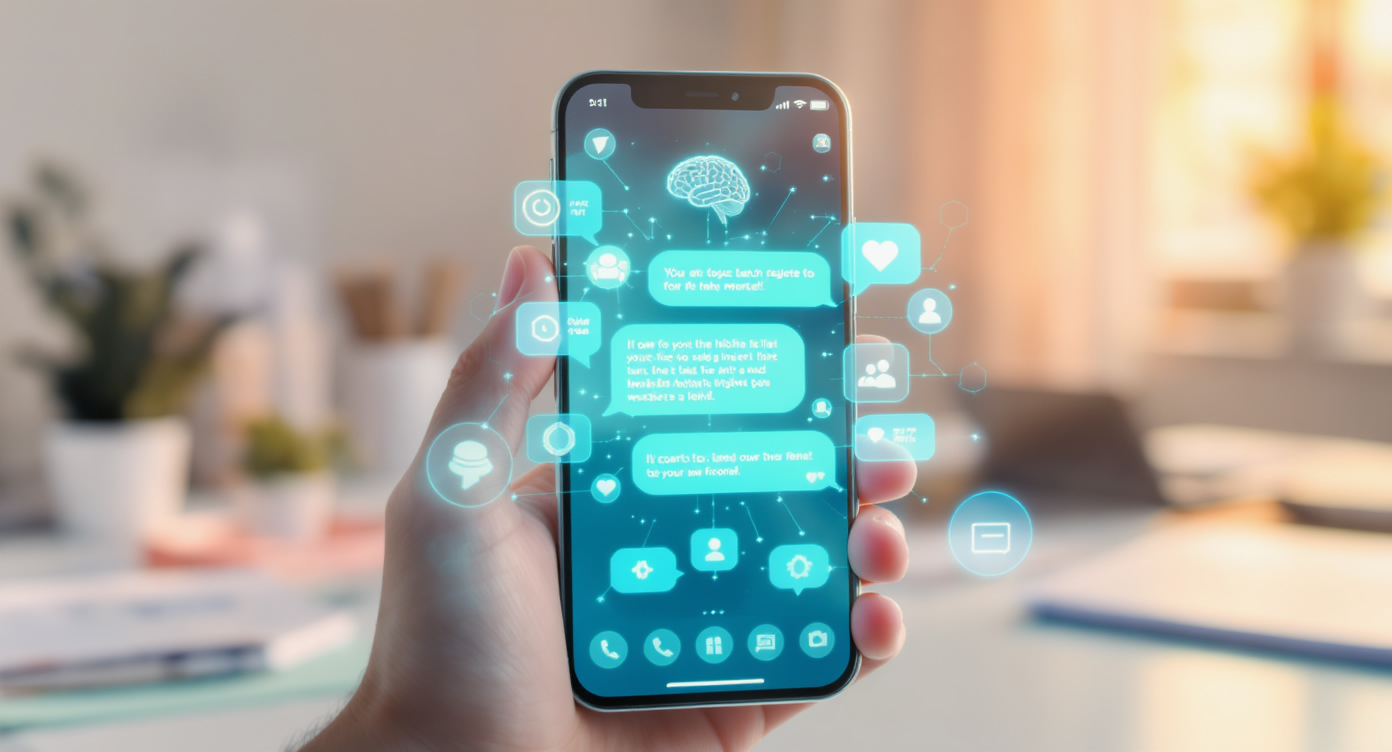
The intersection of artificial intelligence and mental healthcare has reached a pivotal moment. Recent studies reveal that AI chatbots have achieved an impressive 78% accuracy rate in mental health screening, marking a significant milestone in digital healthcare innovation. This breakthrough promises to revolutionize how we approach early detection and initial assessment of mental health conditions, potentially bridging the gap between overwhelming demand and limited resources in mental healthcare.
As mental health concerns continue to surge globally, with the World Health Organization reporting that one in four people will be affected by mental health disorders at some point in their lives, the need for accessible, efficient screening tools has never been more critical. Traditional mental health screening often involves lengthy wait times, geographical barriers, and the challenge of initial disclosure to human professionals. AI chatbots are emerging as a game-changing solution, offering immediate, anonymous, and increasingly accurate preliminary assessments.
The 78% accuracy milestone represents years of technological advancement, machine learning refinement, and clinical validation. This level of precision places AI chatbots within a competitive range of traditional screening methods, while offering unique advantages in accessibility and scalability that could transform mental healthcare delivery worldwide.
The Technology Behind AI Mental Health Screening
AI chatbots designed for mental health screening leverage sophisticated natural language processing (NLP) algorithms and machine learning models trained on vast datasets of clinical conversations, validated screening questionnaires, and psychological assessment protocols. These systems analyze multiple dimensions of user interaction, including language patterns, response timing, emotional indicators, and behavioral markers that correlate with various mental health conditions.
The technology employs sentiment analysis to detect emotional undertones in user responses, while pattern recognition algorithms identify linguistic markers associated with conditions such as depression, anxiety, PTSD, and other common mental health disorders. Advanced chatbots integrate established clinical assessment tools like the PHQ-9 for depression screening and GAD-7 for anxiety assessment, adapting these validated instruments into conversational formats that feel more natural and less clinical.
Machine learning models continuously improve through supervised learning processes, where clinical professionals validate chatbot assessments against traditional diagnostic methods. This iterative refinement has contributed to the steady improvement in accuracy rates, with some specialized systems achieving even higher precision for specific conditions or demographic groups.
The conversational interface design plays a crucial role in accuracy, as chatbots must establish rapport and encourage honest disclosure while maintaining clinical relevance. Successful systems balance empathetic communication with systematic data collection, creating an environment where users feel comfortable sharing sensitive information while providing the detailed responses necessary for accurate assessment.
Benefits and Limitations of AI-Powered Mental Health Assessment
The advantages of AI chatbots in mental health screening extend far beyond their impressive accuracy rates. 24/7 availability ensures that individuals experiencing mental health crises or concerns can access immediate support, regardless of time zones, office hours, or geographical location. This constant accessibility is particularly valuable for rural communities, shift workers, and individuals in regions with limited mental health resources.
Anonymity and reduced stigma represent significant benefits, as many individuals hesitate to seek mental health support due to privacy concerns or social stigma. AI chatbots provide a judgment-free environment where users can explore their mental health concerns without fear of immediate human judgment or social repercussions. This psychological safety often leads to more honest self-reporting and comprehensive disclosure of symptoms.
Cost-effectiveness makes AI screening accessible to organizations and individuals who might otherwise lack resources for comprehensive mental health assessment. Healthcare systems, educational institutions, and employers can implement chatbot screening programs at a fraction of the cost of traditional assessment methods, potentially reaching larger populations with preventive care.
However, important limitations must be acknowledged. The 22% margin of error means that approximately one in five assessments may be inaccurate, potentially leading to false positives that cause unnecessary anxiety or false negatives that miss individuals requiring immediate attention. These limitations necessitate human oversight and follow-up protocols to ensure appropriate care pathways.
Cultural and linguistic nuances present ongoing challenges, as AI systems may not fully capture the diverse ways different communities express distress or mental health concerns. Training data bias can perpetuate disparities in accuracy across demographic groups, requiring ongoing attention to equity and inclusivity in algorithm development.
Complex mental health presentations, comorbid conditions, and crisis situations may exceed current AI capabilities, highlighting the need for seamless integration with human mental health professionals rather than replacement of traditional care models.
Integration with Traditional Mental Healthcare Systems
The most promising applications of AI mental health screening emerge through strategic integration with existing healthcare infrastructures rather than standalone deployment. Progressive healthcare systems are implementing chatbots as initial screening tools that complement rather than compete with human clinicians, creating hybrid care models that optimize both efficiency and quality.
Successful integration typically involves chatbots serving as first-line screening tools that identify individuals who would benefit from further assessment while providing immediate resources and coping strategies for those with lower-risk presentations. When chatbots detect concerning patterns or high-risk indicators, they seamlessly connect users with human mental health professionals, ensuring continuity of care and appropriate clinical oversight.
Electronic health record integration allows chatbot assessments to inform clinical decision-making, providing mental health professionals with structured data about patient symptoms, concerns, and initial risk assessments before first appointments. This preparation enables more efficient use of clinical time and more targeted initial interventions.
Training and supervision protocols ensure that mental health professionals understand chatbot capabilities and limitations, enabling them to appropriately interpret AI-generated assessments and maintain clinical responsibility for diagnosis and treatment planning. This collaborative approach leverages AI efficiency while preserving the irreplaceable value of human clinical judgment and therapeutic relationships.
Quality assurance programs monitor chatbot performance through regular validation against clinical assessments, tracking accuracy rates across different populations and conditions while identifying opportunities for algorithm improvement and training enhancement.
Future Implications and Practical Considerations
The trajectory toward higher accuracy rates suggests that AI chatbots will play an increasingly central role in mental health screening and early intervention. Research initiatives are exploring multimodal assessment approaches that integrate text analysis with voice pattern recognition, facial expression analysis, and physiological monitoring to create more comprehensive assessment profiles.
Organizations considering chatbot implementation should prioritize systems with proven clinical validation, robust privacy protections, and clear integration pathways with human mental health resources. Regulatory compliance with healthcare privacy laws, ethical AI principles, and clinical practice standards remains essential for responsible deployment.
Professional development programs for mental health workers should include training on AI collaboration, ensuring that clinicians can effectively leverage chatbot insights while maintaining their essential roles in diagnosis, treatment planning, and therapeutic intervention.
The democratization of mental health screening through AI technology promises to identify mental health concerns earlier in their development, potentially preventing crisis situations and reducing the overall burden on mental health systems. However, this promise requires continued investment in both technological advancement and human clinical capacity to serve the increased number of individuals who may seek follow-up care.
Ethical considerations around informed consent, data security, algorithm transparency, and equitable access require ongoing attention as these technologies become more widespread. The mental health field must balance innovation with responsibility, ensuring that AI advancement serves the fundamental goal of improving mental health outcomes for all individuals.
The achievement of 78% accuracy in AI-powered mental health screening represents a significant step toward more accessible, efficient, and effective mental healthcare. While limitations remain, the potential for AI chatbots to serve as valuable screening tools within comprehensive mental health systems continues to grow.
As we stand at this technological crossroads, the question isn’t whether AI will transform mental health screening, but how quickly we can implement these tools responsibly and effectively. How might your organization or community benefit from incorporating AI-powered mental health screening while ensuring appropriate clinical oversight and support?

Comments