The artificial intelligence landscape has witnessed another seismic shift with OpenAI’s groundbreaking announcement of GPT-5, a revolutionary language model that sets unprecedented standards in multimodal reasoning capabilities. This latest iteration represents more than just an incremental upgrade—it’s a quantum leap that fundamentally transforms how AI systems understand, process, and interact with multiple forms of data simultaneously.
Unlike its predecessors, GPT-5 demonstrates remarkable proficiency in seamlessly integrating text, images, audio, and video inputs to produce coherent, contextually relevant outputs. This advancement addresses one of the most persistent challenges in artificial intelligence: creating systems that can reason across different data modalities with human-like comprehension and analytical depth.
The significance of this breakthrough extends far beyond technical achievements. As businesses increasingly rely on AI-powered solutions to process diverse data streams, GPT-5’s multimodal reasoning capabilities promise to unlock new possibilities in content creation, data analysis, customer service, and decision-making processes across virtually every industry.
Revolutionary Multimodal Architecture: Beyond Traditional AI Boundaries
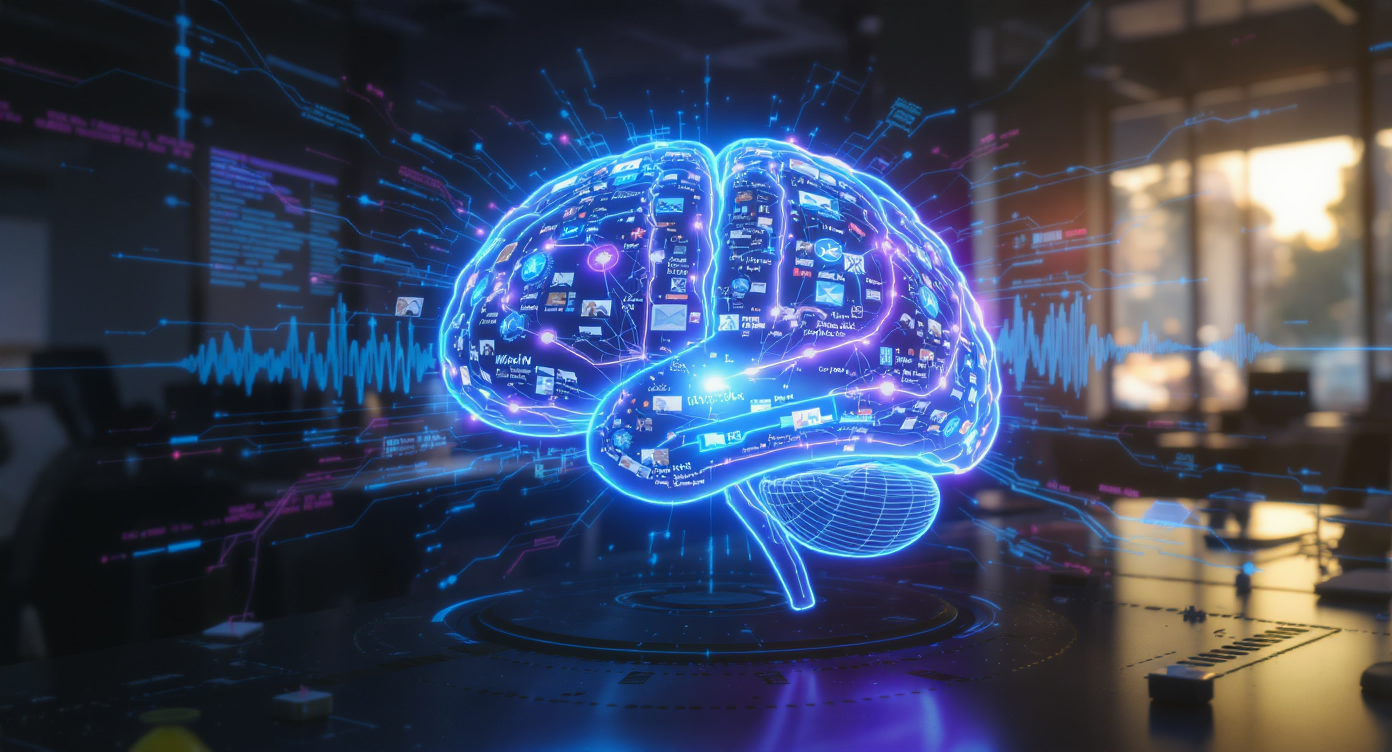
GPT-5’s multimodal reasoning represents a fundamental shift from traditional AI architectures that typically excel in single-domain tasks. The model’s sophisticated neural network structure enables it to process and correlate information across multiple sensory modalities simultaneously, mimicking the way humans naturally integrate different types of information to form comprehensive understanding.
The technical foundation of GPT-5’s multimodal capabilities lies in its advanced attention mechanisms and cross-modal alignment systems. These innovations allow the model to identify relationships between visual elements in images, spoken words in audio files, textual context, and temporal patterns in video content. For instance, when presented with a product image, customer review text, and a video demonstration, GPT-5 can synthesize insights that consider all three inputs holistically rather than processing them as isolated data points.
This architectural breakthrough enables GPT-5 to excel in complex reasoning tasks that require contextual understanding across different media types. The model can analyze a business presentation slide, understand the accompanying speaker notes, interpret charts and graphs, and provide comprehensive feedback that addresses visual design, content accuracy, and presentation effectiveness—all within a single interaction.
Early benchmarking results demonstrate GPT-5’s superior performance in multimodal reasoning tasks, showing significant improvements over existing models in areas such as visual question answering, cross-modal retrieval, and multimodal dialogue systems. These performance gains translate into more accurate, contextually appropriate responses that better serve real-world applications.
Transformative Applications Across Industries
The practical applications of GPT-5’s enhanced multimodal reasoning capabilities are reshaping how organizations approach complex problem-solving and content generation tasks. In the healthcare sector, the model can analyze medical images, patient records, and symptom descriptions simultaneously to assist healthcare professionals in diagnostic processes and treatment planning.
Educational technology stands to benefit enormously from these advancements. GPT-5 can process textbooks, lecture videos, student assignments, and visual aids to create personalized learning experiences that adapt to individual learning styles and comprehension levels. The model’s ability to understand and generate content across multiple modalities enables more engaging, interactive educational tools that cater to diverse learning preferences.
Marketing and content creation industries are experiencing particularly dramatic transformations. GPT-5 can analyze brand assets, target audience data, market research reports, and visual content to generate comprehensive marketing strategies that maintain consistency across all touchpoints. The model’s understanding of visual design principles, combined with its text generation capabilities, enables the creation of cohesive campaigns that resonate with specific audience segments.
Customer service applications are becoming more sophisticated and effective through GPT-5’s multimodal processing. The model can simultaneously analyze customer inquiries, product images, troubleshooting videos, and historical support interactions to provide more accurate, helpful responses. This comprehensive approach to customer support reduces resolution times and improves customer satisfaction rates.
Financial services firms are leveraging GPT-5’s capabilities for enhanced risk assessment and fraud detection. The model can process transaction data, document images, audio recordings from customer calls, and behavioral patterns to identify potential security threats or assess creditworthiness with greater accuracy than single-modality systems.
Enhanced Performance Metrics and Breakthrough Capabilities
GPT-5’s performance improvements in multimodal reasoning are quantifiable across multiple evaluation criteria. The model demonstrates significant advances in cross-modal consistency, maintaining coherent understanding when information spans different input types. This consistency is crucial for applications requiring reliable, accurate outputs based on diverse data sources.
Latency improvements represent another critical advancement. Despite processing multiple data modalities, GPT-5 maintains response times competitive with single-modality models, making it practical for real-time applications such as live customer support, interactive presentations, and dynamic content generation.
The model’s reasoning capabilities extend to complex temporal understanding, enabling it to track narrative threads across video content while simultaneously analyzing accompanying text and audio elements. This temporal reasoning proves invaluable for applications such as video summarization, content moderation, and educational content analysis.
Accuracy benchmarks show substantial improvements in tasks requiring visual-linguistic understanding. GPT-5 demonstrates superior performance in describing complex scenes, answering questions about visual content, and generating appropriate captions that consider both visual elements and contextual information from accompanying text.
Memory management represents another significant breakthrough. GPT-5 efficiently maintains context across different modalities throughout extended conversations, enabling more natural, coherent interactions that build upon previous exchanges regardless of the input types involved.
Implementation Strategies and Future Implications
Organizations planning to integrate GPT-5’s multimodal capabilities should approach implementation strategically, beginning with pilot projects that demonstrate clear value propositions. Success in multimodal AI implementation depends on having appropriate data infrastructure, clear use case definitions, and proper change management processes.
Data preparation becomes more complex but also more critical when working with multimodal systems. Organizations need robust data governance frameworks that ensure quality, consistency, and accessibility across different media types. This includes establishing standardized formats, metadata schemas, and quality control processes for various content types.
Training requirements for teams working with multimodal AI systems differ from traditional text-based applications. Staff need understanding of how different modalities interact, how to structure queries effectively, and how to interpret multimodal outputs accurately. Investment in comprehensive training programs ensures organizations maximize the potential of these advanced capabilities.
The competitive implications of GPT-5’s multimodal reasoning are profound. Organizations that successfully integrate these capabilities gain significant advantages in customer experience, operational efficiency, and innovation capacity. Early adopters can establish market leadership positions that become increasingly difficult for competitors to challenge.
Privacy and ethical considerations require heightened attention when implementing multimodal AI systems. The ability to process and correlate information across multiple data types raises important questions about data protection, consent, and potential bias amplification. Organizations must develop comprehensive governance frameworks that address these concerns proactively.
Looking ahead, GPT-5’s multimodal capabilities will likely catalyze further innovations in human-AI interaction. As the technology matures, we can expect to see more sophisticated applications that blur the lines between human and artificial intelligence in creative, analytical, and decision-making processes.
The integration of multimodal AI into existing business processes will drive demand for new skill sets and organizational capabilities. Companies that invest in building these competencies now will be better positioned to leverage future advancements in artificial intelligence.
GPT-5’s breakthrough in multimodal reasoning represents a pivotal moment in artificial intelligence development, offering unprecedented opportunities for organizations willing to embrace these advanced capabilities. The model’s ability to seamlessly integrate and reason across different data types opens new possibilities for solving complex business challenges and creating innovative solutions.
As this technology continues to evolve and become more accessible, the question isn’t whether multimodal AI will transform business operations, but how quickly organizations can adapt to leverage these powerful new capabilities.
How is your organization preparing to integrate multimodal AI capabilities, and what challenges do you anticipate in implementing these advanced systems across your business processes?
Comments