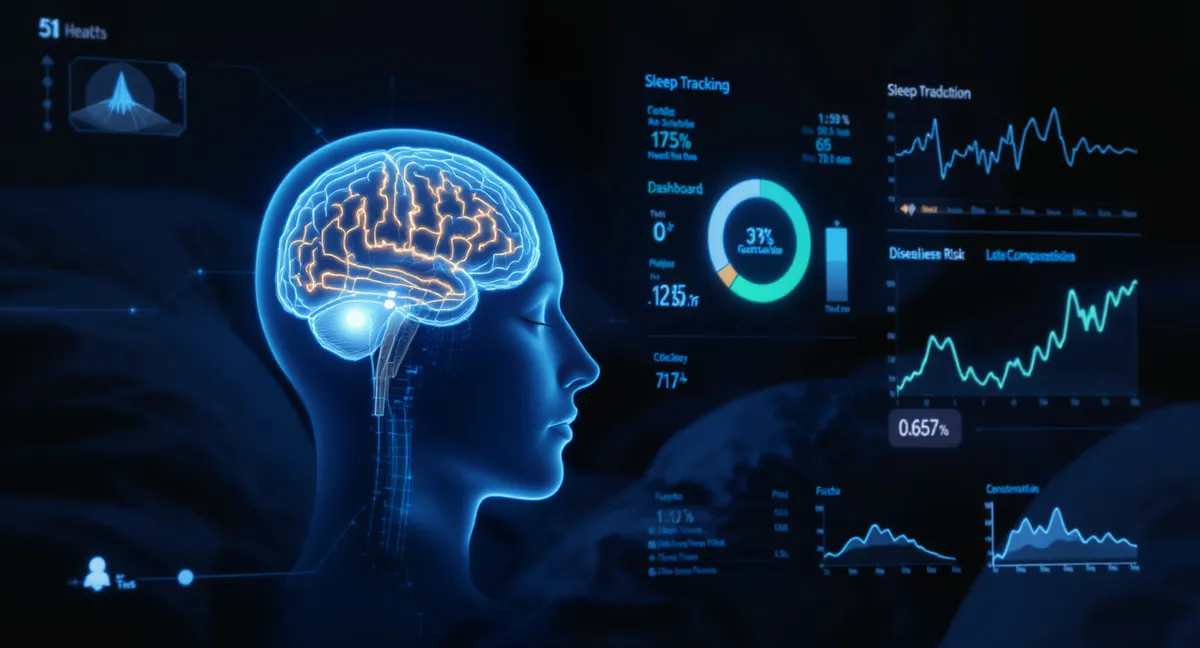
While you sleep, your body tells a story. Heart rate patterns, breathing rhythms, movement during sleep, brain wave activity—all contain information about your health. New AI systems can read these signals and identify warning signs of serious diseases years before traditional symptoms appear.
The Science of Sleep Signals
Sleep Reveals Health
Sleep isn’t just rest—it’s an active biological process that reflects overall health. During sleep:
- The brain consolidates memories and clears waste products
- The cardiovascular system follows distinct patterns
- Hormone levels fluctuate in characteristic ways
- The nervous system exhibits patterns that change with disease
Disruptions to these patterns often precede obvious symptoms of illness, making sleep a window into future health.
What AI Can Detect
Modern AI systems analyze multiple signals simultaneously, finding patterns too subtle for human observation:
- Heart rate variability: Changes in beat-to-beat timing that correlate with cardiovascular health
- Breathing patterns: Variations that may indicate respiratory or neurological problems
- Movement patterns: REM sleep behavior disorder, linked to Parkinson’s disease
- Sleep architecture: How time is distributed across sleep stages
Disease Prediction Capabilities
Parkinson’s Disease
Perhaps the most dramatic finding: AI can identify people at risk for Parkinson’s disease up to seven years before diagnosis. The key marker is REM sleep behavior disorder (RBD)—acting out dreams during REM sleep when the body should be paralyzed.
AI systems detect subtle RBD patterns invisible to casual observation, flagging individuals for closer monitoring and potential early intervention.
Cardiovascular Disease
Sleep patterns correlate strongly with heart health. AI analysis of overnight heart rate data can identify:
- Increased risk of heart attack or stroke
- Undiagnosed atrial fibrillation
- Developing heart failure
- Blood pressure abnormalities
Sleep Apnea
AI can detect sleep apnea from home monitoring devices, without requiring expensive sleep lab studies. Early detection prevents the cardiovascular damage that untreated apnea causes.
Diabetes
Sleep disruptions affect glucose metabolism, and AI can identify patterns associated with insulin resistance and developing diabetes, enabling lifestyle interventions before the disease takes hold.
Mental Health
Depression, anxiety, and other mental health conditions alter sleep architecture in characteristic ways. AI detection could enable earlier treatment and better outcomes.
Current Technology
Consumer Devices
Modern smartwatches and fitness trackers collect sleep data that AI systems can analyze:
- Apple Watch with sleep tracking
- Oura Ring with comprehensive sleep metrics
- WHOOP with detailed recovery analysis
- Fitbit with sleep scoring
While consumer devices have limitations, they provide continuous data impossible with occasional clinical monitoring.
Clinical Systems
Medical-grade systems offer more detailed analysis:
- Polysomnography (full sleep studies) with AI interpretation
- Under-mattress sensors for home monitoring
- Medical wearables with clinical validation
- Continuous monitoring systems for high-risk patients
Emerging Platforms
New platforms combine multiple data sources—sleep, activity, heart rate, and other signals—for comprehensive health assessment. AI integrates these streams to build complete pictures of individual health trajectories.
How It Works
Data Collection
Sleep AI starts with data: movement patterns, heart rate, breathing, and sometimes brain activity. Consumer devices capture some signals; clinical systems capture more. The key is continuous collection over time—patterns that emerge over weeks or months.
Pattern Recognition
Machine learning models trained on thousands of patients learn to recognize patterns associated with various conditions. These patterns might involve:
- Specific sequences of sleep stages
- Heart rate responses to sleep transitions
- Movement patterns during different sleep phases
- Breathing irregularities at particular times
Risk Scoring
AI systems output risk scores—probabilities that specific conditions are present or developing. High scores trigger alerts for clinical follow-up; trends over time show improving or worsening trajectories.
Benefits and Considerations
Early Detection
The primary benefit: catching diseases before symptoms appear. For conditions like Parkinson’s, early detection could enable neuroprotective interventions while the brain is still relatively healthy.
Continuous Monitoring
Unlike periodic checkups, sleep AI provides continuous surveillance. Gradual changes that might go unnoticed become visible in long-term data trends.
Accessibility
Consumer devices bring some sleep analysis capabilities to anyone with a smartphone. This democratizes early detection beyond those with access to specialized medical care.
Limitations
Current systems aren’t perfect. False positives cause unnecessary worry; false negatives provide false reassurance. Sleep AI works best as a screening tool that triggers professional evaluation, not as a diagnostic tool on its own.
Privacy Considerations
Continuous health monitoring raises privacy questions. Who has access to your sleep data? How is it stored and protected? What are the implications if health insurers or employers access this information?
The Future
Sleep AI is advancing rapidly:
- More accurate prediction across more conditions
- Better integration with other health data
- Personalized recommendations based on individual patterns
- Potential for intervention recommendations, not just detection
Within a few years, routine health monitoring may include AI sleep analysis as a standard component, catching conditions that currently go undetected until symptoms force medical attention.
Taking Action
If you’re interested in AI sleep analysis:
- Start with a consumer device for basic tracking
- Share data with your healthcare provider
- Watch for validated clinical applications
- Maintain good sleep hygiene regardless of monitoring
The technology is still maturing, but the foundations for predictive sleep medicine are being built now.
Recommended Reading
Deep Medicine: How AI Can Make Healthcare Human Again
Discover how AI analyzes health data to predict disease and transform patient outcomes. A must-read on AI in healthcare.
As an Amazon Associate, I earn from qualifying purchases.
Would you want AI analyzing your sleep for early disease detection? Share your thoughts in the comments below.

Comments