The artificial intelligence revolution has reached a critical juncture as the global tech industry grapples with an unprecedented shortage of AI-specialized semiconductors. The first quarter of 2026 has witnessed demand for AI chips skyrocket by an astounding 400% compared to the same period in 2025, creating severe supply chain bottlenecks that are reverberating across multiple industries worldwide.
This supply crisis represents more than just a temporary market disruption—it signals a fundamental shift in how businesses, governments, and consumers are integrating AI technologies into their daily operations. From autonomous vehicles requiring advanced neural processing units to smart cities deploying edge computing solutions, the appetite for AI-capable hardware has outpaced even the most optimistic industry forecasts.
The surge is being driven by several converging factors: the mainstream adoption of generative AI applications, the rollout of autonomous systems across transportation and logistics, the acceleration of edge computing deployments, and the growing demand for real-time AI inference capabilities in everything from medical devices to industrial automation systems. Major cloud service providers alone account for nearly 60% of this increased demand, as they scramble to expand their AI infrastructure to meet customer needs.
The Perfect Storm: Understanding the Supply-Demand Imbalance
The current AI chip shortage stems from a complex web of manufacturing constraints, geopolitical tensions, and explosive market growth that has caught even industry veterans off guard. Unlike previous semiconductor shortages that primarily affected consumer electronics, this crisis is uniquely challenging due to the specialized nature of AI accelerators and the limited number of foundries capable of producing them at scale.
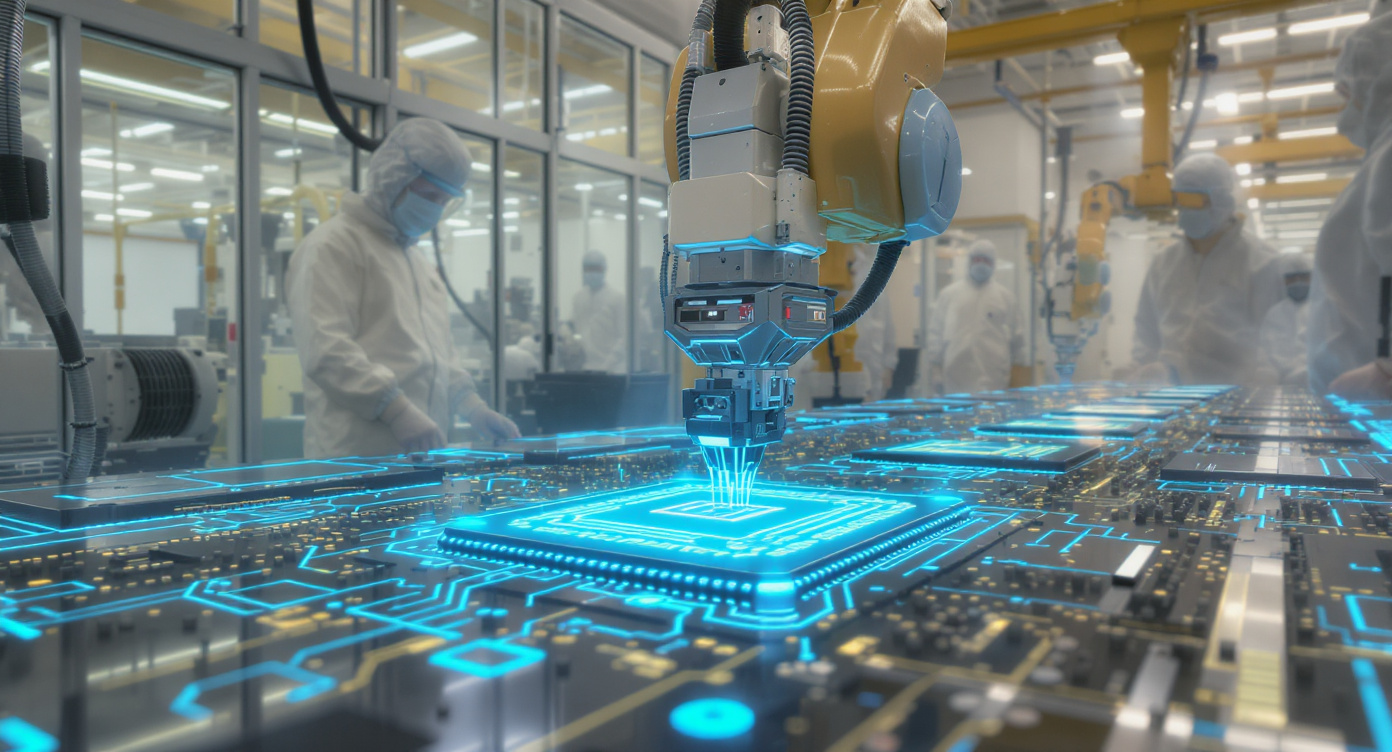
Manufacturing these sophisticated chips requires cutting-edge fabrication processes, typically utilizing 5-nanometer or 3-nanometer technology nodes that only a handful of foundries worldwide can deliver. Taiwan Semiconductor Manufacturing Company (TSMC) and Samsung, the two primary producers of advanced AI chips, are operating at maximum capacity but still cannot meet the overwhelming demand from major players like NVIDIA, AMD, Intel, and emerging competitors.
The situation is further complicated by the extended lead times required for AI chip production. Unlike standard processors, AI accelerators require specialized design validation, extensive testing phases, and complex packaging processes that can extend manufacturing timelines to 12-18 months from order to delivery. This means that the supply chain cannot quickly adapt to sudden demand spikes, creating a lag effect that exacerbates shortages.
Geopolitical factors have also contributed significantly to the crisis. Trade restrictions and export controls between major economies have limited the flow of both raw materials and finished products, forcing companies to seek alternative suppliers and manufacturing locations. This has resulted in supply chain fragmentation and reduced overall efficiency in chip distribution networks.
The energy sector adds another layer of complexity, as AI chip manufacturing requires enormous amounts of electricity and water. Some foundries have faced production constraints due to power grid limitations and environmental regulations, further restricting their ability to scale up production rapidly.
Industry Winners and Losers: Market Disruption Across Sectors
The AI chip shortage has created a stark divide between companies that secured adequate chip supplies early and those caught unprepared by the demand surge. This disparity is reshaping competitive landscapes across multiple industries and accelerating consolidation trends as smaller players struggle to compete without access to essential AI hardware.
Technology Giants Leading the Pack
Large technology companies with established relationships with chip manufacturers and substantial cash reserves have managed to secure priority allocations, allowing them to continue expanding their AI capabilities. Companies like Google, Microsoft, Amazon, and Meta have leveraged their long-term contracts and strategic partnerships to maintain relatively stable chip supplies, enabling them to capture market share from competitors facing hardware constraints.
These tech giants are also investing heavily in developing their own custom AI chips to reduce dependence on external suppliers. Google’s Tensor Processing Units (TPUs), Amazon’s Inferentia chips, and Apple’s Neural Engine represent successful attempts to create specialized AI hardware tailored to specific use cases and reduce reliance on the broader market.
Startups and Mid-Market Companies Struggling
The most severe impact has been felt by AI startups and mid-market companies that lack the purchasing power and supplier relationships of larger competitors. Many promising AI companies have been forced to delay product launches, reduce service offerings, or seek alternative hardware solutions that may not deliver optimal performance.
This has created a significant barrier to entry in the AI market, potentially stifling innovation as smaller companies cannot access the computational resources needed to develop and deploy competitive AI solutions. Some startups have pivoted to software-only approaches or sought partnerships with larger companies that can provide access to AI infrastructure.
Automotive Industry Transformation
The automotive sector has been particularly hard hit, as the transition to autonomous and semi-autonomous vehicles requires substantial AI processing power. Traditional automakers are finding themselves competing directly with tech companies for the same chip supplies, often at a disadvantage due to their historically lower margins and less established relationships with semiconductor suppliers.
This has accelerated partnerships between automotive manufacturers and technology companies, with many carmakers now viewing access to AI chips as a strategic priority requiring dedicated supply chain management and long-term planning.
Cloud Service Providers Adapting Strategies
Cloud computing providers are experiencing both challenges and opportunities. While they face constraints in expanding their AI infrastructure, the shortage has also driven increased demand for their existing AI services as companies seek alternatives to deploying on-premises AI systems.
Strategic Solutions: How Companies Are Navigating the Crisis
Forward-thinking organizations are implementing innovative strategies to overcome chip shortage challenges and position themselves for long-term success in the AI-driven economy. These approaches range from technical optimizations to fundamental changes in business models and supply chain management.
Hardware Optimization and Efficiency Improvements
Many companies are focusing on maximizing the performance of existing AI hardware through software optimizations, algorithm improvements, and more efficient utilization of computational resources. Techniques such as model compression, quantization, and pruning allow AI applications to run effectively on less powerful hardware while maintaining acceptable performance levels.
Edge computing architectures are becoming increasingly popular as they distribute AI processing across multiple smaller devices rather than relying on centralized high-performance chips. This approach not only reduces dependence on the most sought-after AI accelerators but also improves latency and reduces bandwidth requirements.
Alternative Hardware Exploration
Some organizations are exploring alternative hardware platforms that may not be optimal but are more readily available. This includes utilizing graphics processing units (GPUs) originally designed for gaming, field-programmable gate arrays (FPGAs), and even quantum processing units for specific AI workloads.
While these alternatives may not offer the same performance as dedicated AI chips, they can provide viable solutions for companies willing to adjust their technical requirements or accept longer processing times in exchange for hardware availability.
Strategic Partnerships and Consortiums
Industry collaboration has emerged as a key strategy for addressing the chip shortage. Companies are forming partnerships, consortiums, and joint ventures to pool resources, share chip allocations, and collectively negotiate with suppliers for better terms and priority access.
Some organizations are entering into chip-sharing agreements where they coordinate their usage patterns to maximize efficiency across shared hardware resources. This approach is particularly effective for companies with complementary peak usage periods or different geographic markets.
Investment in Domestic Manufacturing
Governments and large corporations are making substantial investments in domestic chip manufacturing capabilities to reduce dependence on overseas suppliers and create more resilient supply chains. The United States, European Union, and other regions have announced multi-billion-dollar initiatives to establish local AI chip production facilities.
While these investments will take several years to materialize into meaningful production capacity, they represent a long-term solution to supply chain vulnerabilities and may help stabilize the market in the future.
Looking Ahead: Long-term Implications and Market Evolution
The current AI chip shortage is likely to have lasting effects on technology markets, business strategies, and global supply chains well beyond the immediate crisis period. Understanding these long-term implications is crucial for organizations planning their AI investments and competitive positioning.
The shortage is accelerating the development of more efficient AI algorithms and architectures that require less computational power to achieve similar results. This trend toward “frugal AI” may ultimately reduce the industry’s dependence on cutting-edge hardware and make AI technologies more accessible to smaller organizations and emerging markets.
We can expect to see increased vertical integration as major technology companies seek greater control over their chip supply chains through acquisitions, strategic investments, and in-house development capabilities. This trend may lead to market consolidation and the emergence of a few dominant ecosystems controlling both hardware and software aspects of AI deployment.
The crisis is also driving innovation in chip design and manufacturing processes. New architectures optimized for specific AI workloads, novel manufacturing techniques, and alternative materials are all receiving increased investment and attention as the industry seeks to expand production capacity and improve efficiency.
Geopolitically, the shortage is reinforcing the strategic importance of semiconductor manufacturing capabilities and may lead to further decoupling of technology supply chains between major economic blocs. Countries are increasingly viewing AI chip production as a matter of national security and economic competitiveness.
The current crisis may also accelerate the adoption of chip-as-a-service models, where companies access AI computing power through cloud-based platforms rather than owning physical hardware. This approach could improve overall utilization efficiency and make AI capabilities more accessible despite hardware constraints.
As we navigate this unprecedented supply crisis, the companies and organizations that adapt most effectively to hardware constraints while continuing to innovate in AI applications will emerge stronger and more competitive. The shortage represents both a significant challenge and an opportunity to rethink how we approach AI deployment and infrastructure planning.
How is your organization adapting to the AI chip shortage, and what strategies are you implementing to ensure continued access to the computational resources needed for your AI initiatives?
Comments