
The artificial intelligence revolution has reached a critical bottleneck. As AI applications explode across industries—from autonomous vehicles to cloud computing—the specialized chips that power these technologies are becoming increasingly scarce. This supply-demand imbalance is reshaping entire industries and forcing companies to rethink their technology strategies.
The current AI chip shortage isn’t just another supply chain hiccup; it’s a fundamental mismatch between the rapid acceleration of AI adoption and the complex, time-intensive process of semiconductor manufacturing. While traditional computer chips face their own supply challenges, AI chips require specialized architectures, advanced materials, and cutting-edge manufacturing processes that only a handful of facilities worldwide can produce.
Graphics Processing Units (GPUs), originally designed for rendering video game graphics, have become the backbone of AI computing due to their parallel processing capabilities. Tensor Processing Units (TPUs) and other application-specific integrated circuits (ASICs) designed explicitly for machine learning workloads are also experiencing unprecedented demand. These chips can cost thousands of dollars each, yet companies are willing to pay premium prices—when they can find them at all.
The shortage has created a ripple effect throughout the technology ecosystem. Startups are delaying product launches, established companies are rationing their AI initiatives, and cloud service providers are struggling to meet customer demands for AI-powered services. Some organizations are even redesigning their AI models to work with less powerful, more readily available hardware.
The Perfect Storm Behind the Shortage
Multiple factors have converged to create this supply crisis, each amplifying the others in a cascading effect that caught even industry veterans off guard.
Explosive AI Adoption Across Industries
The democratization of AI tools has accelerated demand beyond all forecasts. Large language models like ChatGPT have sparked a global rush to implement AI capabilities, with companies across sectors—healthcare, finance, manufacturing, and entertainment—simultaneously scaling their AI operations. Each ChatGPT query requires significant computational power, and with millions of users generating billions of interactions, the infrastructure demands have skyrocketed.
Meanwhile, autonomous vehicle development, cryptocurrency mining, and high-performance computing applications continue to consume massive quantities of specialized chips. The emergence of generative AI has added another layer of demand, as these models require enormous computational resources for both training and inference.
Manufacturing Complexity and Limited Production Capacity
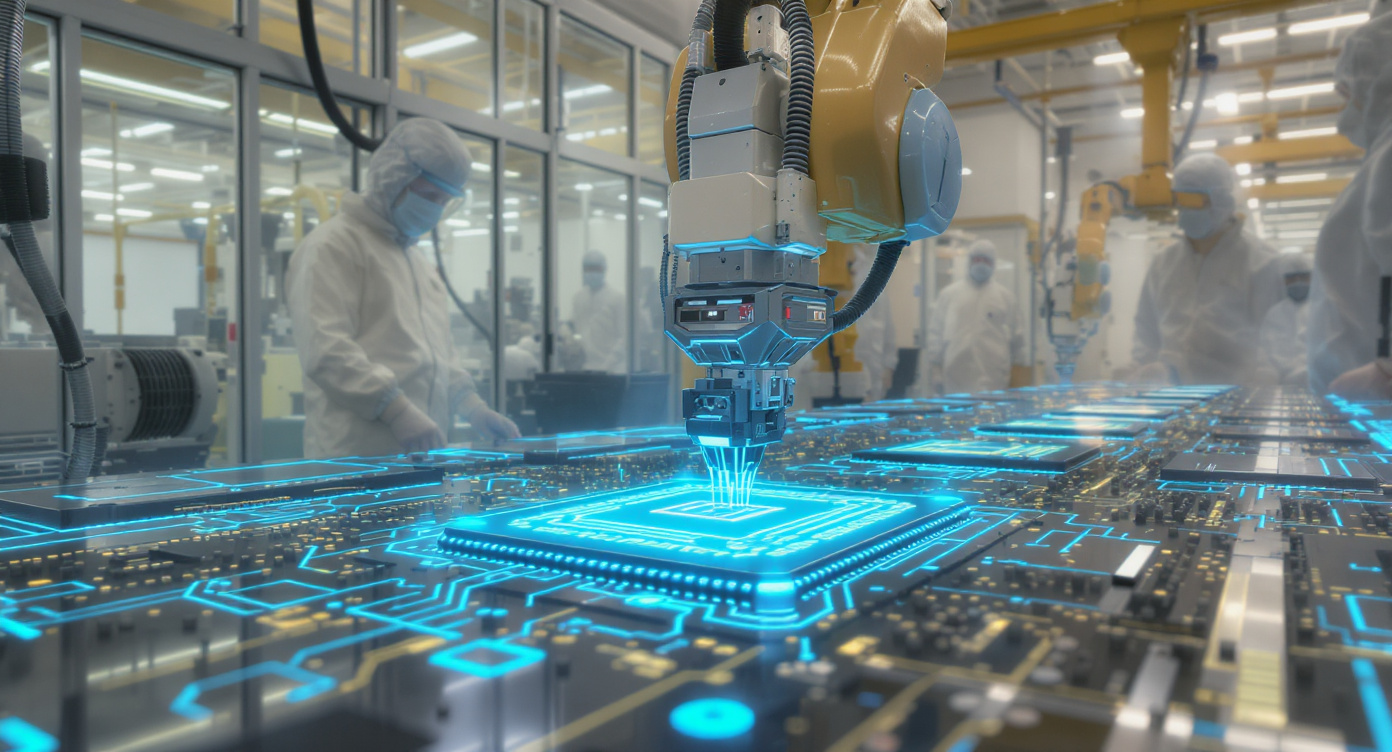
AI chips represent some of the most sophisticated semiconductors ever created. Modern GPUs contain billions of transistors manufactured using cutting-edge processes that only a few foundries worldwide can execute. TSMC and Samsung dominate the market for advanced chip manufacturing, but their production capacity cannot be quickly scaled to meet surging demand.
The manufacturing process for these chips involves hundreds of precise steps, specialized equipment worth millions of dollars, and months-long production cycles. Even minor disruptions—whether from geopolitical tensions, natural disasters, or equipment failures—can significantly impact global supply chains.
Geopolitical Tensions and Export Controls
International trade restrictions have added another layer of complexity to the supply chain. Export controls on advanced semiconductors to certain countries have disrupted traditional supply routes and created additional demand pressure in permitted markets. Companies are stockpiling chips as a hedge against future restrictions, further exacerbating the shortage.
These geopolitical factors have also sparked massive government investments in domestic chip manufacturing capabilities, but these facilities won’t come online for several years, offering no short-term relief to the current crisis.
Real-World Impact on Businesses and Innovation
The AI chip shortage is forcing fundamental changes in how organizations approach technology deployment and strategic planning.
Cloud Computing Giants Struggle to Meet Demand
Major cloud providers like Amazon Web Services, Microsoft Azure, and Google Cloud are experiencing unprecedented demand for AI-capable instances. Some providers have implemented waiting lists for high-end GPU instances, while others have imposed usage limits on existing customers. This scarcity has driven up prices for AI computing services, with some GPU instances costing hundreds of dollars per hour.
Smaller cloud providers and AI-focused startups are finding it nearly impossible to secure the hardware needed to compete with established players. This dynamic is concentrating AI capabilities among a few large companies with existing chip inventories, potentially stifling innovation and competition.
Startups Face Existential Challenges
AI startups, typically operating with limited capital and tight timelines, are particularly vulnerable to the chip shortage. Many are being forced to delay product launches, reduce the complexity of their AI models, or pivot to less hardware-intensive approaches. Some startups are spending months searching for available chips, burning through funding while unable to build their core products.
This situation has created a new category of business risk that venture capitalists and entrepreneurs must now factor into their planning. Securing chip supply has become as critical as developing algorithms or attracting talent.
Traditional Industries Accelerate Digital Transformation
Paradoxically, the chip shortage has intensified demand as traditional industries rush to implement AI capabilities before supply becomes even more constrained. Manufacturing companies are investing in predictive maintenance systems, retailers are deploying recommendation engines, and healthcare organizations are implementing diagnostic AI tools.
This acceleration has created a feedback loop where the fear of future scarcity drives current demand, further exacerbating the shortage and pushing prices higher.
Strategic Responses and Adaptation Techniques
Organizations worldwide are developing creative solutions to navigate the chip shortage while maintaining their AI initiatives.
Optimizing AI Models for Available Hardware
Companies are increasingly focusing on model efficiency and hardware optimization. This includes developing smaller, more efficient neural networks that can run on less powerful chips, implementing model compression techniques, and using specialized software optimizations to maximize performance from available hardware.
Edge computing has gained renewed attention as organizations seek to distribute AI processing across many smaller, more readily available chips rather than concentrating it in data centers equipped with high-end GPUs. This approach can reduce overall chip requirements while improving response times for certain applications.
Alternative Hardware Strategies
Some organizations are exploring alternative chip architectures, including Field-Programmable Gate Arrays (FPGAs) and custom ASICs designed for specific AI workloads. While these solutions require significant upfront investment and longer development timelines, they can provide better long-term supply security and performance optimization.
Intel’s recent push into AI chips with their Habana processors and other emerging players are providing alternatives to the GPU-dominated market, though adoption requires significant software ecosystem development.
Supply Chain Diversification and Strategic Partnerships
Forward-thinking companies are establishing direct relationships with chip manufacturers, joining industry consortiums, and forming strategic partnerships to secure future chip supplies. Some are even investing in chip companies or committing to long-term purchase agreements to guarantee access to critical components.
Cloud-first strategies are becoming more sophisticated, with companies using multiple cloud providers to access different types of AI hardware and reduce dependency on any single supplier or chip type.
Future Outlook and Industry Transformation
The current crisis is catalyzing fundamental changes in the semiconductor industry that will reshape the AI landscape for years to come.
Massive Investment in Production Capacity
Governments and private companies are investing hundreds of billions of dollars in new semiconductor manufacturing facilities. The U.S. CHIPS Act, European Union semiconductor strategies, and massive investments by companies like Intel, TSMC, and Samsung will eventually increase global production capacity significantly.
However, these new facilities won’t begin meaningful production until 2025-2027, meaning the shortage will likely persist in the medium term. When new capacity does come online, it should help stabilize supply and potentially reduce prices.
Innovation in Chip Design and Manufacturing
The shortage is driving innovation in both chip architecture and manufacturing processes. New designs focused on AI workloads are becoming more specialized and efficient, while manufacturing techniques are becoming more automated and scalable.
Chiplet architectures, where multiple smaller chips are combined into more powerful processors, are gaining traction as a way to improve manufacturing yields and flexibility. This approach could help address supply constraints while enabling more customized solutions.
Emergence of New Business Models
The crisis is spurring new business models around AI hardware access. Fractional GPU ownership, AI-as-a-Service platforms, and specialized AI hardware leasing companies are emerging to help organizations access computational resources without massive upfront investments.
These models could persist even after the supply crisis resolves, fundamentally changing how companies access and pay for AI capabilities.
The AI chip shortage represents both a significant challenge and a catalyst for innovation. While short-term disruptions will continue affecting businesses and development timelines, the industry’s response is driving technological advancement and infrastructure investment that will ultimately benefit the entire AI ecosystem.
Organizations that successfully navigate this crisis—through strategic partnerships, technical innovation, and adaptive planning—will be well-positioned to capitalize on the enormous opportunities that AI presents. The companies that emerge stronger from this supply crisis will likely be those that viewed it not just as an obstacle, but as an opportunity to innovate and differentiate their approaches to AI implementation.
How is your organization adapting its AI strategy to address the current chip shortage, and what alternative approaches are you considering to maintain your competitive advantage?
Comments