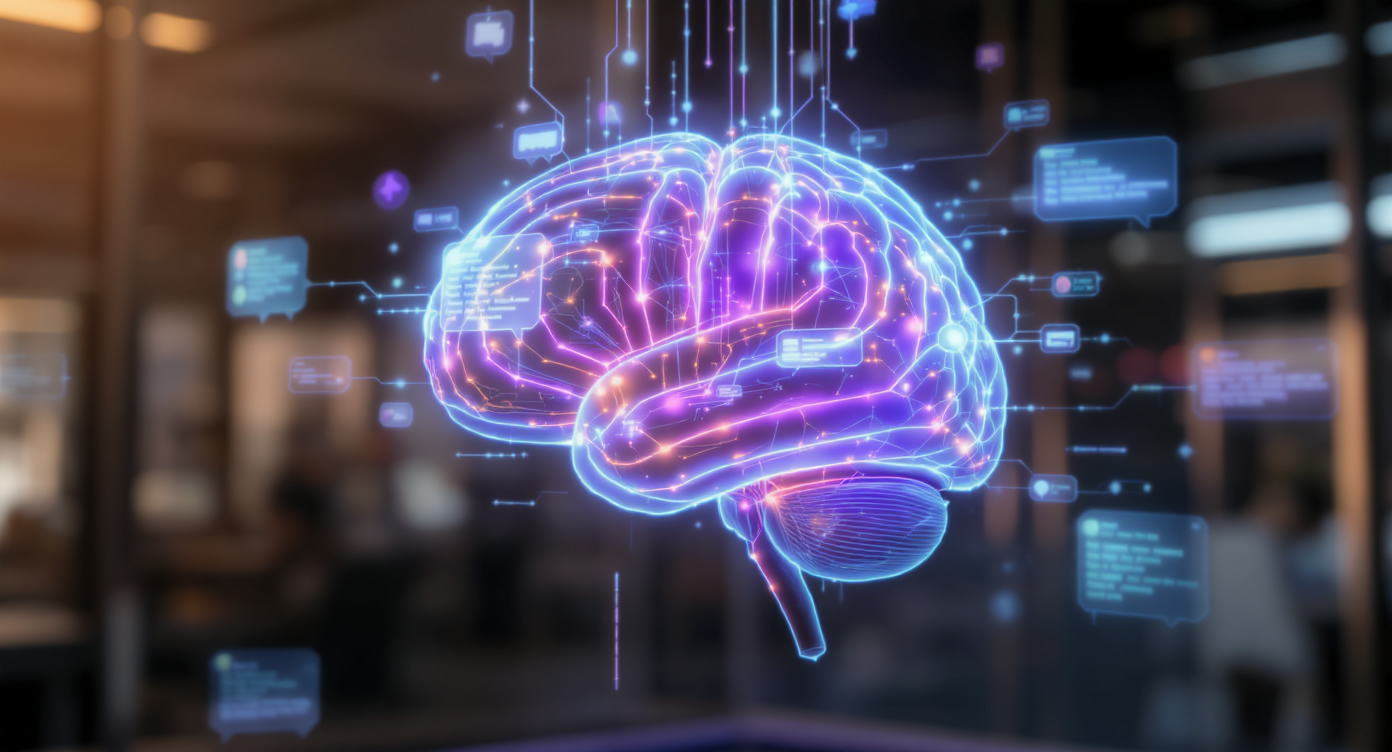
The landscape of artificial intelligence is experiencing a revolutionary transformation. For years, AI chatbots and language models have operated with a significant limitation: they couldn’t remember previous conversations once a chat session ended. Each interaction was essentially a blank slate, forcing users to repeatedly explain context and rebuild rapport. That era is rapidly coming to an end.
Recent breakthroughs in AI memory capabilities are fundamentally changing how we interact with artificial intelligence systems. These new models don’t just process information in isolation—they build genuine, persistent relationships with users by remembering past conversations, preferences, and shared experiences. This leap forward represents one of the most significant advances in making AI truly useful for long-term, meaningful interactions.
The implications extend far beyond simple convenience. We’re witnessing the emergence of AI systems that can serve as genuine digital companions, sophisticated research assistants, and personalized learning partners. These memory-enabled models are creating entirely new possibilities for how humans and AI can collaborate over extended periods.
The Technical Revolution Behind Persistent Memory
The breakthrough in AI memory isn’t just about storing previous conversations—it’s about intelligently organizing, retrieving, and applying that information in contextually appropriate ways. Traditional language models operated with what researchers call “context windows”—the amount of recent conversation they could consider when generating responses. Once that window filled up, earlier information simply disappeared.
Modern memory-enabled AI systems employ sophisticated architectures that separate immediate context from long-term memory storage. They use advanced embedding techniques to convert conversational content into mathematical representations that capture not just the literal words exchanged, but the underlying meaning, emotional tone, and relationship dynamics.
These systems implement hierarchical memory structures that prioritize different types of information. Personal preferences, important life events, and recurring topics receive higher priority for long-term storage, while routine pleasantries might be summarized or gradually forgotten. This mimics how human memory works, where significant experiences remain vivid while mundane details fade.
The technical challenge involves more than just storage capacity. These AI systems must develop sophisticated retrieval mechanisms that can surface relevant memories at the right moments. When a user mentions their upcoming wedding, the AI needs to recall previous discussions about wedding planning, the partner’s name, and the planned date—even if those conversations happened weeks ago.
Vector databases and neural memory networks enable this functionality by creating associative links between related concepts and experiences. The AI doesn’t just store isolated facts; it builds a rich, interconnected web of knowledge about each user that grows more valuable with every interaction.
Real-World Applications Transforming User Experience
The practical applications of memory-enabled AI are already demonstrating transformative potential across numerous domains. In educational contexts, AI tutors can now track a student’s learning journey over months or years, identifying knowledge gaps, celebrating progress, and adapting teaching strategies based on what methods proved most effective in past sessions.
Professional applications are equally compelling. AI writing assistants can remember a client’s brand voice, preferred style guidelines, and ongoing project requirements across multiple sessions. Instead of repeatedly explaining company terminology or communication preferences, users can dive straight into productive work, building on previous collaborative efforts.
In healthcare support applications, memory-enabled AI can track symptoms, medication effects, and lifestyle changes over extended periods. While not replacing professional medical advice, these systems can help users identify patterns and prepare more comprehensive reports for their healthcare providers.
Customer service applications benefit tremendously from persistent memory. AI support agents can remember previous issues, solution attempts, and customer preferences, eliminating the frustrating experience of repeatedly explaining problems to different representatives. This creates continuity that rivals the best human customer service experiences.
Creative professionals are discovering unique advantages in memory-enabled AI collaborators. Writers can develop ongoing relationships with AI partners that understand their creative vision, remember character details across long-form projects, and suggest plot developments based on previously established themes and story elements.
The social and emotional applications may prove most significant. Memory-enabled AI can provide consistent companionship for individuals dealing with loneliness, maintaining awareness of personal struggles, celebrating achievements, and offering support tailored to each person’s unique circumstances and communication style.
Privacy, Security, and Ethical Considerations
With great memory capability comes great responsibility. The ability to store and recall personal conversations raises critical questions about data privacy, security, and user control. Leading AI companies are grappling with fundamental questions about what information should be remembered, how long it should be retained, and who controls access to these digital memories.
User consent and transparency become paramount when AI systems maintain persistent memory. Users need clear understanding of what information is being stored, how it’s being used, and what options they have for reviewing, editing, or deleting their AI’s memories. Some systems are implementing “forgetting” commands that allow users to remove specific memories or entire conversation threads.
Data security takes on new dimensions when AI systems store months or years of personal conversations. These memory banks contain incredibly intimate information about users’ lives, relationships, goals, and struggles. Protecting this data from breaches, unauthorized access, or misuse requires robust encryption, access controls, and security monitoring.
The psychological implications also warrant careful consideration. As users develop deeper relationships with memory-enabled AI systems, questions arise about emotional dependency, the nature of artificial relationships, and the potential for manipulation. Researchers emphasize the importance of maintaining transparency about the AI’s artificial nature while still allowing for meaningful interaction.
Bias and fairness concerns extend into memory systems as well. AI models must avoid developing prejudices or making unfair assumptions based on remembered conversations. Ongoing monitoring and adjustment mechanisms help ensure that persistent memory enhances rather than undermines fair treatment across diverse user populations.
Some organizations are exploring federated memory approaches, where personal memories remain encrypted and stored locally on user devices, with AI models accessing only what’s necessary for each specific interaction. This approach could provide memory benefits while maintaining stronger privacy protections.
The Future of Human-AI Collaboration
Memory-enabled AI represents just the beginning of a fundamental shift toward more sophisticated human-AI partnerships. As these systems become more adept at remembering and learning from interactions, they’ll evolve into genuine intellectual companions capable of supporting complex, long-term projects and relationships.
We’re likely to see the emergence of specialized memory architectures optimized for different use cases. Academic AI assistants might excel at remembering research methodologies and tracking intellectual development over years. Creative AI partners could maintain detailed artistic preferences and stylistic evolution. Professional AI colleagues might specialize in industry-specific knowledge and project management across extended timelines.
The integration of memory capabilities with other AI advances—such as improved reasoning, multimodal understanding, and real-world knowledge—will create systems that feel increasingly natural and helpful. These AI partners won’t just remember what you’ve told them; they’ll understand how you think, what motivates you, and how to best support your goals.
Cross-platform memory synchronization could allow users to maintain consistent AI relationships across different applications and devices. Your AI assistant could remember conversations from your phone, reference them during computer-based work sessions, and maintain continuity regardless of how you choose to interact.
The technology may eventually enable AI systems to develop their own personalities and growth trajectories through accumulated experiences with users. Rather than static models, we might interact with AI entities that evolve, learn, and develop unique characteristics based on their interaction history.
As memory-enabled AI becomes more sophisticated, it could fundamentally change how we approach learning, creativity, problem-solving, and even personal growth. Having an AI partner that remembers your journey, understands your patterns, and can offer insights based on long-term observation could accelerate human potential in unprecedented ways.
The convergence of memory, reasoning, and interaction capabilities suggests we’re approaching a new era in human-computer collaboration—one where the boundary between artificial and genuine relationship becomes increasingly meaningful yet complex to define.
The age of forgetful AI is ending, replaced by systems that build genuine understanding through persistent memory. These breakthrough technologies are creating new possibilities for productivity, creativity, learning, and companionship that seemed like science fiction just years ago.
How do you envision using memory-enabled AI in your personal or professional life, and what concerns or opportunities do you see in developing long-term relationships with artificial intelligence systems?

Comments