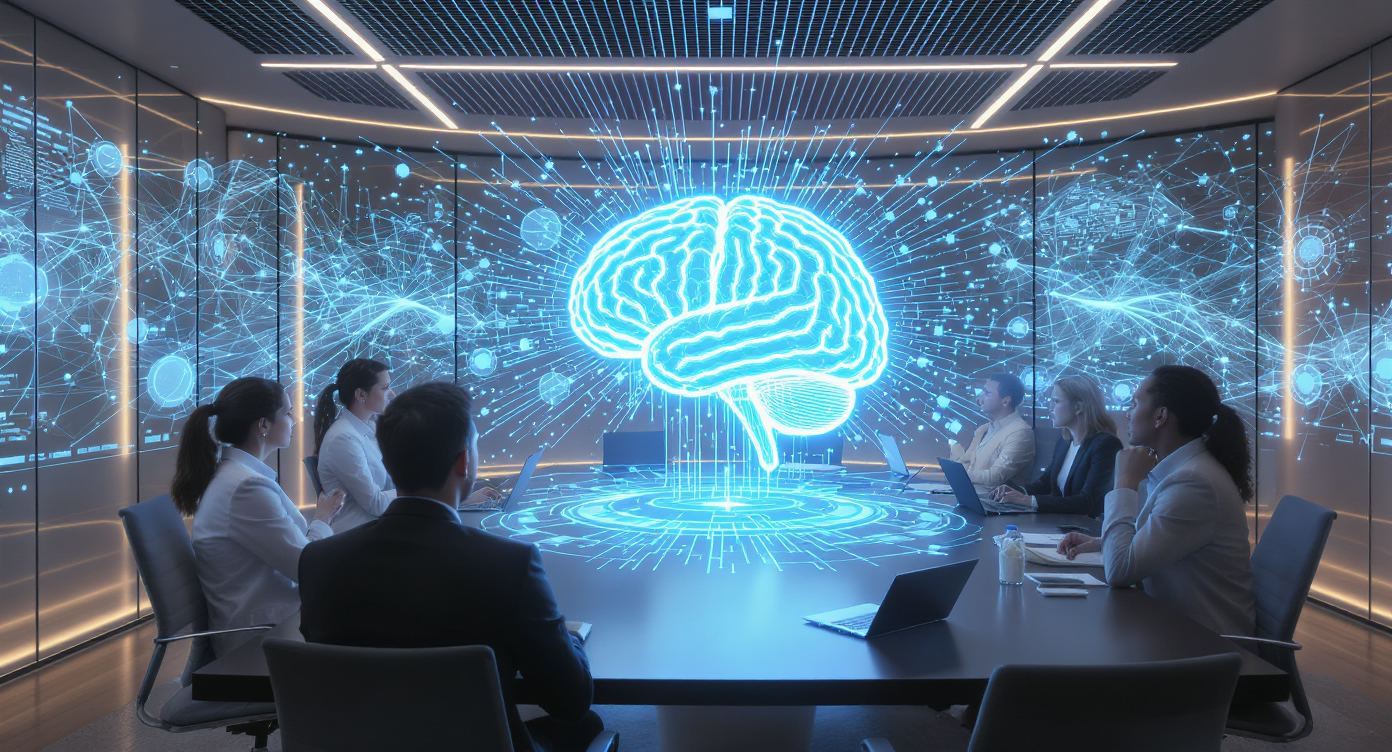
The artificial intelligence landscape has just witnessed a seismic shift with OpenAI’s latest announcement regarding GPT-5’s beta performance metrics. Early testing reveals that GPT-5 demonstrates 40% better reasoning skills compared to its predecessor, GPT-4, marking a significant leap forward in AI cognitive capabilities. This breakthrough promises to reshape how we interact with AI systems and could fundamentally alter numerous industries that rely on complex problem-solving and analytical thinking.
The implications of this advancement extend far beyond mere technological curiosity. As businesses, researchers, and individuals increasingly depend on AI for critical decision-making processes, the enhanced reasoning capabilities of GPT-5 could unlock previously unattainable levels of productivity and innovation across multiple sectors.
Understanding the Breakthrough: What 40% Better Reasoning Actually Means
When OpenAI claims GPT-5 shows 40% better reasoning skills, they’re referring to measurable improvements across several key cognitive benchmarks. These include logical deduction, causal reasoning, multi-step problem solving, and abstract thinking capabilities. The evaluation encompasses standardized tests designed to measure AI performance in areas that traditionally required human-level intelligence.
Logical Deduction Improvements: GPT-5 demonstrates enhanced ability to follow complex logical chains, identifying valid conclusions from given premises with significantly higher accuracy. In beta testing, the model showed remarkable improvement in handling syllogistic reasoning and conditional statements that previously challenged even advanced AI systems.
Enhanced Causal Reasoning: Perhaps most impressive is GPT-5’s improved understanding of cause-and-effect relationships. The model can now better distinguish between correlation and causation, analyze multi-variable scenarios, and predict outcomes based on complex interdependencies. This advancement is particularly valuable for business analytics, scientific research, and strategic planning applications.
Multi-Step Problem Solving: The new model excels at breaking down complex problems into manageable components and systematically working through solutions. This capability proves especially valuable in mathematical proofs, engineering challenges, and strategic business problems that require sustained logical thinking over multiple steps.
Abstract Thinking Capabilities: GPT-5 shows remarkable improvement in handling abstract concepts, metaphorical reasoning, and creative problem-solving scenarios. This enhancement bridges the gap between purely analytical processing and the kind of flexible thinking that characterizes human intelligence.
The 40% improvement metric comes from comprehensive testing across diverse reasoning tasks, including standardized academic assessments, professional certification exams, and novel problem-solving challenges specifically designed to evaluate AI reasoning capabilities.
Real-World Applications and Industry Impact
The enhanced reasoning capabilities of GPT-5 translate into tangible benefits across numerous professional domains, fundamentally changing how AI can support human decision-making and problem-solving processes.
Healthcare and Medical Diagnosis: Medical professionals are already exploring how GPT-5’s improved reasoning could enhance diagnostic accuracy and treatment planning. The model’s ability to analyze complex symptom patterns, consider multiple differential diagnoses, and reason through treatment protocols could significantly support clinical decision-making. Early beta testing suggests GPT-5 can better integrate patient history, current symptoms, and medical literature to provide more nuanced diagnostic insights.
Financial Analysis and Investment Strategy: The financial sector stands to benefit enormously from GPT-5’s enhanced analytical capabilities. Investment firms are testing the model’s ability to analyze market trends, assess risk factors, and develop sophisticated investment strategies. The improved causal reasoning helps identify genuine market drivers rather than spurious correlations, potentially leading to more successful investment outcomes.
Legal Research and Case Analysis: Legal professionals are discovering that GPT-5’s superior reasoning skills translate into more effective case analysis and legal research. The model can better understand complex legal precedents, analyze multi-faceted legal arguments, and identify relevant case law with improved accuracy and nuance.
Scientific Research and Development: Researchers across various scientific disciplines are leveraging GPT-5’s enhanced problem-solving capabilities to accelerate discovery processes. The model’s improved ability to generate and test hypotheses, analyze experimental data, and identify research directions is proving valuable in fields ranging from drug discovery to materials science.
Business Strategy and Management: Corporate strategists are finding GPT-5 invaluable for scenario planning, competitive analysis, and strategic decision-making. The model’s enhanced reasoning allows for more sophisticated analysis of market conditions, competitive landscapes, and potential business outcomes.
The practical impact extends beyond individual applications to fundamental changes in workflow efficiency. Teams using GPT-5 report significant time savings in research phases, more comprehensive analysis of complex problems, and improved quality of strategic recommendations.
Technical Innovations Behind the Improvement
OpenAI’s achievement in developing GPT-5’s enhanced reasoning capabilities stems from several key technical innovations that represent significant advances in artificial intelligence architecture and training methodologies.
Advanced Neural Architecture: GPT-5 incorporates novel neural network architectures that better support sustained reasoning processes. These improvements include enhanced attention mechanisms that can maintain context over longer reasoning chains and specialized modules designed specifically for logical operations. The architecture allows the model to maintain coherent reasoning threads while simultaneously considering multiple perspectives on complex problems.
Refined Training Methodologies: The training process for GPT-5 included extensive exposure to structured reasoning tasks, mathematical proofs, and logical problem sets. OpenAI implemented reinforcement learning techniques that specifically reward valid reasoning processes, not just correct answers. This approach helps the model develop more robust logical thinking patterns rather than simply memorizing solutions to specific problem types.
Enhanced Context Integration: One of GPT-5’s most significant improvements lies in its ability to integrate and maintain context across complex reasoning tasks. The model can better track multiple variables, remember intermediate conclusions, and apply previously established facts to new situations within the same problem-solving session.
Improved Error Detection and Correction: GPT-5 demonstrates enhanced metacognitive abilities – essentially, thinking about its own thinking. The model can better identify when its reasoning might be flawed, backtrack to correct errors, and verify the validity of its conclusions through multiple reasoning pathways.
Multimodal Reasoning Integration: While primarily known for text processing, GPT-5’s reasoning improvements extend to multimodal capabilities, allowing it to reason across text, images, and other data types more effectively than previous versions.
These technical advances represent fundamental improvements in how AI systems process information and generate insights, moving closer to the kind of flexible, adaptive reasoning that characterizes human intelligence.
Implications for the Future of AI and Human Collaboration
The 40% improvement in reasoning skills demonstrated by GPT-5 signals a pivotal moment in artificial intelligence development, with profound implications for how humans and AI systems will collaborate in the future.
Shifting Human-AI Dynamics: As AI reasoning capabilities approach and potentially exceed human performance in specific domains, the nature of human-AI collaboration is evolving. Rather than simply automating routine tasks, AI is increasingly capable of serving as a genuine intellectual partner in complex problem-solving scenarios. This shift requires humans to develop new skills in AI collaboration, prompt engineering, and critical evaluation of AI-generated insights.
Educational and Training Implications: The enhanced reasoning capabilities of GPT-5 have significant implications for education and professional training. Educational institutions are beginning to explore how these tools can support learning while ensuring students develop critical thinking skills that complement rather than depend entirely on AI capabilities.
Ethical Considerations and Responsible Development: With more powerful reasoning capabilities comes greater responsibility for ethical AI deployment. The enhanced problem-solving abilities of GPT-5 make it crucial to implement robust safeguards against misuse while ensuring equitable access to these powerful capabilities.
Economic and Workforce Impacts: Industries that rely heavily on analytical and reasoning skills may experience significant transformation as GPT-5 and similar technologies become more widely available. This shift presents both opportunities for increased productivity and challenges for workforce adaptation.
Research and Innovation Acceleration: The improved reasoning capabilities could accelerate research and innovation across numerous fields by providing researchers with more capable analytical partners. This could lead to faster scientific discoveries, more efficient problem-solving processes, and novel approaches to complex challenges.
The future landscape suggests a world where human creativity, emotional intelligence, and strategic thinking combine with AI’s enhanced reasoning capabilities to tackle previously unsolvable problems and unlock new possibilities for innovation and progress.
As GPT-5’s enhanced reasoning capabilities prepare to reshape industries and redefine human-AI collaboration, one critical question emerges: How will you adapt your professional skills and strategies to leverage these powerful new AI reasoning capabilities while maintaining your unique human value proposition in an increasingly AI-integrated world?
Comments