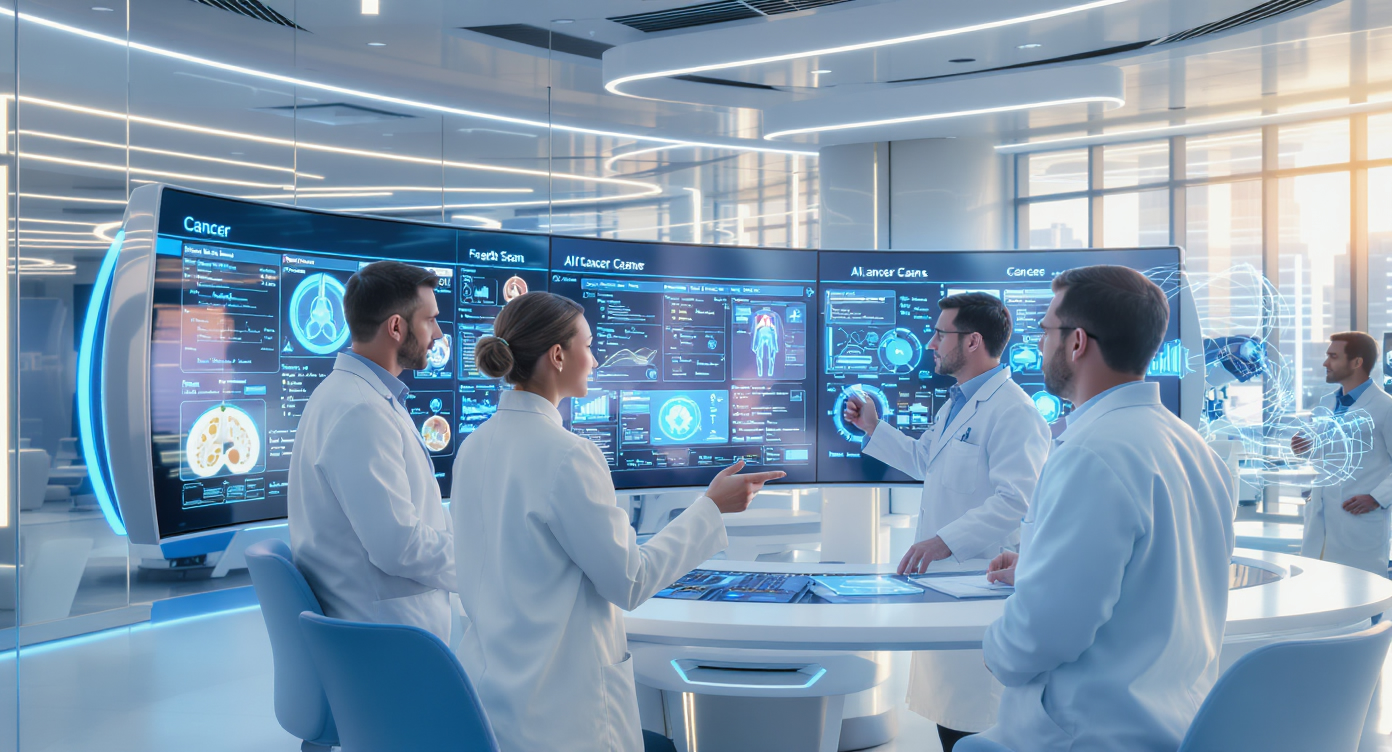
The fight against cancer has reached a remarkable milestone that could transform how we detect and treat this devastating disease. Recent breakthroughs in artificial intelligence have demonstrated that AI models can now achieve an astounding 90% accuracy rate in early cancer detection—a development that promises to save millions of lives worldwide.
This achievement represents years of intensive research, machine learning refinement, and collaboration between technologists and medical professionals. As we stand at the threshold of this medical revolution, understanding the implications of AI-powered cancer detection becomes crucial for patients, healthcare providers, and the broader medical community.
The Science Behind AI Cancer Detection Accuracy
Artificial intelligence models achieve their remarkable 90% accuracy through sophisticated deep learning algorithms that can analyze medical imaging data with superhuman precision. These systems are trained on massive datasets containing millions of medical images, including CT scans, MRIs, mammograms, and pathology slides, allowing them to identify subtle patterns that human eyes might miss.
The key to this breakthrough lies in convolutional neural networks (CNNs), which excel at image recognition tasks. These AI systems can detect microscopic changes in tissue structure, unusual cell formations, and early-stage tumor development that often escape detection during routine screenings. Unlike human radiologists who may experience fatigue or oversight, AI models maintain consistent performance levels regardless of workload or time constraints.
What makes these results particularly impressive is the AI’s ability to identify cancers at Stage 1 and Stage 2—the critical early phases when treatment success rates are highest. Traditional detection methods often struggle with early-stage cancers because symptoms haven’t yet manifested, and tumors may be too small or subtle for conventional imaging techniques to reliably identify.
The training process involves feeding AI systems both positive and negative examples—images showing cancerous and non-cancerous tissue. Through iterative learning, these models develop increasingly sophisticated pattern recognition capabilities, eventually surpassing human diagnostic accuracy in many scenarios. Recent studies have shown that AI systems can reduce false positives by up to 5.7% while simultaneously reducing false negatives by 9.4%.
Current Applications and Real-World Impact
Healthcare institutions worldwide are already implementing AI-powered cancer detection systems with remarkable results. Google’s AI system for lung cancer detection has been deployed in several major medical centers, demonstrating its ability to identify malignant nodules in chest CT scans more accurately than experienced radiologists.
In breast cancer screening, AI models are revolutionizing mammography interpretation. The technology has proven particularly effective at detecting dense breast tissue abnormalities, which traditionally pose challenges for human radiologists. Several European healthcare systems have integrated AI mammography screening into their national programs, resulting in earlier detection rates and improved patient outcomes.
Skin cancer detection represents another area where AI has achieved breakthrough results. Dermatology-focused AI systems can analyze photographs of skin lesions and identify potential melanomas with accuracy rates exceeding 90%. This capability has enabled the development of smartphone applications that provide preliminary skin cancer screening, making early detection accessible to populations with limited healthcare access.
The real-world impact extends beyond accuracy improvements. AI-powered detection systems are addressing critical healthcare challenges:
- Radiologist shortage mitigation: With many regions facing shortages of qualified radiologists, AI systems help bridge the gap by providing rapid preliminary screenings
- Reduced healthcare costs: Early detection significantly reduces treatment costs compared to late-stage cancer interventions
- Improved screening efficiency: AI can process hundreds of images in the time it takes a human radiologist to analyze a handful
- Enhanced diagnostic confidence: Radiologists using AI-assisted tools report increased confidence in their diagnoses
Clinical studies have documented tangible outcomes from AI implementation. At one major cancer center, the integration of AI screening tools resulted in a 23% increase in early-stage cancer detection rates and a 15% reduction in unnecessary biopsies. These improvements translate directly into better patient outcomes and reduced healthcare system strain.
Challenges and Limitations in AI Cancer Detection
Despite these impressive achievements, AI cancer detection technology faces significant challenges that must be addressed before widespread adoption becomes reality. Data bias represents one of the most critical concerns, as AI systems are only as good as the data used to train them. Many existing datasets lack diversity in terms of demographics, genetic backgrounds, and geographic representation, potentially leading to reduced accuracy in underrepresented populations.
The “black box” nature of deep learning algorithms poses another challenge for medical adoption. Healthcare providers need to understand how AI systems reach their conclusions, particularly when making life-altering diagnoses. Regulatory bodies increasingly require explainable AI systems that can provide clear reasoning for their diagnostic recommendations.
Technical limitations include:
- Image quality dependence: AI systems require high-quality, standardized imaging inputs to maintain accuracy
- False positive management: While reduced compared to human error rates, false positives can still lead to unnecessary anxiety and procedures
- Rare cancer detection: AI systems may struggle with extremely rare cancer types due to limited training data
- Integration complexity: Incorporating AI tools into existing healthcare IT systems requires significant technical infrastructure
Ethical considerations surrounding AI medical diagnosis continue to evolve. Questions about liability, patient consent for AI-assisted diagnosis, and the appropriate level of human oversight remain topics of ongoing debate within the medical community. Additionally, ensuring equitable access to AI-powered screening tools across different socioeconomic groups presents both technical and policy challenges.
The regulatory landscape adds another layer of complexity. While the FDA and other regulatory bodies have begun approving AI medical devices, the approval process for new AI cancer detection tools can be lengthy and expensive, potentially slowing the pace of innovation and deployment.
Future Prospects and Healthcare Integration
The future of AI in cancer detection extends far beyond current 90% accuracy rates. Researchers are developing multi-modal AI systems that combine different types of medical data—imaging, genetic information, blood biomarkers, and patient history—to create even more comprehensive diagnostic tools. These integrated approaches could potentially push accuracy rates above 95% while expanding detection capabilities to a broader range of cancer types.
Emerging technologies like liquid biopsies, which detect circulating tumor DNA in blood samples, are being enhanced with AI analysis capabilities. This combination could enable routine blood tests to screen for multiple cancer types simultaneously, revolutionizing preventive healthcare approaches.
Key developments on the horizon include:
- Personalized screening protocols: AI systems that adapt screening recommendations based on individual risk factors and genetic profiles
- Real-time pathology analysis: AI-powered tools that can analyze tissue samples during surgery, enabling immediate treatment decisions
- Predictive modeling: Systems that can predict cancer development risk years before symptoms appear
- Telemedicine integration: AI tools that enable high-quality cancer screening in remote or underserved areas
Healthcare integration strategies are evolving to maximize AI benefits while maintaining quality patient care. Many institutions are adopting hybrid models where AI provides initial screening and risk stratification, with human specialists focusing on high-risk cases and complex diagnostic scenarios. This approach optimizes both efficiency and diagnostic accuracy while preserving the human element in patient care.
The economic impact of widespread AI cancer detection adoption could be transformative. Healthcare economists project that early detection improvements could reduce global cancer treatment costs by 20-30% while significantly improving survival rates. This cost reduction could make advanced cancer screening accessible to broader populations worldwide.
Training programs for healthcare professionals are adapting to include AI literacy components, ensuring that medical staff can effectively collaborate with AI systems. This educational evolution is crucial for successful technology integration and optimal patient outcomes.
The convergence of AI cancer detection with other emerging technologies—including robotics, genomics, and precision medicine—promises to create comprehensive cancer care ecosystems that address prevention, detection, treatment, and monitoring in integrated, highly effective ways.
As AI models achieve unprecedented 90% accuracy in early cancer detection, we’re witnessing the dawn of a new era in medical diagnosis. This technology has the potential to save countless lives through earlier intervention and more precise screening protocols. However, realizing this potential requires continued innovation, careful regulation, and thoughtful integration into existing healthcare systems.
What aspects of AI-powered cancer detection do you think will have the most significant impact on healthcare accessibility in your community?
Comments