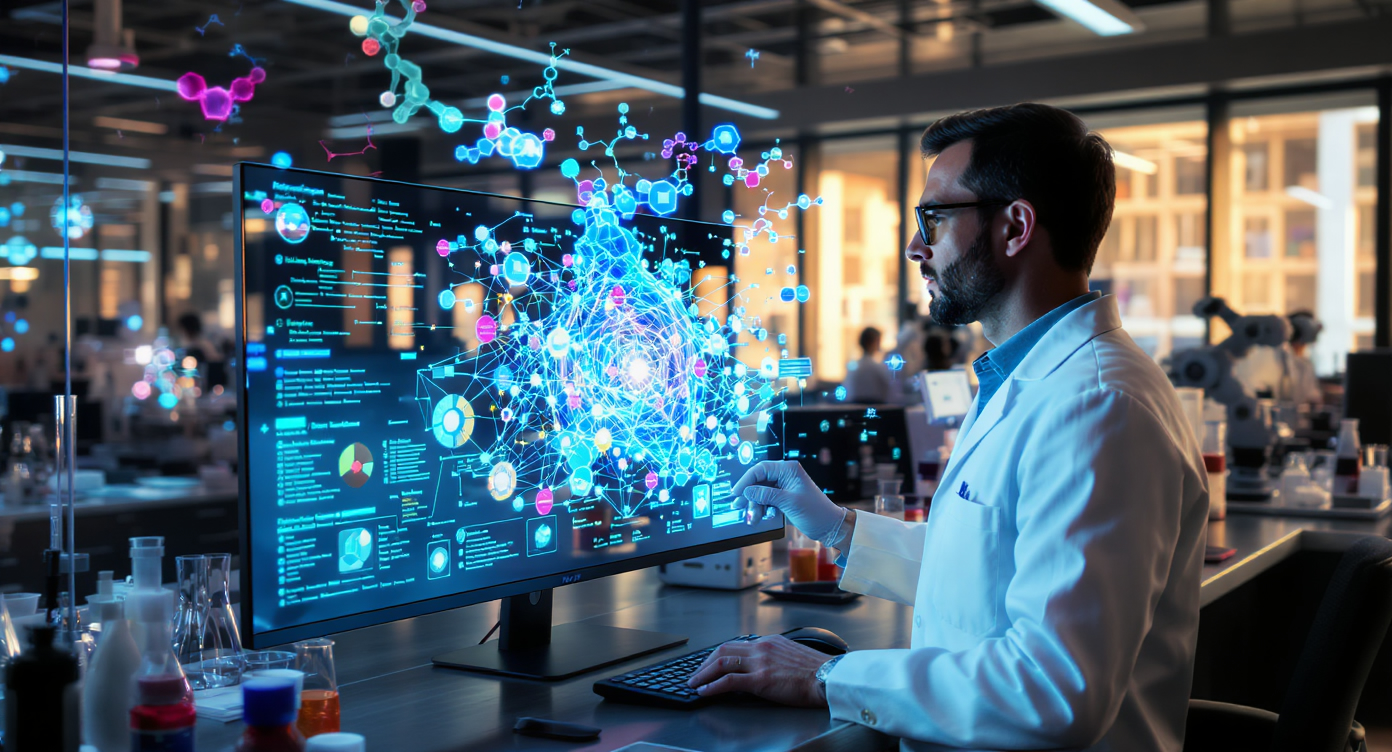
The pharmaceutical industry stands on the brink of a revolutionary transformation. Recent breakthroughs in artificial intelligence have demonstrated the potential to reduce drug development timelines by an unprecedented 75%, fundamentally changing how we approach the creation of life-saving medications. This game-changing advancement promises to address one of healthcare’s most pressing challenges: the notoriously lengthy and expensive process of bringing new drugs to market.
Traditional drug discovery typically spans 10-15 years and costs billions of dollars, with many promising compounds failing at various stages of development. However, AI-powered platforms are now identifying viable drug candidates in months rather than years, while simultaneously improving success rates and reducing costs. Major pharmaceutical companies and biotech startups alike are racing to implement these technologies, recognizing their transformative potential for addressing urgent medical needs.
The convergence of machine learning algorithms, vast biological databases, and advanced computational power has created an environment where AI can analyze molecular interactions, predict drug efficacy, and identify potential side effects with remarkable accuracy. This technological leap forward represents more than incremental improvement—it’s a paradigm shift that could accelerate treatments for cancer, Alzheimer’s, rare diseases, and other conditions that have long challenged medical researchers.
How AI is Revolutionizing Drug Discovery Processes
Artificial intelligence is transforming every stage of the drug discovery pipeline, from initial target identification to clinical trial optimization. Machine learning algorithms can now analyze vast datasets of genetic information, protein structures, and molecular interactions to identify promising therapeutic targets in a fraction of the time previously required.
One of the most significant breakthroughs involves virtual screening technologies that can evaluate millions of potential compounds against specific disease targets. Traditional high-throughput screening might test thousands of compounds in laboratory settings over months, while AI-powered virtual screening can analyze millions of molecular structures in days. These systems use sophisticated algorithms to predict how different compounds will interact with target proteins, essentially conducting millions of virtual experiments simultaneously.
Predictive modeling represents another crucial advancement, where AI systems learn from historical drug development data to forecast which compounds are most likely to succeed in clinical trials. These models consider factors such as absorption, distribution, metabolism, excretion, and toxicity (ADMET) properties, helping researchers prioritize the most promising candidates early in the development process.
AI is also revolutionizing clinical trial design by identifying optimal patient populations, predicting enrollment challenges, and even simulating trial outcomes before human testing begins. Natural language processing algorithms can analyze vast amounts of medical literature and patient data to identify biomarkers that might predict treatment response, enabling more targeted and efficient clinical studies.
The integration of AI with omics technologies—including genomics, proteomics, and metabolomics—has created unprecedented opportunities for precision drug discovery. These systems can identify patient subgroups most likely to benefit from specific treatments, leading to more personalized therapeutic approaches and higher success rates in clinical development.
Real-World Success Stories and Case Studies
The theoretical promise of AI in drug discovery is being validated through tangible successes across the pharmaceutical industry. Several high-profile cases demonstrate the technology’s potential to accelerate drug development while improving outcomes for patients with serious medical conditions.
Atomwise, an AI drug discovery company, made headlines by identifying potential treatments for Ebola in just days rather than months or years. Their AI platform analyzed existing drug compounds and identified several that could potentially inhibit the Ebola virus. This rapid identification process, which would traditionally require extensive laboratory screening, demonstrated AI’s ability to respond quickly to emerging health crises.
Exscientia achieved a significant milestone by becoming the first company to advance an AI-discovered drug into human clinical trials. Their platform designed a treatment for obsessive-compulsive disorder in just 12 months, compared to the typical 4-5 years required for traditional drug discovery. The AI system optimized the molecular structure through iterative cycles, creating a compound with improved properties and reduced side effects.
BenevolentAI successfully identified baricitinib, an existing rheumatoid arthritis drug, as a potential COVID-19 treatment using their AI platform. The system analyzed vast amounts of biomedical data to understand the virus’s effects on human cells and identified this existing medication as a promising therapeutic option. Clinical trials subsequently confirmed the drug’s efficacy against COVID-19, leading to regulatory approval in several countries.
Insilico Medicine demonstrated the power of AI-driven drug discovery by identifying a novel treatment for fibrosis in just 46 days and synthesizing it in 78 days. Their AI platform designed the compound from scratch, optimizing its properties for the specific therapeutic target. This achievement showcased AI’s ability to create entirely new molecules rather than simply repurposing existing drugs.
These success stories share common themes: dramatically reduced timelines, improved precision in targeting specific diseases, and the ability to identify unexpected therapeutic opportunities. Companies utilizing AI-powered drug discovery report success rates 2-3 times higher than traditional methods, while significantly reducing the time and resources required for early-stage development.
Challenges and Limitations in AI-Driven Drug Development
Despite remarkable progress, AI-driven drug discovery faces several significant challenges that must be addressed to fully realize its potential. Understanding these limitations is crucial for setting realistic expectations and developing strategies to overcome current obstacles.
Data quality and availability represent perhaps the most fundamental challenge. AI algorithms require vast amounts of high-quality, standardized data to function effectively. However, much of the existing pharmaceutical data is proprietary, fragmented, or stored in incompatible formats. Historical clinical trial data often lacks standardization, making it difficult for AI systems to learn effectively from past experiences. Additionally, negative results are frequently unpublished, creating bias in the datasets used to train AI models.
Regulatory uncertainty poses another significant hurdle. Regulatory agencies like the FDA are still developing frameworks for evaluating AI-discovered drugs and the algorithms that identify them. Questions remain about how much data regulators will require to validate AI-generated insights and whether traditional clinical trial requirements will need modification for AI-discovered compounds. This uncertainty can slow adoption and create additional compliance costs for pharmaceutical companies.
Interpretability and trust issues present ongoing challenges for AI implementation. Many advanced machine learning algorithms operate as “black boxes,” making predictions without providing clear explanations for their decisions. Pharmaceutical researchers and regulators need to understand why an AI system recommends specific compounds or predicts certain outcomes. This lack of transparency can hinder acceptance and make it difficult to build confidence in AI-generated recommendations.
Complex biological systems remain difficult for AI to fully model. While AI excels at identifying patterns in large datasets, biological systems involve intricate interactions that may not be captured in available data. Drug efficacy can depend on factors like individual genetic variations, environmental influences, and complex multi-organ interactions that current AI systems struggle to fully comprehend.
The integration of AI tools with existing pharmaceutical workflows also presents practical challenges. Many organizations must significant technological infrastructure and train personnel to effectively utilize AI platforms. Cultural resistance within traditional pharmaceutical companies can slow adoption, as researchers may be hesitant to rely on AI recommendations over established methodologies.
The Future Impact on Global Healthcare
The widespread adoption of AI in drug discovery promises to transform global healthcare delivery in profound and lasting ways. As these technologies mature and overcome current limitations, their impact will extend far beyond faster drug development timelines to address some of healthcare’s most persistent challenges.
Rare disease treatment stands to benefit enormously from AI-accelerated drug discovery. Traditional pharmaceutical companies often avoid rare disease research due to small patient populations and uncertain returns on investment. However, AI’s ability to reduce development costs and timelines makes rare disease drug development more economically viable. Machine learning algorithms can identify existing drugs that might be repurposed for rare conditions or design new treatments specifically tailored to unique genetic profiles associated with these disorders.
The democratization of drug discovery represents another transformative potential. AI platforms could enable smaller biotech companies, academic institutions, and even developing countries to participate in drug discovery efforts that were previously limited to major pharmaceutical corporations. Cloud-based AI tools and shared datasets could level the playing field, fostering innovation from unexpected sources and addressing medical needs specific to different global populations.
Personalized medicine will likely see dramatic advancement as AI systems become better at analyzing individual genetic profiles, medical histories, and environmental factors. Future drug discovery efforts may focus on creating treatments tailored to specific patient subgroups or even individuals, moving away from the current “one-size-fits-all” approach. This precision could significantly improve treatment efficacy while reducing adverse effects.
The economic implications of AI-driven drug discovery extend beyond pharmaceutical companies to entire healthcare systems. Faster, more efficient drug development could reduce overall healthcare costs by bringing effective treatments to market sooner and at lower prices. Countries with aging populations and rising healthcare costs could particularly benefit from AI technologies that accelerate the development of treatments for age-related diseases.
Global health equity may also improve as AI makes drug development more accessible and cost-effective. Diseases that primarily affect developing countries, which have historically received less research attention, could see increased focus as AI reduces the financial barriers to drug discovery. International collaborations enabled by AI platforms could accelerate research into neglected tropical diseases and other conditions that disproportionately affect underserved populations.
As AI continues to evolve, we can expect even more dramatic improvements in drug discovery efficiency. Quantum computing, advanced neural networks, and better integration of real-world patient data will likely push the boundaries of what’s possible in pharmaceutical research. The current 75% reduction in development time may be just the beginning of a healthcare revolution that fundamentally changes how we prevent, diagnose, and treat human diseases.
The convergence of AI and drug discovery represents one of the most promising developments in modern medicine. While challenges remain, the potential to dramatically accelerate the development of life-saving treatments offers hope for millions of patients worldwide who are waiting for breakthrough therapies.
What aspects of AI-driven drug discovery do you find most promising, and how do you think these technologies might impact healthcare in your community?


Comments