The Revolutionary Impact of AI on Medical Imaging: How Technology is Accelerating Healthcare
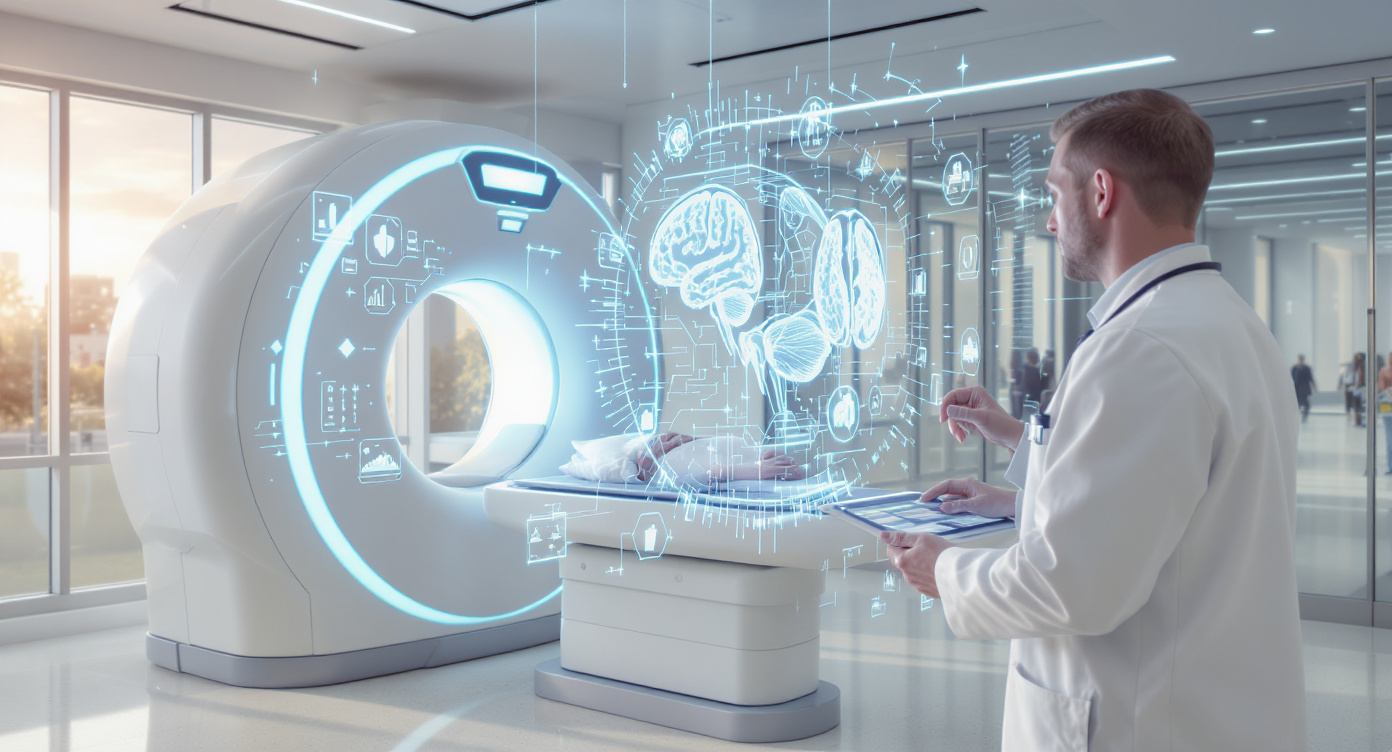
The healthcare landscape is experiencing a seismic shift, with artificial intelligence leading the charge in transforming how medical professionals diagnose and treat patients. Perhaps nowhere is this transformation more evident than in medical imaging, where AI-powered systems are delivering diagnoses 40% faster than traditional methods while maintaining exceptional accuracy rates. This breakthrough isn’t just improving efficiency—it’s saving lives by enabling earlier interventions and reducing the burden on overwhelmed healthcare systems worldwide.
Medical imaging has long been the cornerstone of modern diagnostics, helping physicians peer inside the human body to identify diseases, injuries, and abnormalities. However, the traditional process of analyzing X-rays, CT scans, MRIs, and other imaging studies has historically been time-consuming and dependent on the availability of specialized radiologists. With AI stepping into this space, we’re witnessing a paradigm shift that promises to make quality healthcare more accessible and efficient than ever before.
How AI Accelerates Medical Image Analysis
The 40% improvement in diagnostic speed isn’t merely about computers working faster than humans—it’s about fundamentally reimagining the diagnostic workflow. AI algorithms can process vast amounts of imaging data simultaneously, identifying patterns and anomalies that might take human radiologists considerably longer to detect and analyze.
Pattern Recognition at Lightning Speed
Modern AI systems utilize deep learning neural networks trained on millions of medical images. These networks can instantly recognize subtle patterns associated with specific conditions, from the early stages of cancer to complex cardiovascular abnormalities. While a radiologist might spend 15-20 minutes carefully examining a single CT scan, AI can perform an initial analysis in under 5 minutes, flagging areas of concern for human review.
Automated Preprocessing and Enhancement
AI doesn’t just analyze images—it optimizes them. Advanced algorithms can automatically adjust contrast, reduce noise, and enhance image quality before analysis begins. This preprocessing step eliminates the manual adjustments that traditionally consumed valuable time, allowing for immediate diagnostic assessment.
Prioritization and Triage
Perhaps most importantly, AI systems can instantly prioritize urgent cases. When a scan reveals signs of a stroke, pulmonary embolism, or other time-critical conditions, AI can immediately flag these studies for expedited review. This automated triage ensures that the most critical patients receive attention first, potentially saving crucial minutes or hours in emergency situations.
Continuous Learning and Improvement
Unlike static diagnostic tools, AI systems continuously learn from new cases and outcomes. Each diagnosis contributes to the system’s growing knowledge base, making future analyses even more accurate and efficient. This self-improving capability means that the 40% speed improvement we’re seeing today is likely just the beginning.
Key Areas Where AI is Making the Biggest Impact
The influence of AI in medical imaging spans across multiple specialties, but several areas are experiencing particularly dramatic improvements in diagnostic speed and accuracy.
Radiology and Emergency Medicine
Emergency departments are perhaps the most visible beneficiaries of AI-enhanced imaging. When patients arrive with chest pain, head injuries, or other acute conditions, AI can rapidly analyze X-rays, CT scans, and other imaging studies to identify immediate threats. For stroke patients, where every minute of delayed treatment increases the risk of permanent disability, AI can identify signs of cerebral hemorrhage or blockages within seconds of scan completion.
Oncology and Cancer Detection
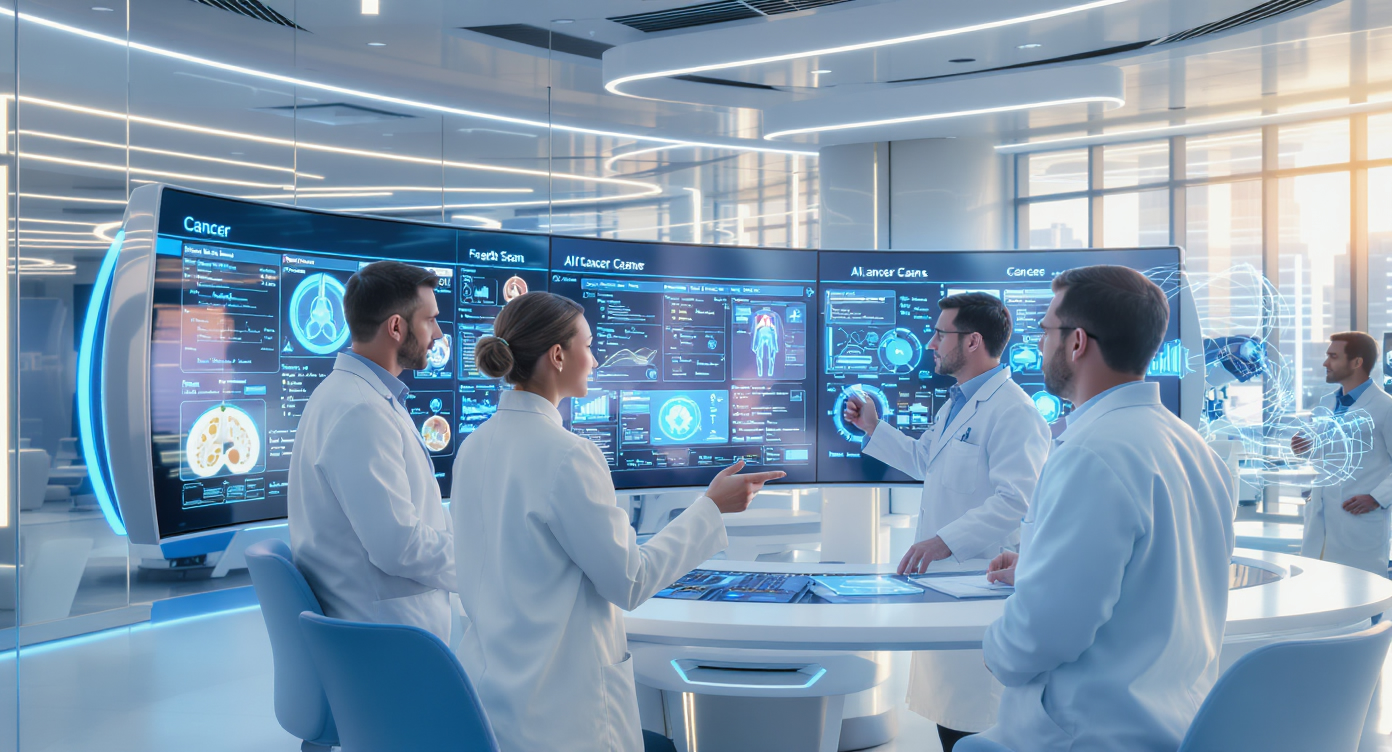
Cancer diagnosis represents one of AI’s most promising applications in medical imaging. AI systems can detect tumors at earlier stages than traditional methods, often identifying malignancies when they’re still small and highly treatable. In mammography, AI algorithms can spot subtle signs of breast cancer that might be missed during routine screening, while in lung cancer detection, AI can identify suspicious nodules in chest CT scans with remarkable precision.
Cardiology and Cardiovascular Imaging
Heart disease remains a leading cause of death globally, making rapid cardiac imaging analysis crucial. AI can quickly assess echocardiograms, cardiac CT scans, and cardiac MRIs to identify everything from coronary artery disease to structural abnormalities. The technology is particularly valuable in identifying acute coronary syndromes, where rapid diagnosis can mean the difference between life and death.
Ophthalmology and Vision Care
Diabetic retinopathy, a leading cause of blindness, can now be detected through AI analysis of retinal photographs in minutes rather than hours. This capability is particularly valuable in underserved areas where specialist ophthalmologists may not be readily available. AI can also detect other eye conditions like glaucoma and age-related macular degeneration during routine screenings.
Dermatology and Skin Cancer Detection
While not traditional “medical imaging” in the radiology sense, AI’s ability to analyze dermatological images has revolutionized skin cancer screening. Smartphone apps and specialized devices can now provide instant analysis of suspicious moles and lesions, helping patients and primary care physicians identify cases that require immediate specialist attention.
The Technology Behind the Speed: Understanding AI’s Diagnostic Process
To truly appreciate the 40% improvement in diagnostic speed, it’s essential to understand the sophisticated technology driving these advances.
Convolutional Neural Networks (CNNs)
At the heart of most medical imaging AI systems are convolutional neural networks, specialized algorithms designed to process visual information. These networks analyze images by examining small sections at a time, gradually building up a comprehensive understanding of the entire image. CNNs can identify features that are imperceptible to the human eye, including subtle texture changes, minute variations in tissue density, and complex spatial relationships between anatomical structures.
Transfer Learning and Specialized Training
AI systems for medical imaging don’t start from scratch. They build upon pre-trained models that already understand basic visual concepts, then receive specialized training on medical images. This transfer learning approach dramatically reduces the time and data required to develop effective diagnostic algorithms. A system might be trained on hundreds of thousands of chest X-rays, learning to distinguish between normal lung tissue, pneumonia, tumors, and other abnormalities.
Multi-Modal Integration
Advanced AI systems don’t rely on single images alone. They can integrate information from multiple imaging modalities, patient history, laboratory results, and other clinical data to provide comprehensive diagnostic insights. This holistic approach often reveals patterns that might be missed when analyzing individual components separately.
Real-Time Processing and Cloud Computing
The speed improvements in AI-driven diagnostics are also enabled by powerful cloud computing infrastructure. Modern AI systems can leverage vast computational resources to process images in real-time, often analyzing multiple cases simultaneously across different healthcare facilities. This distributed processing capability ensures that diagnostic speed isn’t limited by local hardware constraints.
Implementation Challenges and Real-World Considerations
Despite the impressive 40% improvement in diagnostic speed, implementing AI in medical imaging isn’t without challenges. Understanding these obstacles is crucial for healthcare organizations considering AI adoption.
Integration with Existing Systems
Most hospitals and clinics use established Picture Archiving and Communication Systems (PACS) and Electronic Health Records (EHRs). AI solutions must seamlessly integrate with these existing systems without disrupting established workflows. This integration often requires significant technical planning and staff training to ensure smooth adoption.
Regulatory Approval and Compliance
Medical AI systems must undergo rigorous testing and regulatory approval before clinical use. The FDA and other regulatory bodies require extensive validation studies demonstrating both safety and efficacy. While this process ensures patient safety, it can slow the adoption of promising new technologies.
Radiologist Workflow and Acceptance
The success of AI in medical imaging depends heavily on acceptance from radiologists and other medical professionals. Rather than replacing human expertise, the most successful implementations position AI as a powerful diagnostic aid that enhances human capabilities. Training programs and change management initiatives are essential for successful adoption.
Data Privacy and Security
Medical images contain sensitive patient information that must be protected according to strict privacy regulations like HIPAA. AI systems must incorporate robust security measures to prevent data breaches while still enabling the data sharing necessary for system training and improvement.
Cost and Return on Investment
While AI systems can improve diagnostic speed and accuracy, they require significant upfront investment in software, hardware, and training. Healthcare organizations must carefully evaluate the return on investment, considering factors like improved patient outcomes, reduced liability, and operational efficiency gains.
The transformation of medical imaging through AI represents more than just a technological advancement—it’s a fundamental shift toward more efficient, accessible, and accurate healthcare. The 40% improvement in diagnostic speed we’re witnessing today is just the beginning of what promises to be an ongoing revolution in medical diagnostics.
As AI systems continue to learn and improve, we can expect even greater advances in both speed and accuracy. The technology will likely expand beyond current applications, potentially revolutionizing areas like interventional radiology, surgical planning, and personalized treatment protocols. The ultimate goal isn’t to replace human medical professionals but to augment their capabilities, enabling them to provide better care to more patients in less time.
For healthcare organizations, patients, and medical professionals, the message is clear: AI-enhanced medical imaging isn’t a distant future possibility—it’s a present reality that’s already improving lives and outcomes. The question isn’t whether AI will transform medical imaging, but how quickly healthcare systems can adapt to harness its full potential.
How do you think AI-powered medical imaging will change your next healthcare experience, and what concerns or hopes do you have about this technological transformation?
Comments