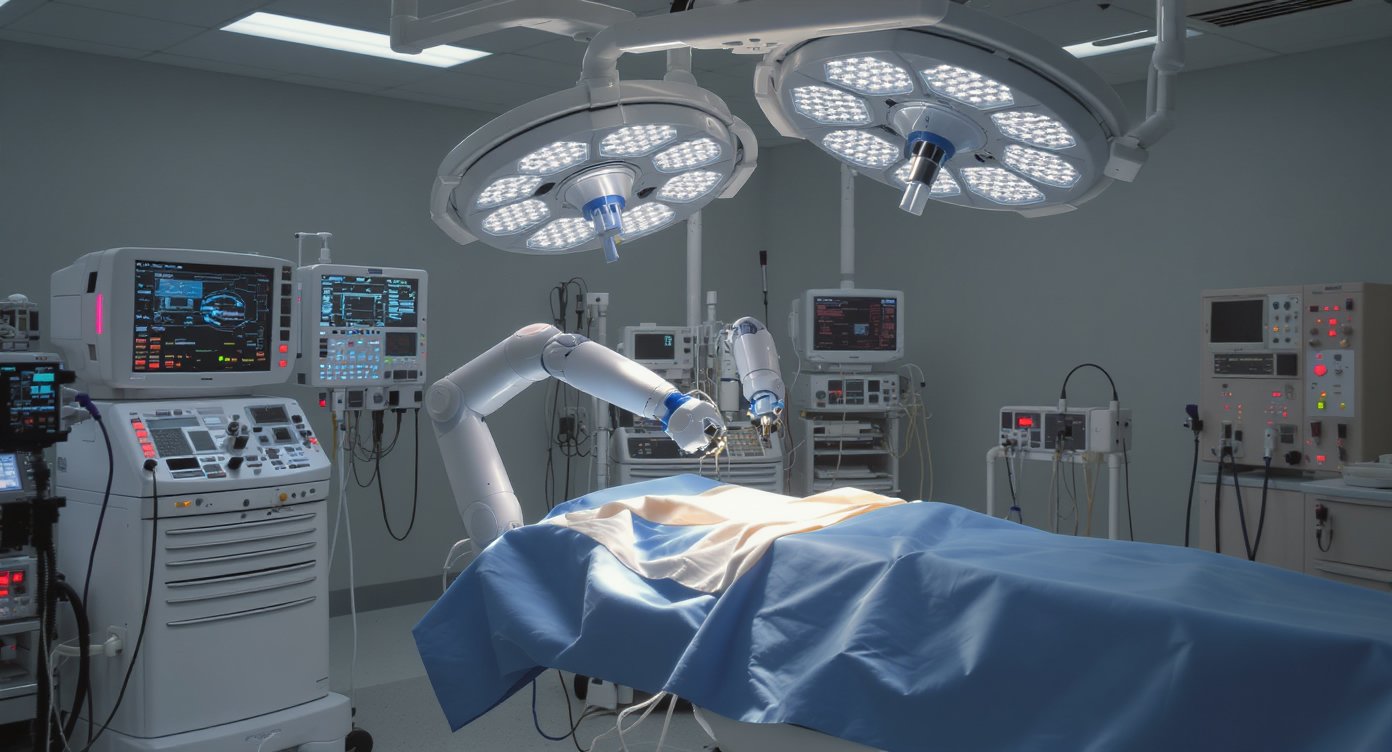
The healthcare robotics industry is facing an unprecedented challenge as the first quarter of 2026 draws to a close. An acute shortage of specialized AI chips has created significant disruptions across hospitals, surgical centers, and medical device manufacturers worldwide. This crisis, dubbed the “AI Silicon Squeeze,” is forcing healthcare organizations to reassess their robotic automation strategies and confront the reality of supply chain vulnerabilities in critical medical infrastructure.
The shortage primarily affects neuromorphic processors and edge AI accelerators—the specialized chips that power everything from surgical robots to automated pharmacy systems. Major chip manufacturers have reported production delays of 6-12 months, while healthcare robotics companies are scrambling to secure existing inventory and redesign systems around available components.
Dr. Sarah Chen, Director of Robotic Surgery at Massachusetts General Hospital, recently told industry publications, “We’ve had to postpone the deployment of three new da Vinci systems because the AI enhancement modules are simply unavailable. It’s unprecedented in my 15 years of experience with medical robotics.”
This shortage represents more than just a temporary supply chain hiccup—it’s a wake-up call for an industry that has become increasingly dependent on cutting-edge semiconductor technology to deliver life-saving care.
The Perfect Storm: Understanding the Root Causes
The current AI chip shortage stems from a confluence of factors that began building momentum in late 2025. Unlike previous semiconductor shortages that affected consumer electronics, this crisis specifically targets the high-performance, specialized processors that healthcare robotics demands.
Geopolitical Trade Tensions have significantly impacted chip production. New export restrictions implemented in early 2026 have limited access to advanced manufacturing equipment needed for AI chip production. Taiwan Semiconductor Manufacturing Company (TSMC) and other leading foundries have experienced production capacity reductions of up to 30% for certain specialized processors.
Unprecedented Demand Growth has outpaced manufacturing capacity. The healthcare robotics market expanded by 78% in 2025, driven by post-pandemic automation initiatives and an aging global population requiring more surgical interventions. Hospitals worldwide accelerated their digital transformation plans, creating a surge in demand for AI-powered medical devices.
Supply Chain Concentration has proven problematic. Approximately 85% of healthcare-grade AI chips come from just three manufacturers, creating dangerous bottlenecks. When production issues hit these key suppliers simultaneously, the entire healthcare robotics ecosystem feels the impact.
Critical Material Shortages have compounded the problem. Rare earth elements essential for AI chip manufacturing, particularly those used in neuromorphic processors, have seen price increases of over 200% since January 2026. Political instability in key mining regions has further constrained supply.
The ripple effects extend beyond just chip availability. Healthcare robotics companies are reporting that even when chips are available, prices have increased by 150-300%, forcing difficult decisions about which projects to prioritize and which to postpone indefinitely.
Healthcare Sectors Feeling the Impact
The AI chip shortage isn’t affecting all healthcare robotics applications equally. Some sectors are experiencing more severe disruptions than others, creating a complex landscape of winners and losers in the race for available technology.
Surgical Robotics has been hit hardest by the shortage. Advanced surgical systems require multiple high-performance AI processors to handle real-time imaging, precision control, and safety monitoring simultaneously. Intuitive Surgical has delayed shipments of its latest robotic surgical platform by an average of eight months, while Medtronic’s Hugo robotic system faces similar constraints.
The shortage has particularly impacted minimally invasive cardiac surgery programs. Dr. Michael Rodriguez, Chief of Cardiac Surgery at Cleveland Clinic, explains: “Our new robotic heart surgery program was scheduled to launch in February, but we’re still waiting for two critical systems. Every month of delay means dozens of patients who could benefit from less invasive procedures are instead undergoing traditional open-heart surgery.”
Pharmaceutical Automation represents another severely affected sector. Robotic pharmacy systems that prepare and dispense medications require sophisticated AI chips for drug recognition, dosage calculations, and safety verification. Hospital pharmacy departments are reporting delays in automation upgrades, forcing them to rely more heavily on manual processes that increase the risk of medication errors.
Diagnostic Imaging Robotics has experienced mixed impacts. While some AI-enhanced imaging systems face delays, manufacturers have successfully redesigned certain products to use alternative chip architectures. This adaptability has helped maintain critical diagnostic capabilities in many healthcare facilities.
Rehabilitation Robotics has shown remarkable resilience during the shortage. Many rehabilitation devices require less computational power than surgical systems, allowing manufacturers to substitute alternative processors more easily. However, the most advanced AI-powered prosthetics and exoskeletons still face significant delays.
Elderly Care Robotics has seen both challenges and opportunities. While sophisticated companion robots face production delays, simpler monitoring and assistance robots have actually gained market share as healthcare facilities seek alternatives to more chip-intensive solutions.
Strategic Responses and Industry Adaptations
Healthcare organizations and robotics manufacturers aren’t simply waiting for the shortage to resolve—they’re implementing creative strategies to maintain operations and continue advancing patient care capabilities.
Chip Architecture Diversification has become a top priority for medical device manufacturers. Companies are redesigning their systems to work with multiple types of processors, reducing dependence on any single chip supplier. Boston Scientific, for example, has created modular robotic platforms that can operate with three different AI chip configurations depending on availability.
Cloud-Edge Hybrid Solutions are gaining traction as an alternative to on-device processing. Rather than requiring powerful local AI chips, some robotic systems now perform complex computations in secure cloud environments while maintaining essential safety functions locally. This approach reduces the need for the most advanced—and scarcest—AI processors.
Refurbishment and Lifecycle Extension programs have expanded dramatically. Hospitals are investing more heavily in maintaining and upgrading existing robotic systems rather than purchasing new equipment. Stryker has reported a 340% increase in demand for robotic system refurbishment services since the shortage began.
Strategic Inventory Management has become critical for healthcare systems. Forward-thinking hospitals are building relationships with multiple equipment suppliers and maintaining larger spare parts inventories. Some health systems have even formed purchasing consortiums to improve their negotiating power with suppliers.
Alternative Technology Integration is driving innovation in unexpected directions. Some manufacturers are exploring quantum processing solutions for specific applications, while others are developing more efficient algorithms that require less computational power to achieve similar results.
Regional Manufacturing Initiatives are beginning to emerge. Several countries have announced plans to develop domestic AI chip manufacturing capabilities specifically for healthcare applications. While these initiatives won’t solve the immediate shortage, they promise greater supply chain resilience in the future.
Healthcare robotics companies are also collaborating more closely than ever before. Traditionally competitive firms are sharing supply chain intelligence and even co-developing chip-agnostic platforms that can benefit the entire industry.
Long-term Implications and Future Preparedness
The Q1 2026 AI chip shortage will likely reshape the healthcare robotics landscape for years to come, forcing fundamental changes in how the industry approaches technology development, supply chain management, and strategic planning.
Supply Chain Resilience has moved from a back-office consideration to a C-suite priority. Healthcare systems are developing sophisticated risk assessment frameworks that evaluate not just the clinical capabilities of robotic systems, but also the supply chain stability of their manufacturers. This shift is driving demand for greater transparency throughout the medical device supply chain.
Technology Standardization efforts are accelerating across the industry. Professional organizations and regulatory bodies are working to establish common standards for AI chips in medical applications, potentially reducing the industry’s dependence on highly specialized processors that are vulnerable to supply disruptions.
Investment Patterns in healthcare technology are shifting toward companies that demonstrate supply chain resilience and component flexibility. Venture capital firms are now scrutinizing the supply chain strategies of healthcare robotics startups as carefully as their clinical outcomes and regulatory pathways.
Regulatory Adaptation is becoming necessary as the FDA and other agencies grapple with how to evaluate medical devices that may need to use different AI chips depending on availability. New guidance documents are expected to address component substitution protocols and equivalency standards.
Innovation Acceleration in chip-efficient algorithms is creating unexpected benefits. Some healthcare robotics companies are discovering that designing for chip scarcity actually improves their products’ energy efficiency, cost-effectiveness, and reliability.
The shortage has also highlighted the strategic importance of healthcare robotics to national security and public health preparedness. Several governments are developing policies to ensure priority access to critical semiconductor components for healthcare applications during future supply disruptions.
As the healthcare industry navigates these challenges, one thing becomes clear: the organizations that adapt most effectively to supply chain uncertainty will emerge stronger and more resilient. The current crisis, while disruptive, is driving innovations and strategic thinking that will benefit patient care for decades to come.
The path forward requires unprecedented collaboration between healthcare providers, technology manufacturers, semiconductor companies, and policymakers. Only through coordinated effort can the industry build the resilient, adaptable infrastructure needed to ensure that supply chain disruptions never again compromise patient care.
How is your healthcare organization preparing for future supply chain disruptions in critical medical technology, and what lessons from the current AI chip shortage will guide your strategic planning?



Comments