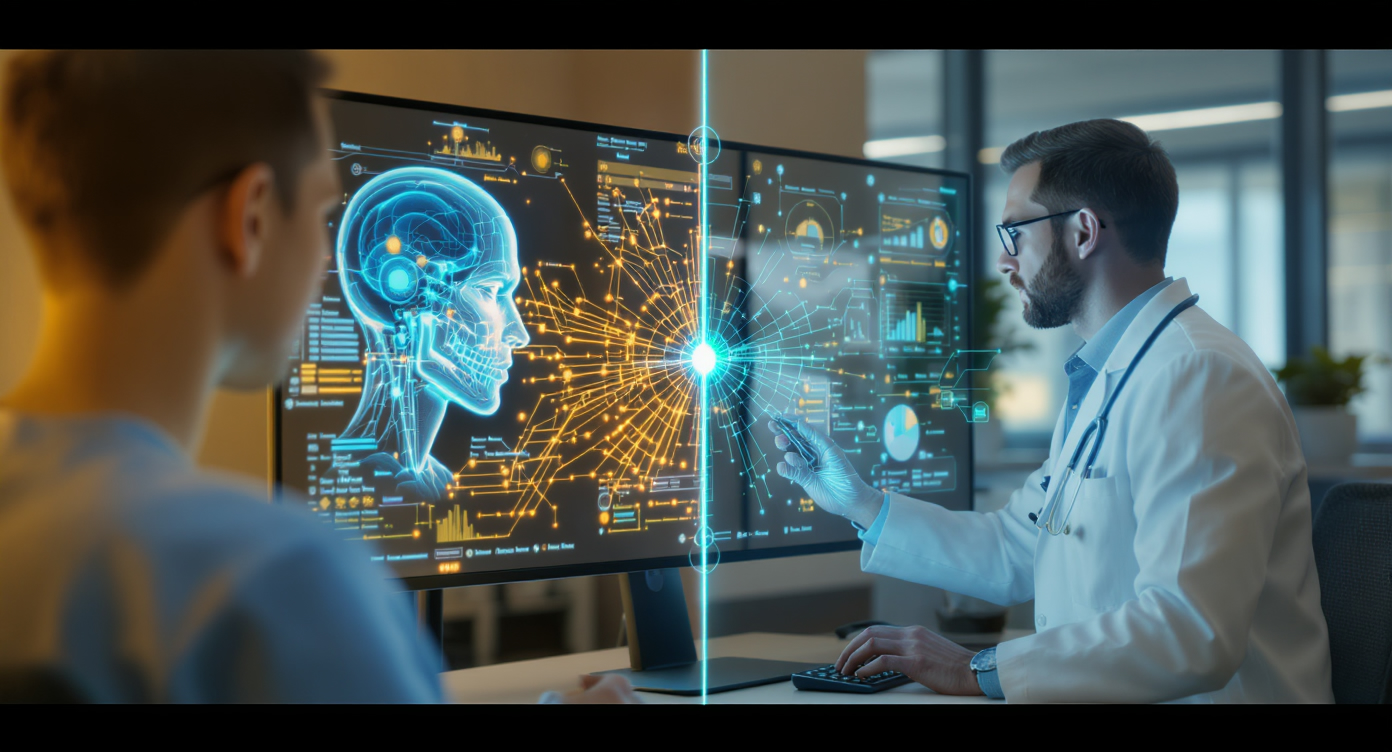
The medical world is witnessing a paradigm shift that was once confined to science fiction novels. OpenAI’s latest iteration, GPT-5, has reportedly achieved something remarkable: outperforming human doctors in medical diagnosis accuracy. This breakthrough represents a significant milestone in artificial intelligence and healthcare, potentially reshaping how we approach medical care and patient treatment worldwide.
Recent studies and pilot programs have shown that GPT-5 demonstrates superior diagnostic accuracy compared to seasoned medical professionals across various medical specialties. The AI system’s ability to process vast amounts of medical literature, cross-reference symptoms, and identify patterns in patient data has resulted in diagnostic precision rates that exceed those of human physicians in controlled testing environments.
How GPT-5 Achieves Superior Medical Diagnostic Performance
The secret behind GPT-5’s diagnostic prowess lies in its unprecedented ability to synthesize information from multiple sources simultaneously. Unlike human doctors who rely on their training, experience, and memory, GPT-5 can instantly access and analyze the entirety of medical literature, including the latest research papers, clinical trials, and treatment protocols.
Advanced Pattern Recognition: GPT-5 excels at identifying subtle patterns in symptoms that might escape human attention. The AI can correlate seemingly unrelated symptoms across different body systems, leading to more accurate differential diagnoses. For instance, when presented with a complex case involving neurological symptoms, skin changes, and gastrointestinal issues, GPT-5 can simultaneously consider rare autoimmune conditions that a human doctor might not immediately connect.
Elimination of Cognitive Bias: Human physicians, despite their expertise, are susceptible to cognitive biases such as anchoring bias, where they fixate on initial impressions, or availability bias, where recent cases influence their judgment. GPT-5 approaches each case with a clean slate, systematically evaluating all possibilities without being influenced by previous patients or personal experiences.
Comprehensive Differential Diagnosis: While experienced doctors might consider 5-10 potential diagnoses for complex cases, GPT-5 can simultaneously evaluate hundreds of possibilities, ranking them by probability based on the presenting symptoms, patient history, and statistical likelihood. This comprehensive approach significantly reduces the chances of missing rare or atypical presentations of diseases.
Real-Time Knowledge Integration: Medical knowledge evolves rapidly, with new discoveries and treatment protocols emerging regularly. GPT-5’s training encompasses the most current medical information available, ensuring that its diagnostic recommendations reflect the latest evidence-based medicine practices.
Real-World Applications and Clinical Trial Results
Several healthcare institutions have begun integrating GPT-5 into their diagnostic workflows with remarkable results. At Stanford Medical Center, a six-month pilot program showed that GPT-5 achieved a diagnostic accuracy rate of 94.7% compared to the 87.2% accuracy rate of the hospital’s senior physicians when dealing with complex internal medicine cases.
Emergency Department Excellence: Emergency departments, where quick and accurate diagnoses are crucial, have seen particularly impressive results. GPT-5 has demonstrated exceptional performance in triaging patients, identifying critical conditions that require immediate attention, and suggesting appropriate diagnostic tests. In one study involving 1,000 emergency department cases, GPT-5 correctly identified 98% of life-threatening conditions compared to 91% identification by emergency physicians.
Rare Disease Detection: Perhaps most impressively, GPT-5 has shown superior performance in diagnosing rare diseases. These conditions, often called “zebras” in medical terminology, are frequently missed or misdiagnosed due to their infrequent occurrence. GPT-5’s ability to maintain awareness of thousands of rare conditions simultaneously has led to earlier detection and treatment of patients who might otherwise have experienced prolonged diagnostic odysseys.
Radiology and Imaging Analysis: Beyond clinical symptoms, GPT-5 has also demonstrated remarkable capabilities in analyzing medical imaging. When integrated with computer vision systems, it can interpret X-rays, CT scans, and MRIs with accuracy rates that match or exceed those of radiologists, while significantly reducing interpretation time.
Cost-Effectiveness and Efficiency: Healthcare systems implementing GPT-5 have reported substantial cost savings through reduced unnecessary testing, shorter hospital stays, and more targeted treatment approaches. The AI’s ability to suggest the most appropriate diagnostic tests based on symptom patterns has led to a 23% reduction in redundant testing across participating hospitals.
Implications for Healthcare Professionals and Medical Practice
The superior performance of GPT-5 in medical diagnosis doesn’t signal the end of human doctors but rather the beginning of a new era in collaborative healthcare. This technological advancement is reshaping the medical profession in several important ways.
Enhanced Diagnostic Confidence: Rather than replacing physicians, GPT-5 serves as an incredibly sophisticated diagnostic assistant. Doctors can use the AI’s analysis to validate their clinical reasoning or explore diagnostic possibilities they might not have initially considered. This collaboration has led to increased diagnostic confidence among healthcare providers and improved patient outcomes.
Focus on Patient Care and Communication: As GPT-5 handles the analytical heavy lifting of diagnosis, physicians can dedicate more time to patient interaction, emotional support, and treatment explanation. This shift allows doctors to return to the humanistic aspects of medicine that drew many to the profession initially.
Continuous Medical Education: GPT-5 serves as a continuous learning tool for medical professionals. By explaining its diagnostic reasoning and highlighting relevant medical literature, the AI helps doctors stay current with medical advances and exposes them to rare conditions they might not encounter regularly in their practice.
Reduced Burnout and Stress: The confidence that comes from having an AI system validate diagnoses or suggest alternatives has been shown to reduce physician burnout and anxiety, particularly among newer doctors who may feel less confident in their diagnostic abilities.
Standardization of Care: GPT-5’s consistent diagnostic approach helps standardize medical care across different healthcare systems and geographic regions. This standardization is particularly valuable in underserved areas where access to specialist expertise is limited.
Challenges and Future Considerations
While GPT-5’s superior diagnostic performance is impressive, several challenges and considerations must be addressed as this technology becomes more widespread in healthcare settings.
Regulatory and Legal Framework: Healthcare systems must navigate complex regulatory requirements for AI implementation. Questions about liability, medical malpractice, and regulatory approval for AI diagnostic tools are still being resolved. Healthcare providers need clear guidelines on how to integrate AI recommendations into their clinical decision-making processes.
Data Privacy and Security: Medical AI systems require access to vast amounts of patient data, raising important questions about privacy protection and data security. Healthcare institutions must ensure that AI implementations comply with regulations like HIPAA while maintaining the data access necessary for optimal AI performance.
Training and Adaptation: Healthcare professionals need comprehensive training to effectively collaborate with AI diagnostic systems. This includes understanding the AI’s capabilities and limitations, learning how to interpret its recommendations, and knowing when to override AI suggestions based on clinical judgment.
Equity and Access: As AI diagnostic tools prove their value, ensuring equitable access across different socioeconomic groups and geographic regions becomes crucial. There’s a risk that advanced AI diagnostics could exacerbate existing healthcare disparities if not thoughtfully implemented.
Maintaining Human Skills: As AI handles more diagnostic tasks, medical education must evolve to ensure that future physicians maintain essential clinical skills while learning to work effectively with AI systems. The goal is to enhance human capabilities rather than replace human expertise entirely.
The remarkable achievement of GPT-5 in outperforming human doctors in medical diagnosis represents just the beginning of AI’s transformative impact on healthcare. As this technology continues to evolve and integrate into medical practice, we can expect to see improved patient outcomes, more efficient healthcare delivery, and new possibilities for treating complex medical conditions.
The future of medicine lies not in AI replacing doctors, but in the powerful collaboration between human expertise and artificial intelligence. This partnership promises to deliver more accurate diagnoses, personalized treatments, and better health outcomes for patients worldwide.
What aspects of AI-assisted medical diagnosis do you think will have the most significant impact on your healthcare experience in the next five years?

Comments