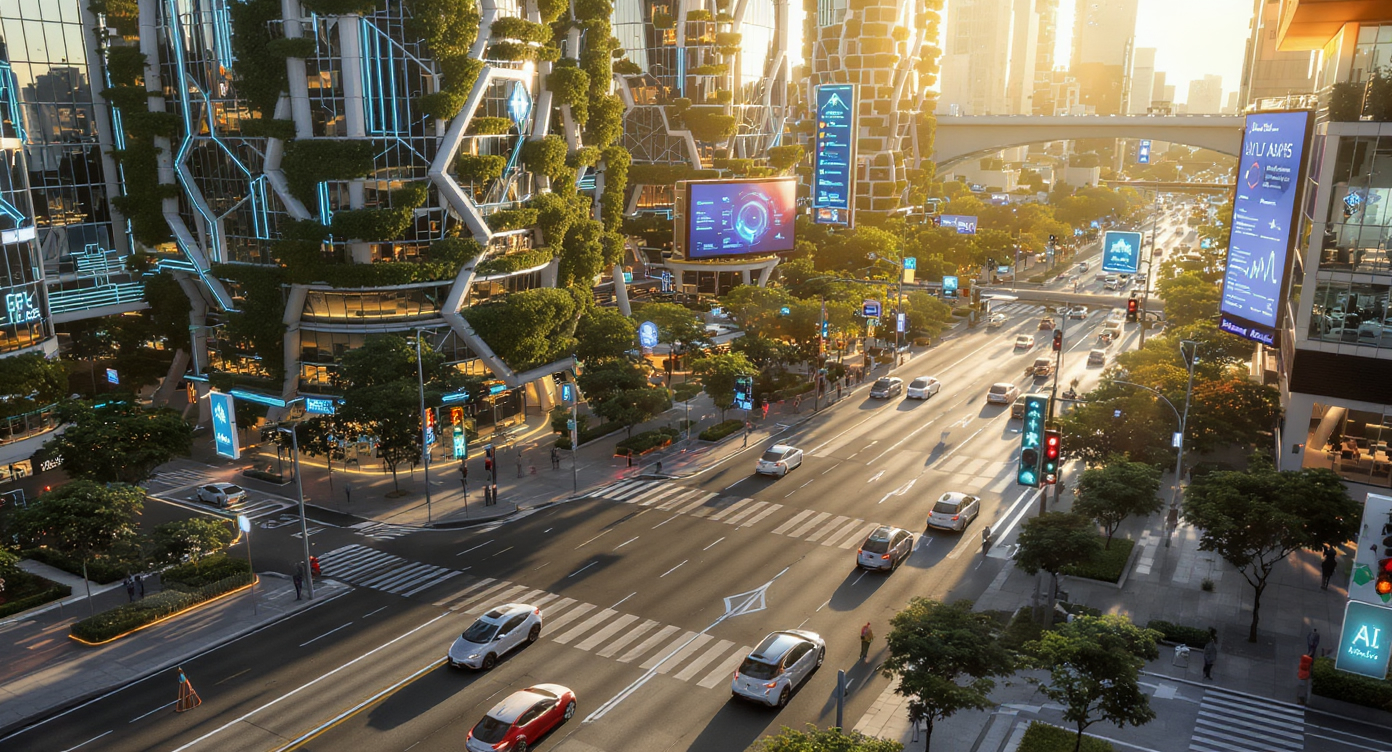
The urban landscape is undergoing a revolutionary transformation as artificial intelligence reshapes how cities function, grow, and serve their residents. In 2026, we’re witnessing the most significant shift in urban planning since the advent of modern infrastructure, with AI-powered smart cities leading the charge toward more efficient, sustainable, and livable metropolitan areas.
This technological revolution isn’t just about adding digital layers to existing urban frameworks—it’s fundamentally reimagining how cities think, adapt, and evolve. From predictive traffic management systems that eliminate congestion before it occurs to AI-driven housing algorithms that optimize neighborhood development, smart cities are becoming living, breathing ecosystems powered by data and intelligence.
The implications extend far beyond mere convenience. As urban populations are projected to reach 6.7 billion by 2050, the pressure on city planners to create sustainable, efficient urban environments has never been greater. AI-powered smart cities offer a pathway to not just accommodate this growth, but to thrive alongside it.
Revolutionary Infrastructure: Where AI Meets Urban Design
The backbone of any smart city lies in its intelligent infrastructure, and 2026 has marked a turning point in how AI integrates with urban systems. Modern smart cities deploy interconnected networks of sensors, IoT devices, and machine learning algorithms that create a comprehensive nervous system for the urban environment.
Traffic optimization represents one of the most visible applications of AI in urban planning. Advanced traffic management systems now utilize real-time data from thousands of sources—including vehicle sensors, mobile phone GPS data, public transportation systems, and even weather patterns—to predict and prevent congestion. Cities like Singapore and Barcelona have reduced traffic delays by up to 40% through AI-powered traffic light synchronization and dynamic route optimization.
Energy management has become equally sophisticated, with AI systems managing power grids that automatically balance supply and demand across entire metropolitan areas. Smart buildings communicate with the grid to reduce energy consumption during peak hours, while AI algorithms predict renewable energy generation from solar and wind sources days in advance. This predictive capability allows cities to optimize their energy mix and reduce carbon emissions by an average of 25%.
Water resource management showcases another critical application where AI transforms urban planning. Intelligent water systems monitor consumption patterns, detect leaks before they become visible, and optimize distribution based on real-time demand. Cities implementing AI-driven water management report water waste reduction of up to 30%, a crucial achievement as urban areas face increasing water scarcity challenges.
The integration of these systems creates a multiplier effect. When traffic, energy, and water systems communicate through AI networks, cities achieve unprecedented levels of efficiency. For instance, reduced traffic congestion leads to lower vehicle emissions, which improves air quality sensors readings, which in turn influences HVAC systems in buildings to optimize indoor air circulation—creating a cascade of interconnected benefits.
Data-Driven Urban Planning: From Reactive to Predictive
Traditional urban planning often relied on historical data and best-guess projections to make decisions that would impact cities for decades. AI-powered smart cities have fundamentally shifted this paradigm from reactive planning to predictive, adaptive urban development.
Predictive analytics now enable urban planners to simulate the long-term effects of development decisions before breaking ground. Machine learning models analyze vast datasets including demographic trends, economic patterns, environmental factors, and social behaviors to forecast how proposed developments will impact everything from local traffic patterns to property values and community well-being.
Real-time adaptation has become a hallmark of smart city planning. Unlike traditional static master plans, AI-enabled cities continuously adjust their development strategies based on emerging data. If sensors detect changing pedestrian flow patterns in a commercial district, AI systems can recommend modifications to building designs, public space allocation, or transportation infrastructure to better serve evolving community needs.
Citizen engagement has been revolutionized through AI-powered platforms that analyze public sentiment and participation patterns. Natural language processing algorithms monitor social media, public forums, and citizen feedback to identify emerging concerns and preferences. This data feeds directly into planning algorithms, ensuring that development decisions reflect actual community needs rather than assumptions about resident preferences.
Resource allocation optimization represents perhaps the most impactful application of predictive urban planning. AI systems analyze patterns in service utilization—from public transportation to healthcare facilities to parks and recreation areas—to optimize the placement and sizing of new infrastructure. This approach has led to more equitable resource distribution and improved quality of life across diverse neighborhoods.
The shift toward predictive planning has also enhanced cities’ resilience to unexpected challenges. AI models that continuously analyze urban systems can quickly identify vulnerabilities and recommend adaptations. During the climate-related disruptions of recent years, AI-powered cities demonstrated superior ability to maintain essential services and protect vulnerable populations.
Sustainability and Smart City Ecosystems
Environmental sustainability has become the cornerstone of AI-powered smart city development, with artificial intelligence serving as the critical enabler for achieving ambitious climate goals while maintaining urban livability and economic growth.
Carbon footprint reduction through AI optimization has produced remarkable results across multiple urban sectors. Intelligent building management systems reduce energy consumption by learning occupancy patterns and adjusting heating, cooling, and lighting accordingly. City-wide AI networks coordinate these efforts, creating virtual power plants that can shift energy loads to optimize renewable energy utilization and minimize carbon emissions.
Waste management has been transformed through AI-powered systems that optimize collection routes, predict waste generation patterns, and maximize recycling efficiency. Smart bins equipped with sensors communicate fill levels to AI systems that dynamically adjust collection schedules, reducing truck emissions by up to 35%. Machine learning algorithms also improve sorting accuracy in recycling facilities, increasing material recovery rates and reducing contamination.
Green space optimization leverages AI to maximize the environmental and social benefits of urban nature. Algorithms analyze air quality data, temperature patterns, and biodiversity indicators to recommend optimal locations for new parks and green corridors. AI-powered irrigation systems maintain these spaces efficiently while sensors monitor their impact on local climate conditions and resident well-being.
Climate resilience planning utilizes AI to prepare cities for extreme weather events and long-term climate changes. Predictive models analyze weather patterns, urban heat island effects, and flood risks to guide infrastructure investments and emergency preparedness strategies. Cities using AI-powered climate planning report improved outcomes during extreme weather events and more effective long-term adaptation strategies.
Circular economy integration has been enhanced through AI systems that identify opportunities for resource sharing and waste reduction across urban systems. Machine learning algorithms analyze material flows throughout the city to identify opportunities for industrial symbiosis, where waste from one sector becomes input for another, creating closed-loop urban ecosystems.
Challenges and Future Opportunities
While AI-powered smart cities offer unprecedented opportunities for urban improvement, their development and implementation present significant challenges that city leaders must navigate carefully to realize the full potential of these technologies.
Privacy and data security concerns top the list of challenges facing smart city development. The extensive sensor networks and data collection systems that power AI urban planning raise legitimate questions about citizen privacy and data protection. Cities must balance the benefits of comprehensive data collection with robust privacy protections and transparent data governance policies.
Digital equity remains a critical challenge as AI-powered city services risk creating new forms of urban inequality. Cities must ensure that all residents can access and benefit from smart city technologies, regardless of their digital literacy or economic status. This requires significant investments in digital infrastructure and education programs in underserved communities.
Infrastructure costs and funding models present ongoing challenges for many cities seeking to implement comprehensive AI-powered systems. The initial investment required for sensors, computing infrastructure, and AI development can be substantial, requiring innovative financing approaches and careful prioritization of investments for maximum impact.
Interoperability and standardization issues complicate smart city development as different vendors and systems must work together seamlessly. Cities need robust technical standards and integration strategies to avoid creating isolated technology silos that limit the effectiveness of AI-powered urban planning.
Despite these challenges, the opportunities ahead are substantial. Advanced AI capabilities continue to evolve rapidly, offering new possibilities for urban optimization. Machine learning models are becoming more sophisticated in their ability to understand complex urban dynamics and predict the outcomes of planning decisions.
Cross-city collaboration is emerging as cities share data, best practices, and AI models to accelerate smart city development globally. This collaborative approach promises to reduce implementation costs and improve outcomes for cities worldwide.
Citizen co-creation opportunities are expanding as AI tools become more accessible, allowing residents to participate directly in urban planning processes through sophisticated simulation and visualization tools.
The transformation of urban planning through AI-powered smart cities represents more than a technological upgrade—it’s a fundamental reimagining of how cities can serve their residents while building sustainable, resilient communities for the future. As we advance through 2026 and beyond, the cities that successfully integrate artificial intelligence into their planning processes will set the standard for urban living worldwide.
The evidence is clear: AI-powered smart cities deliver measurable improvements in efficiency, sustainability, and quality of life. However, realizing these benefits requires thoughtful implementation that prioritizes citizen needs, protects privacy, and ensures equitable access to smart city advantages.
How is your city preparing to leverage AI for smarter urban planning, and what role do you think residents should play in shaping these intelligent urban environments?

Comments